Offgrid Rajasthan

Blogs

Blogs

Why Children Need Nature More Than Screens

What Modern Childhood Is Missing and How Nature Helps Children Thrive Close your eyes for a moment and go back. A summer afternoon, decades ago. The sun is high and hot and nobody cares. There is a group of children somewhere between a mango tree and a muddy pond, inventing a game with no name and no rules. Someone falls. Someone laughs. & Someone finds a beetle and announces it like a discovery that changes everything. Nobody is thinking about what comes next. Nobody needs to. The world has shrunk to the size of one perfect afternoon, and that is more than enough. Now open your eyes. A child sits on a sofa, still, eyes fixed on a glowing rectangle. The room is cool and quiet. Everything they could ever want to watch, play, or listen to is available instantly and endlessly. And somehow, within twenty minutes, they are bored. Within an hour, they are irritable. By evening, asking for more screen time with an urgency that feels almost desperate. Something is off. Most parents feel it. The question is what to do about it. The answer is not complicated. It is just increasingly rare. Children need nature. Not as a reward, not as a structured activity, not as an educational experience with a learning outcome attached. They need it the way they need food and sleep: as a fundamental condition for growing well. Childhood Has Changed More Than We Realize The shift happened gradually, which is part of why it is so easy to miss. No single moment when childhood moved indoors. Just a slow accumulation of small changes: a phone here, a tablet there, a summer vacation that stayed inside because the weather was too hot, a weekend that stayed inside because it was just easier. A generation ago, children came home from school and disappeared outside until dinner. The neighbourhood was the playground. The rules were made up. The injuries were minor and the memories were enormous. Play was physical, imaginative, and entirely self-directed. It ended only when someone was called inside. Today, the average child in an urban Indian home spends more hours looking at a screen each day than they spend in any form of physical outdoor activity across an entire week. This is not a criticism of parents, who are navigating a world that has genuinely changed. It is simply a fact, and one worth sitting with. Then Now Trees to climb Touchscreens to swipe Mud and open fields Mobile games and indoor apps Outdoor games till sunset Indoor entertainment from morning Exploration and discovery Scrolling and watching Imagination-led play Algorithm-led content Community and neighbourhood friends Online interactions with strangers Neither column is entirely good or entirely bad. But the balance has shifted so far in one direction that many children are growing up without experiences that were, for all of human history before this moment, simply what childhood was. What Too Much Screen Time Does to Children This is not an anti-technology argument. Screens have genuine value. They offer learning, creativity, connection, and entertainment. The concern is not the screen itself. It is the ratio: when screens fill the space that movement, nature, and unstructured play once occupied, something gets lost in the displacement. Physical Effects Children who spend extended hours on screens typically move less. Less movement means weaker muscles, poorer coordination, and less developed balance. Eye strain is common: screens demand a fixed focal length for hours, which the eyes are not designed to sustain. Posture suffers. Sleep suffers most of all: the blue light from screens suppresses melatonin production, making it genuinely harder for a child’s body to fall into the deep sleep it needs to grow and recover. Mental Effects Screens are designed, by brilliant people with considerable resources, to be as engaging as possible. The result is content that delivers stimulation in very short bursts, constantly refreshed, constantly new. The child’s brain adapts to this pace. Anything slower, a book, a conversation, a walk, a task that requires sustained focus, begins to feel unbearable. Attention spans shorten not because children are less capable, but because their brains have been trained by a particular kind of experience. Emotional Effects Perhaps the subtlest effect, and in some ways the most important, is emotional. Children who spend significant portions of their waking hours on screens often become dependent on that level of stimulation for their sense of okay-ness. When the screen goes away, nothing in the ordinary world feels interesting enough. Frustration arrives quickly. Patience thins. The capacity to simply be, without being entertained, quietly erodes. Signs Your Child May Need More Time Outdoors What Happens When Children Spend Time in Nature The research on this is not ambiguous. Across dozens of studies, in multiple countries, looking at children of different ages and backgrounds, the conclusion is consistent: time in natural environments makes children healthier, calmer, more creative, and more emotionally resilient. Not as a side effect. As a direct result. Nature Encourages Curiosity A screen provides content. Nature provides questions. What is that sound? Why is this rock a different colour? Where does this path go? How did this nest get here? These are not questions with quick answers. They are invitations to look more closely, to think, to wonder, to return tomorrow and check if anything has changed. A child exploring a patch of ground near a tree is not doing nothing. They are developing the foundational capacity for inquiry: the ability to notice, to be curious, to pursue a question for its own sake. This is the same capacity that drives every significant human achievement, and it is built most naturally in the first years of life, in conditions that make curiosity possible. Nature Builds Physical Competence Children who spend regular time in natural environments tend to be more physically coordinated, more physically confident, and more capable of managing the ordinary physical demands of a life lived in a body. They fall less. They recover faster. &

Blogs

Traditional Summer Wisdom Our Grandparents & Villages Followed

There was a time, not so long ago, when summer was not something to escape. It was something to live inside, slowly, with a kind of ease that most people today have completely forgotten. No air conditioning humming through the night. No cold drinks pulled from a refrigerator. No synthetic curtains blocking the sun. And yet, somehow, people were cooler. They slept better. Their skin did not burn under their own clothes. They ate without thinking about gut health, and their bodies thanked them quietly through the season. What did they know that we have forgotten? Quite a lot, as it turns out. This is not nostalgia for the sake of it. This is a genuine look at the summer wisdom that villages, grandparents, and centuries of lived experience passed down, and what happened when the modern world decided it knew better. They Dressed for the Climate, Not the Trend Go back fifty years in any Indian home and open the summer wardrobe. What you would find is cotton. Loose, soft, breathable cotton. Mulmul kurtas that moved with the body. Handwoven cotton sarees. Khadi that carried air within its weave. Light, unassuming clothes that had one job: to let the body breathe. Nobody thought of this as a wellness choice. It was simply common sense. The body heats up in summer. Clothes that trap heat make things worse. Clothes that allow airflow make things better. End of reasoning. What replaced this logic? Polyester. Nylon. Tight synthetic activewear that looks athletic and performs terribly in heat. Modern fabrics that trap sweat against the skin, prevent evaporation, and turn a warm afternoon into genuine discomfort. All in the name of fashion, price, and convenience. Earlier, people dressed according to the climate, not the calendar. That single shift may be responsible for more summer misery than any rise in temperature. The cotton kurta is not outdated. It is engineering. It is thousands of years of understanding how fabric interacts with a sweating body in a hot climate. The only thing that changed is that we stopped listening. They Ate What the Season Asked For Summer kitchens in Indian homes and villages followed a logic so simple it bordered on obvious: if the body is hot, eat food that cools it. If the sun is fierce, drink things that replace what it takes. Nobody needed a nutritionist to explain this. The knowledge was in the recipes, passed from grandmother to daughter, in the rhythm of what appeared at the market and what appeared on the plate. What They Drank Before cold drinks became a category, there were drinks that actually worked. \ These were not recipes born in a laboratory. They were born in the understanding that summer asks different things of the body, and the body deserves an answer that fits the question. What They Ate Summer vegetables were not chosen for their appearance in a supermarket. They were chosen because they grew in the heat and carried water within them: watermelon and muskmelon, cucumber and kakdi, lauki, tinda, and torai. These vegetables are over ninety percent water by weight. Eating them was a form of hydration that arrived with fiber, minerals, and flavor. Meals were lighter in the middle of the day, when the heat was highest, and heavier in the evening. Nobody ate processed food because there was none. Everything was freshly cooked, seasonal, and deeply attuned to what the body needed in that particular week of that particular month. Their Homes Were Built to Breathe The traditional Indian home was an act of climate intelligence. Concrete remembers heat. Clay releases it. Our grandparents built in clay and lived in comfort. We build in concrete and run air conditioning at full blast through the night. They Cared for the Body With What the Earth Offered Summer skin care in traditional homes was not a product category. It was a practice rooted in what grew nearby and what had been proven, over generations, to work. People bathed more than once on very hot days. Not as indulgence, but as regulation. The body cools dramatically in the hour after bathing, and this was used deliberately as a tool to manage afternoon heat. Vetiver, khus, appeared not just in curtains but in water. A stick of dried vetiver root placed in a clay pot of water infuses it with a subtle cooling compound and a scent that the body seems to recognize as relief. This has been used in Indian summers for longer than any written record reaches. They Lived by a Summer Rhythm Perhaps the most profound shift between then and now is not in what people wore or ate or built. It is in how they moved through the day. Summers had a rhythm, and people lived inside it rather than fighting it. Waking early, before the heat gathered strength, meant the morning hours could be used for work, movement, and activity. The harsh middle of the day, roughly between noon and four, was for rest. Not productive rest, not meditation tracked on an app, but actual stillness: a slow afternoon, a light meal, sleep if it came, or simply quiet in a shaded room. As the day cooled in the late afternoon, life moved outside again. Evenings were for conversation, for sitting together in courtyards or on verandahs, for children playing in the last softened light, for adults gathering outdoors under a sky that was beginning to turn. Nights were spent under open air where possible, on charpais moved to terraces or courtyards, with cotton sheets and the sound of the world settling. This was not laziness. This was intelligence. The human body has a thermal tolerance, and traditional summer life was organized around it. Modern life ignores seasonal rhythm almost entirely. The same schedule runs in December and May. The same working hours, the same activity levels, the same expectations of output, regardless of whether the sun is a gentle winter companion or a fierce summer force. Earlier summers

Blogs

Why Nature Heals Faster Than Therapy

Sound Familiar? You have thought about therapy. Maybe even tried it. But something still feels off: tight chest, restless mind, a tiredness that sleep does not fix. What if the answer is not in a clinic? What if it has been outside, all along? Nature is not a luxury. It is a necessity the modern world taught us to forget. What Ancient Civilisations Already Knew Long before psychiatry, human beings healed their minds with one simple prescription: time in nature. This was not superstition. It was lived science, tested across thousands of years and embedded in the medical traditions of civilisations that understood the human body as an extension of the natural world, not separate from it. India: Ayurveda and Prakriti Ayurveda, one of the world’s oldest healing systems at over 5,000 years old, begins with a radical premise: human beings are not separate from nature. They are made of the same five elements: earth, water, fire, air, and space. When a person falls ill, it is understood as a disconnection from natural rhythm. Healing, therefore, means returning to it. The Charaka Samhita, one of the foundational texts of Ayurvedic medicine, prescribed what it called Vatavaran Chikitsa: treatment through atmosphere. This included time in forests, bathing in rivers, listening to birdsong, and walking barefoot on the earth. These were not supplementary suggestions. They were medical protocols, as seriously prescribed as any herb or formulation. The practice of walking barefoot on soil, watching the sunrise, and bathing in natural water was understood to recalibrate the body’s relationship with the elements it was made from. The earth was not a backdrop to healing. It was the medicine. Japan: Shinrin-Yoku and the Science of Forest Bathing In 1982, Japan introduced Shinrin-Yoku as a national health initiative. The term translates simply as forest bathing, and the practice is exactly what it sounds like: spending slow, intentional time in a forest, without goal or destination. The research that followed was remarkable. Just two hours in a forest environment measurably lowered cortisol levels, reduced blood pressure, and increased the activity of natural killer cells in the immune system. Scientists discovered that trees emit compounds called phytoncides, airborne chemicals that the human immune system responds to directly when inhaled. The forest was not merely a pleasant environment. It was a functioning pharmacy, and the human body had evolved to receive its medicine. Decades of Japanese research have since confirmed that regular forest bathing reduces anxiety, improves sleep quality, lowers markers of chronic inflammation, and produces lasting changes in mood that persist well beyond the walk itself. Ancient Greece: Landscape as Treatment Hippocrates, considered the father of Western medicine, did not build his healing centre in a city. He chose a site surrounded by pine forests, fed by sacred springs, and open to sea breezes. This was a deliberate choice. He understood that the environment in which healing happened was not incidental to the treatment. It was part of it. Hippocrates prescribed nature walks, sunlight exposure, and time in gardens for what he called melancholy, a condition that maps closely to what is now understood as depression. Greek healing temples, the Asclepieia, were consistently built near mountains, rivers, or the sea. The natural landscape was not an aesthetic backdrop. It was recognised as an active element in the restoration of the mind. Why Nature Heals What Therapy Sometimes Cannot Therapy is valuable. It creates space for reflection, provides tools for understanding patterns, and offers genuine support for people navigating difficult experiences. But it works primarily through language and thought. It operates at the level of the conscious mind, using words to process what has happened and reframe how it is interpreted. Nature works differently. It works directly on the body, below thought, before words. And this distinction matters enormously for a particular kind of modern suffering: the chronic, low-grade stress and exhaustion that accumulates not from trauma or crisis, but from the sustained pressure of ordinary contemporary life. This is what ancient healers understood intuitively and what modern research is now confirming in precise physiological terms. The natural world is not a pleasant addition to recovery. For a growing number of people, it is the recovery. Coming Home: At Off Grid Rajasthan Off Grid Rajasthan is not a luxury resort or a wellness clinic. It is a farmstay, family-owned and family-run, built on the belief that the most powerful healing happens quietly, when a person is simply placed in the right conditions and allowed to breathe. Located in the open countryside of Village Mangalwa, Bansur, far from city noise and artificial light, the farm operates on a different rhythm entirely. The day is shaped by sunrise and soil rather than schedules and screens. What awaits is not a programme to complete but a pace to settle into. “You don’t need to fix yourself before you come. The land will do much of that work for you.” Plan your stay at Off Grid Rajasthan www.offgridrajasthan.com Start Today: Nature’s Daily Protocols A stay in the countryside is a powerful reset, but the wisdom of ancient healers does not require a journey to access. These practices are simple, free, and supported by both traditional medicine and modern research. They can begin anywhere, today. None of these require equipment, expense, or expertise. They require only the willingness to pause, step outside, and remember that the natural world is not separate from life. It is the foundation of it. The Invitation Human beings evolved under open skies. In forests and on plains. With hands in soil and eyes on horizons, watching the seasons turn and the stars wheel overhead. For the vast majority of human history, proximity to the natural world was not a lifestyle choice. It was simply life. The disconnection from nature that defines modern urban existence is historically new. And while it has brought extraordinary conveniences and capabilities, it has also introduced a chronic biological stress that the human body does not know how to name, only how to

Blogs

The Productivity Trap: Why Doing More Is Making You Feel Worse

The alarm goes off at six in the morning. Before the eyes are fully open, the mind is already running. There are emails to check, deadlines to meet, calls to prepare for, and a list that seems to grow longer by the hour. Breakfast is skipped or eaten in a hurry. The commute is spent scrolling through notifications. By the time the workday officially begins, exhaustion has already set in. This is not a rare experience. This is Tuesday. This is also Wednesday, and Thursday, and most of Saturday. For generations, society has sold a simple promise: do more, achieve more, and happiness will follow. Work harder. Stay later. Optimize the morning routine. Add another goal. Learn another skill. The underlying belief is that productivity is the path to a good life, and anyone who feels unfulfilled simply has not worked hard enough yet. But here is the quiet truth that many people are beginning to recognize: the more they do, the worse they feel. Despite checking every box, meeting every target, and filling every hour, there is an ache that does not go away. There is a tiredness that sleep does not cure. There is a restlessness that no achievement seems to calm. This is the productivity trap. And millions of people are living inside it without realizing it. What Is the Productivity Trap? The productivity trap is not about laziness. It is not about a lack of discipline or ambition. It is a belief system, quietly absorbed over years, that equates a person’s worth with their output. Under this belief, rest feels like failure. Doing nothing feels irresponsible. Even vacations become opportunities to catch up on work. The cycle looks something like this: a task is completed, and for a brief moment, there is relief. Then comes a small, hollow feeling. So another task is added. Another project is started. Another goal is set. The temporary sense of achievement fades quickly, and the emptiness returns. To escape it, more is done. The wheel keeps turning. The problem is not a lack of productivity. The problem is an excess of pressure, applied without pause, without meaning, and without genuine rest. It is not the amount of work that causes the damage. It is the inability to stop. Why Doing More Is Not Making Life Better To understand the trap more clearly, it helps to look at what constant busyness actually does to the human mind and body over time. Constant Mental Overload The human brain is not designed to operate at full capacity indefinitely. It needs periods of low stimulation to consolidate information, restore focus, and regulate emotion. When the day is packed from morning to night with tasks, meetings, notifications, and decisions, the brain never gets that recovery time. What follows is a kind of cognitive fog: difficulty concentrating, forgetfulness, poor decision-making, and a general sense of being overwhelmed even by small things. This is not weakness. This is biology. The brain under chronic overload is a brain under stress, and stressed brains do not perform well or feel well. Loss of Meaning When activities are done at speed and in volume, they become mechanical. The person answering fifty emails in an hour is not engaging meaningfully with any of them. The person rushing through a meal to get back to the laptop is not nourishing themselves. The person ticking off goals on a spreadsheet may be making progress on paper while feeling completely disconnected from why those goals mattered in the first place. Meaning requires presence. And presence is the first casualty of a life lived in constant motion. Rest Feels Uncomfortable One of the clearest signs of the productivity trap is what happens when there is nothing to do. Instead of feeling peaceful, the mind races. A list of unfinished tasks surfaces. Guilt sets in. The body sits still, but the brain is still running at full speed, scanning for the next problem to solve. This is a particularly cruel dimension of the trap. The person caught inside it cannot even enjoy rest when rest is available. Their nervous system has been trained to equate stillness with danger, and activity with safety. Even leisure activities become performative: the run tracked on an app, the book read to meet a reading goal, the holiday documented in real time. Emotional Exhaustion Burnout does not arrive with a dramatic announcement. It accumulates slowly, beneath the surface of a life that looks perfectly functional from the outside. A person can be meeting every deadline, showing up to every commitment, and smiling through every meeting, while quietly running on empty inside. Emotional exhaustion is not the same as physical tiredness. It is a deeper kind of depletion, one that does not respond to a good night of sleep. It shows up as irritability, emotional flatness, a reduced capacity to care, and a growing sense of going through the motions without any real engagement. Achievement Without Satisfaction Perhaps the most disorienting part of the productivity trap is reaching the goal and feeling nothing. The promotion arrives, and the reaction is relief that the anxiety will briefly stop, not joy. The project is completed, and the first thought is about what comes next, not a moment of genuine celebration. This is because satisfaction is not found at the destination. It is found in the quality of the journey: in connection, in presence, in the feeling of doing something that genuinely matters. When the journey has been spent in a state of chronic stress and speed, the destination offers no real reward. The Hidden Cost of Always Being Busy Beyond the personal toll, constant busyness quietly erodes the things that make life rich. Relationships become shallow when conversations are held while simultaneously checking a phone. Friendships drift when social plans are always rescheduled or cut short. Children grow through milestones while a parent is present in the room but absent in attention. Health warnings are dismissed as inconveniences to be dealt with later.

Blogs, Homestay

6 Signs Your Body is Begging for Nature Therapy

The city never truly sleeps, and lately, neither do you. We live in an era of the “infinite loop.” We tell ourselves, “Once I hit this salary goal, I’ll finally relax,” or “Once I buy that car, I’ll feel like I’ve made it.” But the moment the goal is reached, the finish line moves. The dopamine hit of a new purchase fades in hours, replaced by a fresh to-do list and a new level of anxiety. In our rush to build concrete empires, we have accidentally disconnected from the very thing that sustains our DNA: The Natural World. If you are living the fast-paced city life – juggling late-night deadlines, social obligations, and the constant hum of traffic, your body is likely sending you distress signals. Here are six signs that the “urban toll” has reached its limit and you need nature therapy. 1. The “Always On” Brain (Brain Fog) In the city, your attention is constantly being “grabbed.” A loud horn, a flashing billboard, a ping on your phone. This is called Directed Attention, and it is exhausting. If you find yourself staring at your laptop screen unable to focus, or forgetting why you walked into a room, your brain is fatigued. Nature offers “Soft Fascination” – the ability to look at a fluttering leaf or a moving cloud without effort, allowing your cognitive filters to recharge. 2. High-Functioning Anxiety You’re getting things done, but there’s a tight knot in your chest that won’t go away. This is often the result of “Technostress.” We aren’t evolved to hear the hum of electricity and engines 24/7. This constant noise keeps our nervous system in a mild “fight or flight” mode. If you feel restless even when there is nothing to do, your body is craving the silence that only a forest or a field can provide. 3. The “Goal Post” Depression This is the feeling of emptiness that comes after a big achievement. You hit the target, you got the promotion, but you feel “flat.” In the city, we measure worth by output. In nature, things grow in their own time. When you are disconnected from the cycles of the earth- the seasons, the sunrise, the growth of a seed – you lose sight of the fact that your worth isn’t tied to your productivity. 4. Physical Heaviness & Poor Sleep City life is sedentary and artificial. Lights from screens disrupts your melatonin, and the lack of fresh, oxygen-rich air makes your limbs feel heavy. If you wake up feeling tired despite sleeping eight hours, it’s because your body hasn’t “grounded” itself. 5. Social Exhaustion yet Feeling Lonely You are surrounded by millions of people, yet you feel completely alone. Urban environments often lead to “transactional” relationships. We interact with delivery drivers, colleagues, and baristas, but we rarely connect. Nature therapy reminds you that you are part of a massive, living ecosystem. A tree doesn’t want anything from you; it simply exists with you. 6. The Loss of Wonder When was the last time you stopped and felt truly amazed by something that wasn’t on a screen? If life feels like a series of chores and digital scrolling, you have lost your sense of awe. Awe is a powerful medicinal emotion that shrinks the ego and reduces inflammation in the body. You find it in the scale of a mountain or the vastness of a lake. Why Nature is the Ultimate Pharmacy We often turn to expensive retreats or medications to fix how we feel. While professional help is vital, we often overlook the Original Therapy. Nature doesn’t charge by the hour, and it has no side effects. The Power of the Elements Nature therapy isn’t just “going outside.” It is an intentional connection with the elements: Healing Through Care: The “Hugging” Philosophy You don’t need to travel a thousand miles to start nature therapy. It begins with a shift in perspective. Where the Grid Ends, Life Begins Located away from the neon lights and the constant reach of the “network,” our farmstay is a living, breathing testament to what happens when we prioritize the soil over the skyscraper. Here, we don’t just offer you a room; we offer you a seat at nature’s table. The architecture itself tells a story. Our traditional Haveli stays and garden campers are designed to let the outside in. You aren’t walled off by glass and concrete; you are nestled within a thriving ecosystem of orchards, birds, and open skies. The Healing Rituals of Offgrid Rajasthan We believe that nature therapy should be immersive. When you stay with us, your “therapy sessions” look a little different: The Soil Connection: You are invited to get your hands in the earth. Whether it’s exploring our Hydroponics setup or learning about Bonsai and Vermicomposting, you’ll feel the therapeutic spark that comes from helping something grow. A Sanctuary for All Souls: We are a deeply pet-friendly space because we know that for many city dwellers, their animals are their primary link to nature. Here, your furry friends have the freedom to roam, and you can bond with our resident farm family from the gentle cows to the playful ducks and pigeons. The “Chulha” Meditation: There is a profound healing in watching a meal being prepared over an open fire. Our traditional Rajasthani meals, cooked slowly on a chulha, don’t just nourish your body; the aroma of woodsmoke and fresh spices calms a restless mind in a way no fine-dining restaurant ever could. Conscious Contribution: Through our Subheccha Naturals initiative, you can witness or participate in natural soap-making with rural women. It’s a reminder that beauty and wellness should be kind to the earth and the community. An Invitation to Experience “The Slow” If you are tired of the race, the “goal-post” depression, and the constant hum of the city, we invite you to step into our world. At Offgrid Rajasthan, we provide the silence you need to finally hear your own thoughts again. Walk barefoot through our

Blogs

Finding Joy Beyond Your Walls: connecting with Family Through Nature

When was the last time your family sat together without anyone checking their phone? When did you last laugh so freely that time didn’t matter? Think about it. In the middle of deadlines, school schedules, social media scrolling, and endless responsibilities, we are physically close — but emotionally drifting. We share a home, yet rarely share moments. Years from now, your children will not remember how clean the house was or how many meetings you attended. They will remember the evening you watched the sunset together. They will remember the picnic where food tasted better because everyone was smiling. They will remember how safe they felt simply being with you. And the truth is — those moments don’t happen automatically. We have to choose them. We have to step outside our walls and rediscover what truly matters. When Family Time Meets Nature When family time meets nature, something magical happens. The noise of daily life fades, and hearts begin to listen again. Under open skies and beside whispering trees, conversations flow more gently, laughter feels lighter, and even silence becomes comforting. Away from screens and schedules, families rediscover each other — not as roles like “parent” or “child,” but simply as human beings sharing a moment. Nature slows us down just enough to notice the way our loved ones smile, speak, and feel. It turns ordinary time into meaningful connection, simple outings into lifelong memories. When we step outside together, we don’t just change our surroundings — we deepen our bonds. Nature: The Perfect Place for Family Bonding In a world filled with constant noise, deadlines, and digital distractions, nature offers something priceless — space to truly connect. When families step into open fields, quiet forests, or under wide blue skies, they step into a space where conversations feel easier and laughter feels more genuine. There are no interruptions, no notifications, no rush — just the simple presence of one another. Nature slows down time, allowing families to listen more deeply, share more openly, and enjoy each other without pressure. A walk through trees, a picnic on the grass, or watching the sunset together may seem simple, but these moments quietly strengthen trust, understanding, and love. In the calm embrace of nature, families don’t just spend time together — they grow closer, creating bonds that last far beyond the moment. 🌿 Small Outdoor Moments, Big Family Memories Sometimes, the most meaningful family memories are not created during grand vacations or expensive outings — they are born in the simplest outdoor moments. A short evening walk, sharing snacks on a park bench, watching clouds drift across the sky, or laughing together as the wind plays with your hair — these little experiences quietly become lifelong treasures. Outdoors, away from daily distractions, families rediscover the joy of being fully present with one another. It’s in these small, unplanned moments that conversations deepen, laughter feels freer, and bonds grow stronger. Because in the end, it’s not about how big the plan was — it’s about how connected the hearts were. 🌿 The Beauty of Slow Living with Family In a world that constantly tells us to hurry, achieve more, and move faster, slow living feels almost rebellious — yet deeply necessary. When we choose to slow down with our family, we begin to notice the little things we usually miss: the way our child explains a small story with excitement, the comfort of sitting together without rushing anywhere, the warmth of shared laughter over a simple meal. Slow living is not about doing less; it is about experiencing more. It is about choosing presence over pressure, connection over competition, and meaningful moments over mindless busyness. When families embrace a slower rhythm — unhurried mornings, relaxed conversations, peaceful evenings outdoors — relationships grow deeper and hearts feel lighter. In slowing down together, we don’t lose time; we gain memories, understanding, and a stronger bond that truly lasts. 🌿 Enjoy Nature and Family Time at Offgrid In a world that rarely pauses, Offgrid invites you to slow down, breathe deeply, and reconnect with what truly matters — your family and nature. Imagine waking up to the sound of birds instead of alarms, sharing morning tea under open skies, and watching your children run freely on green fields instead of staring at screens. Offgrid is not just a place; it is an experience where simplicity meets connection. Here, families don’t just spend time together — they truly live the moment together. Away from city noise and daily rush, Offgrid offers a peaceful environment where conversations flow naturally, laughter feels lighter, and bonds grow stronger. 🌿 Why Choose Offgrid for Family Time? Peaceful Natural Surroundings Surrounded by greenery and fresh air, Offgrid creates a calm space that instantly relaxes your mind and body. The open environment encourages families to step outside, explore, and simply be present with each other. Digital Detox Experience Offgrid offers a refreshing break from screens and constant notifications. It’s the perfect opportunity to disconnect from devices and reconnect with your loved ones. Natural & Organic Food Enjoy freshly prepared meals made with natural and organic ingredients. Simple, wholesome food tastes even better when shared in a serene outdoor setting. Eating clean and healthy together becomes part of the experience. Outdoor Activities for All Ages From nature walks and open play areas to relaxing seating spaces under trees, Offgrid provides activities that bring families closer. Whether it’s exploring, playing, or simply resting, there’s something meaningful for everyone. Sunrise & Sunset Views Witness beautiful sunrises and calming sunsets that remind you of life’s simple blessings. These quiet shared moments often become the most cherished memories. Campfire & Storytelling Evenings Evenings at Offgrid can be spent around a warm campfire, sharing stories, laughter, and heartfelt conversations — creating memories that last for years. Safe & Open Space for Children Children can run, explore, and connect with nature in a safe environment, while parents relax knowing their kids are experiencing the joy of the outdoors. Mindful

Blogs

Pet Adventures: Traveling With Animals to Rural Homestays

A deeply shared, slow-travel experience with your pet at Offgrid Rajasthan For many pet parents, travel planning begins quietly. Not with excitement, but with hesitation. The destination matters, yes. But the real concern is emotional. Will my pet feel confused if I leave? Will they feel abandoned, even briefly? Pets do not understand explanations. They understand presence. Routine. Familiar voices. When these disappear, even temporarily, stress follows. At Offgrid Rajasthan, travel is shaped differently. Your pet is not accommodated as an exception. They are included as part of daily life. You arrive together. You settle together. & You experience the landscape together. This is not about taking your pet along.It is about not leaving them behind. The Emotional Reality of Traveling as a Pet Parent Why Guilt Appears Before Excitement Many pet parents feel conflicted when planning travel. Boarding facilities may be clean and professional. Friends or sitters may be reliable. Still, a sense of discomfort remains. Pets rely on emotional consistency.They notice missing routines.They respond to absence with restlessness, withdrawal, or excessive alertness. Traveling without them often creates emotional distance that takes time to repair. Choosing to travel together removes that rupture entirely. Rural homestays make this possible by removing barriers that typically separate pets from travel experiences. Why Rural Spaces Regulate Animal Nervous Systems Urban Environments and Sensory Fatigue Urban settings place constant demands on animals. Over time, this creates tension. Even well-trained pets remain alert for long periods. Rural Environments Restore Balance Rural Rajasthan offers: Pets do not need constant stimulation here. Their nervous systems shift naturally toward rest. Many begin sleeping more during the day. Breathing slows. Reactivity decreases. Shared Slowness Changes the Human–Pet Relationship Time Without Pressure When days are not structured tightly, interaction changes. Humans stop multitasking. Pets notice immediately. Communication Becomes Subtle Instead of commands, communication becomes observational. This strengthens trust. Pets respond not to control, but to emotional presence. What Truly Defines a Pet-Friendly Rural Homestay Living Homes, Not Commercial Spaces Offgrid Rajasthan homestays are not designed as tourist properties first. They are lived-in village homes. Animals have always been part of these environments. Dogs, cows, birds, and other animals coexist naturally. Cultural Familiarity With Animals Hosts understand animal behavior intuitively. Pets are not treated as problems to manage. They are treated as beings adjusting to a new place. Architecture That Supports Animal Comfort How Natural Materials Help Pets Modern interiors often trap heat and sound. Rural architecture does the opposite. Features commonly include: Pets choose where they feel most comfortable. This autonomy reduces anxiety. Village Life as Gentle Enrichment Observing Without Pressure Village environments include other animals moving slowly through daily life. Under supervision, pets may observe: These encounters are not forced. Observation alone provides mental stimulation and builds confidence. Rajasthan as a Sensory Experience for Pets Landscapes That Calm Instead of Stimulate Rajasthan is varied. It includes farmland, open plains, and quiet evenings. Pets experience: Many pet parents report fewer anxious behaviors. Some notice improved appetite. Others observe calmer responses to new stimuli even after returning home. Preparing Thoughtfully for Pet Travel Emotional Grounding Through Familiar Objects Familiar items help pets settle quickly. ✔ Bedding or blankets from home✔ A toy with a familiar scent✔ Regular feeding bowls These items signal safety. Climate Awareness Matters Rajasthan can be warm. ✔ Walk early morning or evening✔ Offer water frequently✔ Encourage rest during midday Let the Environment Set the Pace Avoid rushing exploration. New scents and sounds take time to process. Pauses help pets feel secure. 📸 What Remains After the Journey 🤍 Experiences That Stay What stays with you is not just images. These experiences change daily life afterward. Walks feel calmer. Time together feels more intentional. Offgrid Rajasthan: A Philosophy of Shared Living Offgrid Rajasthan is guided by one belief.When environments support calm, beings respond with balance. This applies equally to humans and animals. Travel here is not fast. It is not crowded. It is not performative. &It is steady, respectful, and shared. A Grounded Invitation for Pet Parents If you want travel that does not separate you from your pet,if you value emotional consistency over convenience,if you want your pet beside you, not waiting elsewhere, Explore rural homestays created for slow, shared living: Visit: https://www.offgridrajasthan.com Call or WhatsApp: +91 9313175332 Email: offgridrajasthan2024@gmail.comLocation: Off Grid Rajasthan Near Govt ITI, ITI Road Kotputli, Rajasthan – 303108 Travel slowly. Stay attentive. Return settled.

Blogs

Yoga Under Rajasthan Stars: Nighttime Wellness Routines 

When the desert cools down, the body relaxes. The mind follows. In Rajasthan, night is not simply the end of the day. It has its own pace and character. The heat slowly fades, a light breeze moves across the sand, and the surroundings grow quiet. The sky becomes clear and wide, filled with stars that are easy to see and hard to ignore. For many visitors, this is the first time they notice how calming a truly dark, open sky can feel. At Offgrid Rajasthan, wellness at night is not something planned down to the minute. It happens naturally. Yoga under the stars is less about technique and more about paying attention. Breath slows. Movement becomes simple. Rest feels easier. For many guests, this nighttime practice becomes one of the strongest memories they take home. Why Nighttime Yoga Feels Different in Rajasthan Yoga in the desert feels different from studio classes or rooftop sessions in cities. The environment plays a big role. There is very little artificial light, no traffic noise, and nothing closing in the horizon. A few reasons night yoga works so well here: In this setting, relaxation does not feel forced. It arrives on its own. The Science Behind Night Yoga After sunset, the body naturally shifts into a rest-focused state. Gentle yoga during this time can: Desert environments make this process easier. There are no screens, no traffic sounds, and no harsh lighting. The body receives fewer signals to stay alert. It becomes simpler to rest. Nighttime Wellness Under the Rajasthan Sky The Desert as a Wellness Space Night yoga at Offgrid Rajasthan is shaped around the surroundings rather than imposed on them. Sessions may take place: Lighting stays minimal. Solar lamps, candles, or moonlight are usually enough. This keeps the senses calm and grounded. The goal is not flexibility. The goal is comfort and awareness. A Full Nighttime Wellness Routine 1. Gentle Arrival at Sunset (10–15 minutes) The practice begins before any movement. As the light fades, guests are invited to sit quietly and notice the change in temperature and sound. You may be guided to: This pause helps the body move out of constant activity and into rest. 2. Slow, Grounded Yoga Flow (25–30 minutes) Movement is steady and unhurried. Common postures include: There is no focus on perfect form. The emphasis is on noticing sensation and moving with care. Without mirrors or distractions, attention stays on the body. 3. Grounding Poses for Emotional Release Evening yoga supports emotional release as well as physical relaxation. Postures often include: These poses help release stored tension, especially in the hips, back, and chest. Many guests describe feeling calmer and lighter afterward. 4. Moon and Star Awareness (10–15 minutes) As movement slows, attention shifts upward. You may be guided to: This is not about focus or effort. It is about quiet observation. 5. Breathwork for Better Sleep Breathing practices emphasize longer exhales, which prepare the body for rest. Common techniques include: These practices support the nervous system and often lead to deeper sleep. 6. Closing Ritual Sessions usually end with: There is no pressure to leave quickly. Silence is respected, allowing the effects of the practice to settle. Wellness Beyond the Yoga Mat Yoga is only one part of nighttime life at Offgrid Rajasthan. Evenings often include: With fewer distractions, the body remembers how to rest. Why Offgrid Rajasthan Is Ideal for Night Yoga This experience works because the setting supports it. Offgrid Rajasthan offers: Yoga here is not a performance. It is a simple return to breath, body, earth, and sky. Who This Experience Is For No prior yoga experience is needed. Only openness. Why Guests Remember It Many guests say nighttime yoga in Rajasthan changes how they think about wellness. Not because it requires effort. But because it shows that rest can happen when you allow it. In the quiet desert night, with the sky above and the ground beneath, very little is needed to feel complete. Elevate Your Stay Pair nighttime yoga with stargazing walks, organic farming experiences, or private wellness retreats. Offgrid Rajasthan also hosts corporate offsites and intimate weddings in a peaceful natural setting. Plan your farmstay at OFFGRID RAJASTHAN today Visit: https://www.offgridrajasthan.com Call or WhatsApp: +91 9313175332 Email: offgridrajasthan2024@gmail.com  Location: Off Grid Rajasthan Near Govt ITI, ITI Road Kotputli, Rajasthan – 303108 Travel lightly. Learn deeply. Leave with understanding that stays with you.

Blogs, Homestay, Hydroponics, Nurcery, Organic Farming

10 Eco-Friendly Packing Tips for Rajasthan Farmstays

Mindful Travel for the Dry Lands of Kotputli, Rajasthan Staying at a farmstay in Rajasthan is fundamentally different from staying in a city hotel. In regions like Kotputli, life unfolds at a slower, more eternal pace—not by choice alone, but by necessity. Rainfall here is limited and unpredictable. Summers are long and intense. Farming depends on careful planning, traditional wisdom, and crops that can survive dry soil and harsh sunlight. Every daily decision—from how water is used to what is grown in the fields—is shaped by these realities. When you visit a place like OFFGRID RAJASTHAN, you step into a way of life where sustainability is woven into routine living. Water is reused thoughtfully. Energy is conserved. Food is grown with patience, not excess. Nothing is wasted casually. That is why eco-friendly travel in Kotputli does not begin after you check in. It begins much earlier—with what you choose to pack. Packing thoughtfully is a quiet but powerful act. It helps protect local resources, supports traditional farming and living practices, and allows you to experience Rajasthan as it truly is, rather than as a tourist bubble. When your belongings align with the land you’re visiting, your stay becomes more respectful, more meaningful, and far more enriching. Below is a detailed guide to packing responsibly for a farmstay in Kotputli and other dry regions of Rajasthan, where mindful living is not a concept, but a daily discipline. 1. Carry Reusable Water Bottles Water Is Limited and Carefully Used Kotputli lies in a semi-arid zone. Water comes mainly from rainwater harvesting and groundwater, both of which are closely monitored. When visitors rely on packaged water bottles, plastic waste increases and water use becomes less controlled. What to pack Why this mattersWater conservation in Rajasthan is part of daily life. Carrying your own bottle reduces plastic waste and respects local water practices. 2. Choose Cotton, Khadi, and Handloom Clothing Dress According to the Climate, Not Fashion Trends The dry heat of Rajasthan makes synthetic fabrics uncomfortable and unnecessary. Local communities have relied on cotton and handwoven textiles for centuries because they work. What to pack Avoid These choices reduce water use and support sustainable textile traditions.. 3. Bring Biodegradable Toiletries What You Use Eventually Returns to the Soil At OFFGRID RAJASTHAN, wastewater often flows through natural filtration systems before returning to the land. Chemical-heavy products disrupt this balance. What to pack Why it mattersHealthy soil is essential for farming in dry regions. Harsh chemicals weaken soil quality over time. 4. Avoid Disposable Food Packaging Support Zero-Waste Food Habits Farmstays usually serve meals prepared from local grains, vegetables, and seasonal produce. Disposable snack packaging creates waste that rural areas struggle to manage. What to pack What to avoid Rajasthan’s traditional food culture naturally supports low-waste living. 5. Carry a Cloth Bag for Local Markets Reduce Plastic in Rural Ecosystems Village markets around Kotputli sell fresh vegetables, grains, and handmade items. Plastic bags often end up burned or dumped. What to pack This small step helps keep farmlands and village surroundings cleaner. 6. Use Natural Mosquito Repellents Protect Yourself Without Harming Crops Insects appear during certain seasons, especially near fields and stored water areas. What to pack Avoid Natural repellents are safer for you, farm animals, and crops. 7. Bring Low-Energy Gadgets and Limit Electronics Respect Off-Grid Energy Systems OFFGRID RAJASTHAN often relies on solar power and minimal electricity use. Smart packing Reducing energy demand supports the off-grid system and improves your experience of rural life. 8. Pack Durable Footwear The Land Is Uneven and Natural Farm paths, dry soil, and open fields require sturdy footwear. What to choose Fast-fashion footwear wears out quickly and adds to waste. 9. Carry Reusable Cutlery and Cups Simple Tools Make a Big Difference From morning chai to meals served outdoors, reusable items reduce daily waste. What to pack This fits naturally into the farmstay lifestyle 10. Pack Awareness and Willingness to Learn The Most Important Thing You Bring Respect local practices and observe how people live with limited resources. Farming in Kotputli is based on resilience, not abundance. Why Eco-Friendly Packing Matters in Rajasthan Dry regions like Kotputli function through balance. Rainfall is limited, summers are intense, and farming depends on careful use of water and soil. Every resource is used with intention. When travelers pack responsibly, they reduce stress on these fragile systems. Reusable bottles, low-waste essentials, and biodegradable products help conserve water and protect farmland from pollution. Eco-friendly packing also supports sustainable farming and respects off-grid living systems. At OFFGRID RAJASTHAN, this approach is part of community care, ensuring that travel benefits both visitors and the land they experience. Ready to Experience Sustainable Farm Living in Kotputli? Step away from fast travel and crowded destinations. At OFFGRID RAJASTHAN, life moves at a pace shaped by the land. Water is used thoughtfully. Food is grown seasonally. Energy is managed carefully through off-grid systems. Your stay is not just about rest. It is about understanding how dry-land farming works, how communities live with limited resources, and how sustainability becomes part of everyday routines. If you are looking for meaningful travel that respects nature and supports local livelihoods, this is where it begins. 👉 Plan your farmstay at OFFGRID RAJASTHAN today🌐 Visit: https://www.offgridrajasthan.com📞 Call or WhatsApp: +91 9313175332📧 Email: offgridrajasthan2024@gmail.com 📍 Location:Off Grid RajasthanNear Govt ITI, ITI RoadKotputli, Rajasthan – 303108 Travel lightly. Learn deeply. Leave with understanding that stays with you.

Blogs

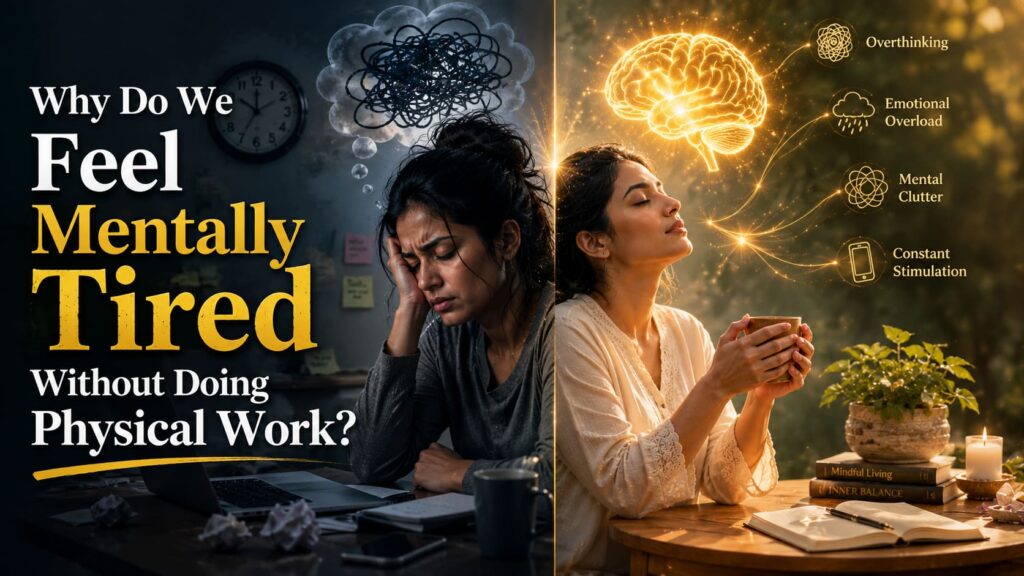
Why City Life Makes Us Tired Even After Sleep

Have you ever woken up after a full night’s sleep and still felt drained — not just physically, but from somewhere deeper inside? Your eyes open, the alarm stops ringing, yet your body feels heavy, your mind foggy, and your heart strangely unenthusiastic about the day ahead. You ask yourself:“Why am I so tired when I slept properly?” This exhaustion has become so normal in city life that we barely question it anymore. We blame age, workload, responsibilities, hormones, stress, or simply say, “This is how life is.” But the truth is — this tiredness is not natural. It is the quiet consequence of living a life disconnected from rhythm, nature, and grounding. City life does not just tire the body. It exhausts the mind, overwhelms the emotions, and slowly starves the spirit. Let us understand this — slowly, honestly, and deeply. The Modern Paradox: Sleeping More, Resting Less Sleep is supposed to heal us. It repairs cells, balances hormones, and restores energy. Yet in cities, sleep has become more of a pause than a repair. You may lie on a comfortable mattress, in an air-conditioned room, behind soundproof windows — but your nervous system rarely feels safe enough to truly rest. Even at night, the city whispers: Your body is still. Your mind is not. This is why city sleep often lacks depth. It is interrupted, light, and mentally active. Example:You sleep for 7–8 hours but wake up with stiffness in the body, heaviness in the chest, and a mind already racing through the day’s to-do list. That is not rest. That is survival-mode sleep. Physical Exhaustion: When the Body Is Always on Alert 1. Constant Sensory Overload Cities overstimulate us without pause. Honking horns, flashing billboards, crowded streets, artificial lights — the senses never get silence. The human nervous system was never designed for this level of stimulation. Over time, this leads to: The body remains slightly tense all the time — as if bracing for impact. 2. Artificial Living Environments In cities, everything is artificial: We spend most of our time indoors, disconnected from sunlight, fresh air, and natural cycles. This confuses the body’s internal clock. 3. Lack of Natural Movement In natural settings, movement is effortless and varied — walking on uneven soil, sitting on the ground, stretching naturally. In cities: The body becomes stiff, circulation slows, and energy stagnates. Mental Fatigue: The Mind That Never Switches Off 1. Constant Mental Noise City life demands continuous thinking: Even moments of rest are filled with scrolling, messages, and information overload. This results in: Example:You sit quietly, yet your mind jumps from one thought to another — replaying conversations, imagining worst-case scenarios, planning endlessly. The mind is exhausted, not because of effort, but because of never stopping. 2. Decision Fatigue From the moment we wake up, we make countless decisions — what to wear, what to eat, how to respond, where to go. By evening, the mind is simply tired of choosing. Emotional Burnout: Surrounded by People, Starved of Connection Cities are crowded, yet emotionally lonely. To cope, we suppress emotions and keep moving. Slowly, this creates: You may appear functional on the outside, yet feel empty within. Spiritual Exhaustion: Losing Touch With the Earth Beyond body, mind, and emotions lies another layer — spiritual health. Human beings are deeply connected to the earth. For thousands of years, we lived barefoot, close to soil, trees, rivers, and open skies. City life has quietly broken this bond. We now live: This disconnection creates a subtle but powerful imbalance — a feeling of being ungrounded. What Is Grounding (Earthing)? Grounding means direct physical contact with the earth — soil, grass, sand, water. When you: Your body exchanges energy with the earth. The earth carries a natural, stabilising electrical charge that helps calm the nervous system and release excess stress. Grounding is ancient wisdom — practiced intuitively by our ancestors. Why City Life Deprives Us of Grounding In cities: We live above the ground, not on it. Just like an electrical system without earthing overheats, the human system also becomes restless without grounding. This leads to: Signs That Your Body Is Craving Grounding These are not random signs. They are messages from your body. Why Nature Heals So Quickly Have you noticed how fast your body relaxes when you: Your breath deepens.Your shoulders drop.& Your mind softens. This is grounding happening naturally. Villages, Farms & Natural Spaces: The Forgotten Medicine Villages and farm spaces offer what cities cannot: Even a short stay can reset the nervous system. Example: Many people say, “I slept better than I have in years.” This is not coincidence — it is alignment. If You Cannot Leave the City, Start Small While regular escapes into nature are ideal, small practices help: These practices gently restore balance. Experiencing True Rest at Our Off-Grid Farm Stay At our off-grid farmhouse in Rajasthan, life slows down naturally. Here, you experience: Guests often share that they feel lighter, calmer, and deeply rested — not because of luxury, but because of reconnection. Final Reflection: You Are Not Lazy, You Are Disconnected If you feel tired even after sleep, pause before judging yourself. Your body may be asking for: Reconnecting with nature is not escapism. It is remembering who we are. Sometimes, healing does not require doing more — it simply requires coming back to the ground beneath your feet. Want to Experience This Kind of Rest for Yourself? If something within you resonated while reading this — the tiredness, the longing for silence, the need to slow down — perhaps it is time to experience it, not just read about it. Our upgraded off-grid farmhouse in Rajasthan is designed for exactly this purpose: to help you disconnect from city chaos and reconnect with nature, soil, silence, and yourself. If you would like to: You can reach out to us here: 🌿 Website: https://www.offgridrajasthan.com 📩 Email: offgridrajasthan2024@gmail.com 📞 Contact Number: +91- 9313175332 We will be happy to guide you and help you

Scroll to Top