

Have You Ever Picked Something and Eaten It Immediately?
Picture it. You are walking through a garden or a farm. There is a tomato right there, red and warm from the sun, sitting on the plant like it has been waiting. You reach out, pull it off, maybe wipe it on your shirt, smell it once, and bite into it.
Something happens in that moment. The taste seems sharper. The smell is fuller. Even if the tomato is not the most exceptional tomato you have ever eaten, the experience of it feels different from slicing a tomato from the fridge at home.
Why?
You could buy the same tomato from a market. It is not a rare ingredient. Nothing about it should be extraordinary. And yet something about picking it yourself, about that moment of going directly from plant to mouth, makes it feel like more than just eating a tomato.
The interesting question is not whether fresh food tastes better. The interesting question is why the experience of picking it changes the experience of eating it at all.
Maybe It’s Not Just the Food
We tend to think of taste as something that happens on the tongue. Sweet, salty, sour, bitter. The basics.
But the actual experience of eating is far more layered than that. Taste, as we experience it, is assembled from smell, texture, temperature, appearance, the surroundings we are eating in, what we expect the food to taste like, what we remember about eating it before, and the emotional state we are in when we eat it.
This means that when you pick a vegetable yourself, before the food has even reached your mouth, the experience has already begun. You have seen where it grew. You touched it while it was still on the plant. & You smelled it. & You made a small decision about when it was ready. & You carried it.
By the time you eat it, you are not tasting a vegetable in isolation. You are tasting a vegetable that comes attached to an experience. And the brain, which does not separate sensation from context as neatly as we might imagine, registers all of it together.
Freshness Really Does Play a Role
There is also a practical dimension to this. Some vegetables and fruits do change after they are harvested. Texture can soften. Moisture levels shift. Aroma compounds, many of which are volatile and do not last long after picking, begin to fade. The gap between harvest and eating can influence what the food is actually like when it reaches your mouth.
A tomato picked this morning and one that has been transported, stored, and sitting at room temperature for a few days are not identical foods. They may be the same variety. They may look very similar. But the experience of eating them can be different, particularly in terms of smell and texture, which both contribute significantly to how we perceive flavour.
This is not a claim that fresh food is always nutritionally superior, or that market food is somehow lesser. The relationship between freshness and nutrition is more complicated than that and depends on the specific food, how it was grown and stored, and many other factors. But when it comes to the sensory experience of eating, the time between harvest and plate does matter for many foods.
The difference between a vegetable you picked twenty minutes ago and one that has been traveling for three days is not just a marketing claim. It is, for many foods, a real difference in the eating experience.
Your Brain Is Also Eating
Here is where it gets genuinely interesting.
When food scientists and psychologists study how we experience flavour, they consistently find that the brain is constructing the experience rather than simply receiving it. Smell, which is processed through the olfactory system and has a direct connection to memory and emotion, contributes an enormous amount to what we perceive as taste. So does expectation. We taste things differently when we believe they are expensive, or homemade, or rare, or grown especially for us.
When you pick food yourself, you have been primed. You have seen the plant. You know exactly where this specific piece of food came from. & You have a small story attached to it before you have even eaten it. That story, those few minutes of walking, looking, choosing, and picking, becomes part of the sensory experience of eating.
You are not just tasting a tomato. You are tasting a tomato that you picked from a specific plant on a specific morning, in a place that smelled of soil and sun. The brain holds all of that together in the moment of eating, and the result is an experience that supermarket food, however good, simply cannot replicate.
Why Does Effort Make Food Feel More Special?
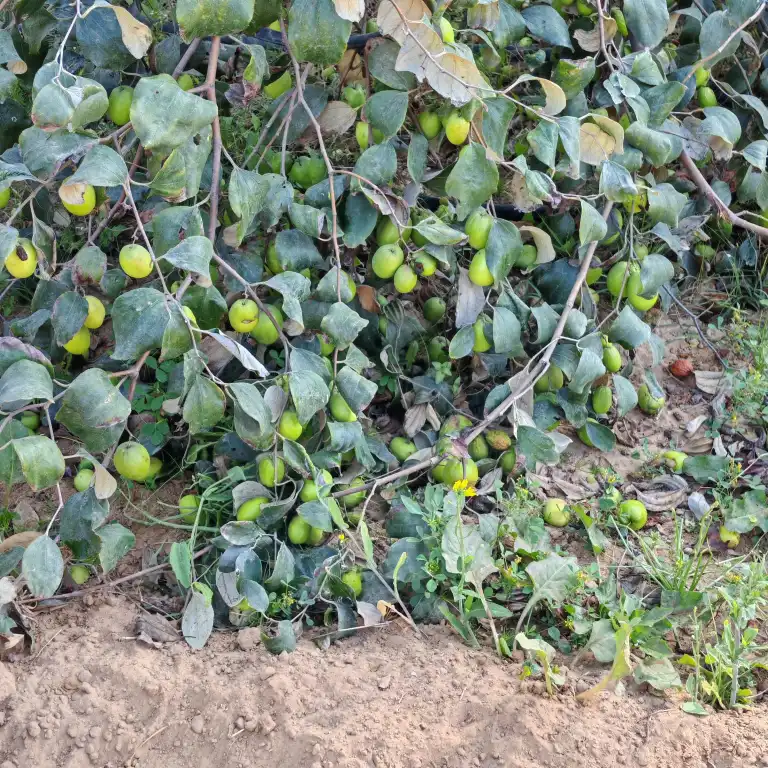
There is something that happens when we work for food, even a little. Buying a basket of vegetables is easy. Walking through a farm, finding the right one, pulling it from the plant, and carrying it back is a small amount of effort by any measure. But that small effort changes the relationship.
You have invested attention. You made choices. & You paid the kind of close physical attention to a vegetable that modern food consumption almost never asks for. And there is a quality of satisfaction in that, unrelated to the food itself, that colors the experience of eating what you worked for.
This is not a grand psychological claim. It is something most people have experienced in small ways: the meal you cooked yourself that tastes better than the same dish ordered in. The mangoes you went to the market for, early, before they were gone. The chai made exactly right, slowly, that tastes better than the one made in a hurry. Effort and attention change the relationship with food. Picking it is simply a more complete version of that same shift.
The Smell Before the First Bite
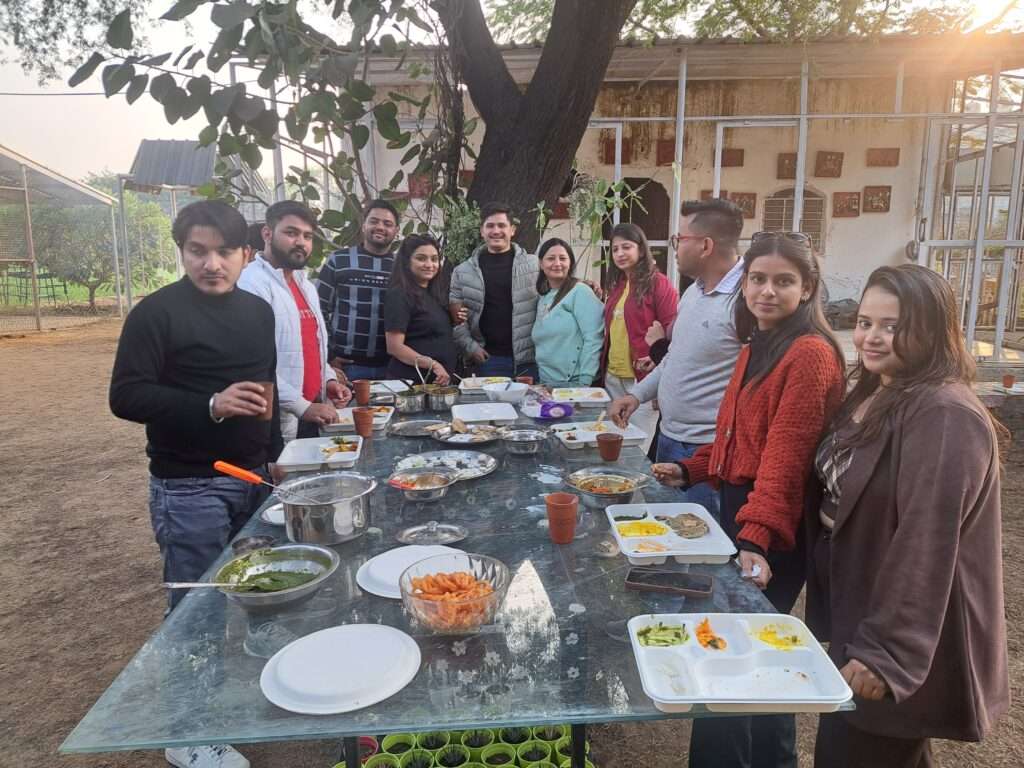
There is a particular smell to food that is still growing.
The leaves of a tomato plant have a sharp, green, slightly herbal smell that is completely distinct from the smell of the fruit itself. A cucumber just pulled from the vine has a cool, clean, faintly grassy smell that does not survive refrigeration. Fresh herbs, pinched off a plant and immediately smelled, have an intensity that dried versions approach but never quite reach.
When you pick food yourself, this is what you get before the eating even begins. You have the smell of the plant, the soil, the warmth of sun on the skin of the vegetable or fruit. You feel the weight of it in your hand, the texture of the skin, the slight give or firmness. And because smell is so closely linked to how we experience flavour, by the time you eat it, your palate is already engaged in a way that unwrapping food from packaging does not produce.
This is not nostalgia or romanticism. This is what the senses are actually receiving, and why the experience of picking and eating is, for many people, a genuinely different kind of eating.
Why Children Get So Excited About Picking Their Own Food
A child who will not eat vegetables at dinner will often eat something they picked from a plant twenty minutes ago, while still in the garden, before anyone has had a chance to cook it.
This is not simply because the food is fresher. It is because picking it made it theirs. They chose it. They decided it was ready. & They pulled it from the plant themselves. The abstract fact that vegetables come from farms has become, for a few minutes, concrete and personal and interesting.
This does not mean that a farm visit will automatically change a child’s eating habits or eliminate picky eating. Every child is different, and the relationship with food is complicated. But for many children, the distance between food and where it comes from is so complete that food has become a kind of product with no particular origin story. A farm collapses that distance. The carrot becomes real. The plant it came from becomes real. The soil it grew in becomes real. And somehow that reality makes the carrot more interesting than it was before.
We Know Where Food Comes From. Until We Actually Look.
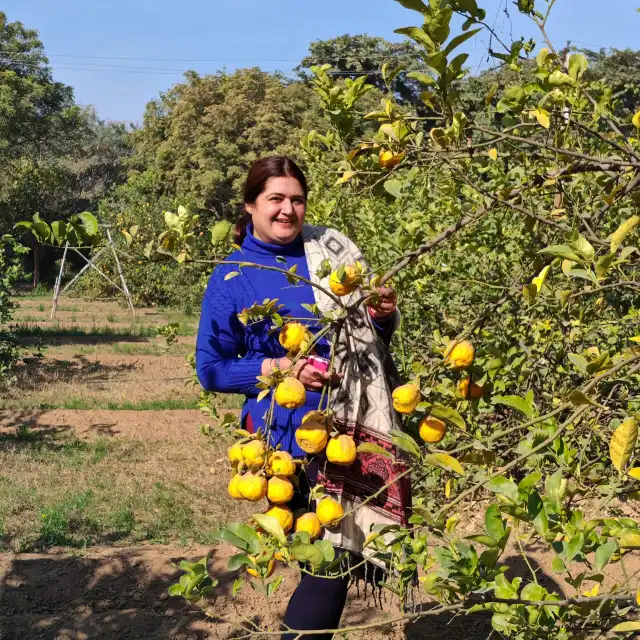
Most of us know, in an abstract way, that food comes from farms. That vegetables grow from seeds in soil. That fruit ripens on trees and vines. That someone harvests it, somewhere, before it travels to reach us.
But knowing this intellectually and having seen it are very different things. Modern food systems have created so many stages between the growing and the eating that most people encounter food only at the very last moment of its journey, cleaned, packaged, and entirely separated from the conditions of its origin.
Standing beside a plant and watching it grow something that you will eat changes that relationship in a way that reading about it does not. You see what a tomato plant actually looks like, how the fruit grows, what the plant smells like, how much attention went into what is in your hand. That is not a farming lesson. It is a small restoration of something that most people have never had a reason to notice was missing.
Most of us have spent our whole lives eating the end result of a journey we never witnessed. A farm is simply a place where you get to see a little more of that journey.
What If Dinner Came With a Story?
Farm-to-table is often treated as a food trend or a restaurant concept. But the actual idea is simpler than that. It is just eating food that comes with a shorter story between growing and eating, and sometimes knowing a little of that story.
“This is the tomato we picked this morning.” “This herb was growing by the garden entrance.” “These are the vegetables that came from the beds we walked through earlier today.”
That is a very different conversation at the table than one that never mentions where the food came from at all. The food is not necessarily better in some objective sense. But it is more present. It has a context. It exists in the meal as something that was somewhere specific, recently, and now it is here.
That quality of connection, knowing the small story of the food you are eating, turns an ordinary meal into something more memorable. Not because the food is extraordinary, but because the experience around it is.
Try This the Next Time You Eat Something
You do not need to visit a farm to try this. Choose any fruit or vegetable the next time you eat. Before you eat it, take thirty seconds.
- Look at it properly, not to assess it, just to actually see it
- Smell it, whatever it actually smells like before it is cooked or prepared
- Notice the texture in your hand
- Think briefly about where it came from and how long it traveled
- Take the first bite slowly and notice the flavour and texture before moving on
Then ask yourself honestly: did you experience the food differently when you gave it your full attention for thirty seconds before eating it?
Most people find that they did. Not because the food changed. Because they brought more attention to it than usual, and attention changes the experience of almost everything.
What Happens When You Actually Visit a Farm?
There is a difference between reading about where food comes from and standing beside a growing plant.
At Off Grid Rajasthan, a nature retreat and organic farmstay near Kotputli, Rajasthan, guests can spend time around the property’s organic growing spaces and experience the journey of food closer to where it begins. Walking through beds of growing vegetables. Seeing what a plant looks like at different stages. Understanding, through direct observation rather than description, what organic farming actually involves.
For families, this can be the kind of experience that makes food permanently more interesting to children. For adults, it is often the kind of grounding that a weekend away from a city schedule rarely provides: the specific, physical, sensory experience of being in a place where food is actually growing around you.
And when the meal comes, and the vegetables on the table are ones that grew a short distance from where you are sitting, the connection is real rather than conceptual. That tomato was on a plant this morning. This herb was picked before the meal began. The food has a story, and you were briefly part of it.
- Walk through organic growing spaces and see vegetables and herbs at different stages of growth
- Understand what organic farming involves through observation rather than explanation
- Experience the farm stay approach to food: grown nearby, eaten close to harvest
- Give children a direct and memorable encounter with where food actually comes from
- Sit down to a meal where the food has a story you were briefly part of
Plan your stay at Off Grid Rajasthan
www.offgridrajasthan.com
Maybe Food Doesn’t Need to Be More Exotic
We spend a lot of time looking for the next interesting ingredient, the new restaurant, the food trend that will make eating feel exciting again. Most of that search is horizontal: more options, more variety, more novelty.
But sometimes what makes food memorable is something simpler and more vertical: knowing where it came from. Picking it yourself. Eating it outside, in the place it grew, with people you like. Paying enough attention to the first bite to actually notice what you are tasting.
The food does not have to be extraordinary. The experience can be.
Maybe food doesn’t taste better simply because you picked it yourself. Maybe it feels better because, for once, you weren’t just eating the final product. You experienced the journey.
Frequently Asked Questions
Q1. Why does freshly picked food taste different?
Freshness influences texture, aroma, and moisture in many vegetables and fruits, all of which contribute to the overall eating experience. Some aroma compounds are volatile and fade after harvest. Beyond freshness, the context of picking food yourself, seeing where it grew, smelling it on the plant, handling it before eating, also shapes how the brain experiences the flavour. The experience of eating is assembled from more than just taste alone.
Q2. Is food picked directly from a farm healthier?
The relationship between freshness and nutrition is more complicated than a simple yes or no. Nutritional value depends on the specific food, its variety, how it was grown, and how it has been stored and handled. Freshness can affect the sensory qualities of food, particularly aroma and texture, without automatically making it nutritionally superior to food that has been stored properly. The sensory experience and the nutritional content are related but not identical.
Q3. What is a farm-to-table experience?
A farm-to-table experience simply means experiencing food closer to where it is grown and harvested, with a shorter and more visible journey between the farm and the plate. It can be as simple as eating vegetables that were picked the same morning, or walking through the growing spaces before a meal. The idea is less about a formal dining concept and more about restoring a connection between eating and the origin of what is being eaten.
Q4. Can children learn about farming during a farm stay?
A farm stay can give children a practical opportunity to see plants growing, observe what different crops look like at different stages, and understand where food actually comes from in a direct and tangible way. For many children who have only ever encountered food in supermarket packaging, seeing a vegetable on a plant is a genuinely surprising experience. A farm stay makes food real rather than abstract, which can make it more interesting.
Q5. Where is Off Grid Rajasthan located?
Off Grid Rajasthan is located near Kotputli, Rajasthan, accessible as a farm stay and nature retreat from Delhi NCR and surrounding areas.
Q6. What can guests experience at Off Grid Rajasthan?
Guests can spend time in the property’s open natural surroundings, explore the organic farming and growing spaces, experience farm-to-table meals made from produce grown nearby, and take time away from urban routines at a slower, more grounded pace. The experience is centered on proximity to growing food, outdoor time, and genuine connection with the natural environment rather than a structured activity itinerary.
Farmstay · Organic Living · Nature Retreat · Kotputli, Rajasthan