
The Science Behind Its Smell, Sound, Mood-Lifting Magic and Why We Shouldn’t Let Monsoon Pass Us By
The sky darkens. The first drops arrive on dust that has been waiting. The air shifts. The smell comes before you can even name it. And something in the body, before the mind has formed any thought, responds.
You are drawn to the window. Maybe you make chai without deciding to. You sit. You watch. & You breathe it in.
Most of us spend the monsoon checking traffic, watching weather apps, or rushing between buildings with an umbrella that is always slightly too small. Rain is happening outside. But are we actually there for it?
Why does rain affect us so deeply, and what is actually happening when it does?
Quick Answer: Why Do We Love Rain So Much?
Rain simultaneously engages multiple senses: the smell of wet earth (produced by compounds including geosmin), the rhythmic sound of water on different surfaces, cooler air, and visible changes in the landscape. For many people, rain also triggers autobiographical memory through its connection to smell. Research on natural environments suggests that sensory exposure to nature can support relaxation for many people, though individual experiences vary.
Rain Is a Full Sensory Experience
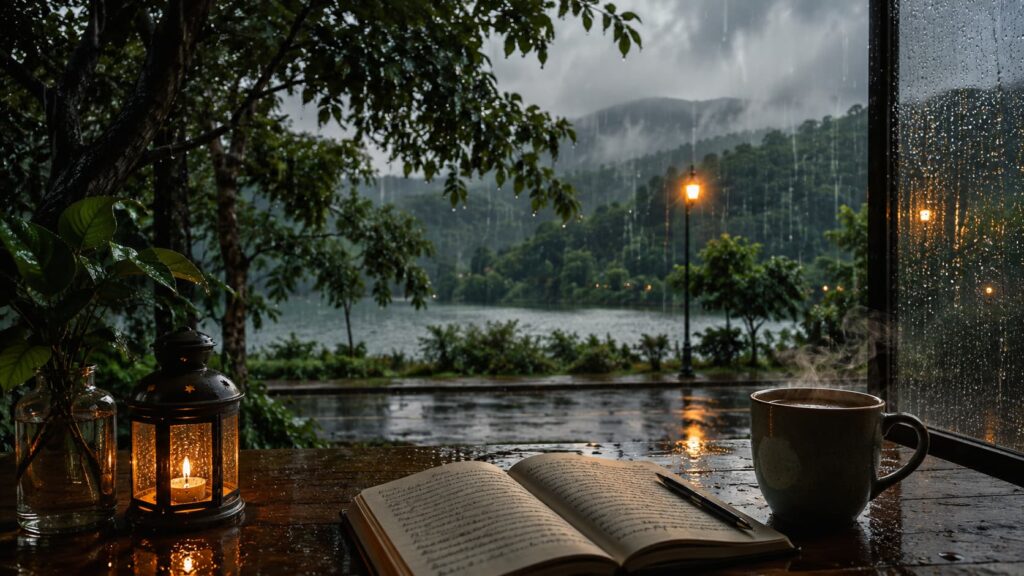
Rain does not announce itself through one sense. It arrives through all of them at once.
- What you see: darkening clouds, moving water, leaves turning deeper green, reflections appearing on dry stone
- What you hear: drops on different surfaces, each producing a different sound, rain on leaves, on a tin roof, on soil
- What you smell: the compound scent of wet earth arriving seconds before the full rain
- What you feel: cooler air on skin, humidity rising, the particular quality of a breezier atmosphere
- The rhythm: rain creates a natural, non-repeating pattern of sound that many people find genuinely absorbing
This combination of sensory change, arriving suddenly and completely, may be why rain feels so different from most ordinary weather.
The Smell of Rain: What Is Actually Happening?
Petrichor and Geosmin
The word petrichor was coined in 1964 by Australian researchers Isabel Joy Bear and Roderick Grant Thomas in a paper published in Nature. It describes the scent produced when rain falls on dry earth.
One of its primary contributors is geosmin, an organic compound produced by soil bacteria including Streptomyces. Research published in Nature Communications (2017) described how Streptomyces release spores that may carry geosmin into the air, particularly when raindrops disturb the soil surface. The human nose is extraordinarily sensitive to geosmin at very low concentrations.
Raindrops also interact with porous surfaces and trapped air to release a mixture of compounds from soil and vegetation, contributing to the complex scent many people recognize as the smell of rain.
Why Smell Triggers Memory So Powerfully
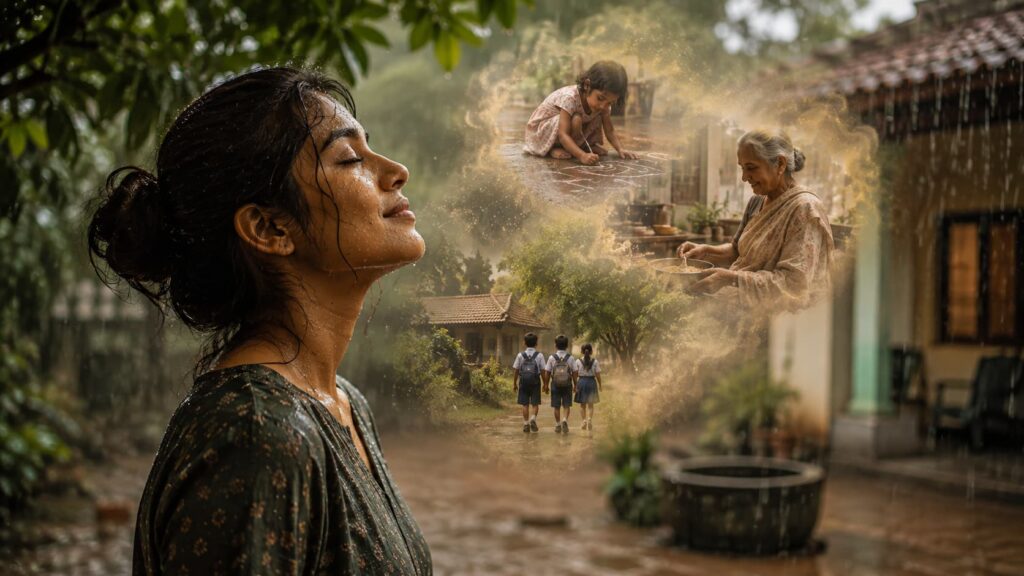
Smell is processed through the olfactory system, which has a more direct anatomical connection to the hippocampus and amygdala than any other sense. These brain regions are central to memory formation and emotional response. Research in cognitive neuroscience consistently notes that olfactory-triggered memories tend to be particularly vivid and emotionally charged (Herz and Engen, 1996, Chemical Senses).
This is why petrichor does not just smell like wet earth. For many people, it smells like childhood, like a grandmother’s courtyard, like school, like home. The smell itself is a trigger, and what it retrieves is often something felt rather than thought.
Why Does the Sound of Rain Feel So Comforting?
Research suggests that natural soundscapes can influence stress-related physiological responses. A study published in Scientific Reports (Gould van Praag et al., 2017) found that listening to natural sounds was associated with changes in autonomic nervous system activity and reduced self-reported stress, though results varied between individuals.
Rain produces a layered, non-repeating natural sound pattern. On leaves, on rooftops, on water surfaces, each producing a slightly different texture of sound that shifts with the wind. For many people, the steady rhythm of rain creates an auditory environment in which the mind can settle, not because it is silent but because it is consistently present without demanding a response.
Rain does not ask you to pay attention to any single thing. It simply fills the background with something real.
Why We Love Watching Rain
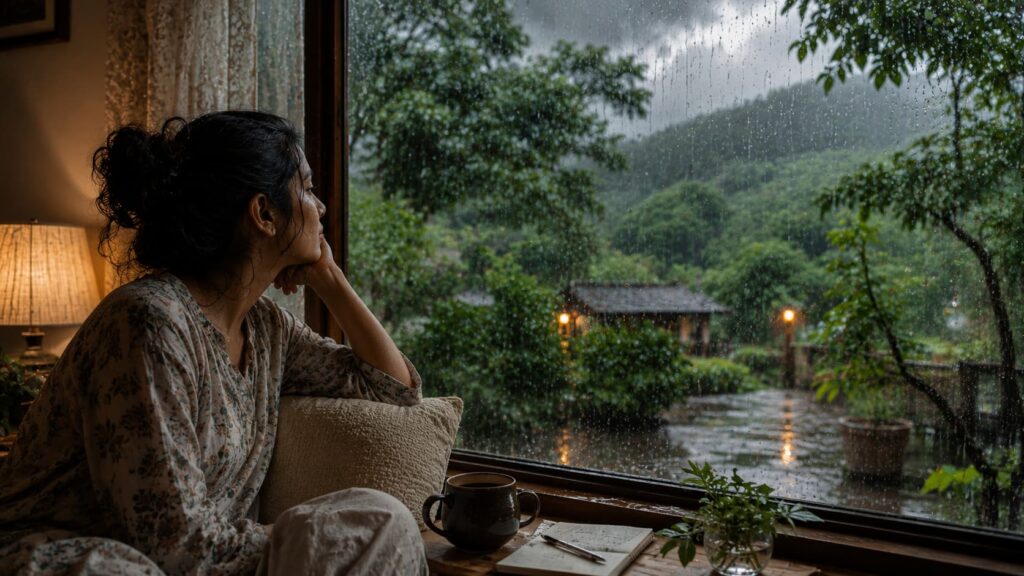
Watching rain involves what environmental psychologists Rachel Kaplan and Stephen Kaplan described as soft fascination: effortless, gentle attention that does not deplete the directed attention system the way work and screens do (Kaplan, 1995, Journal of Environmental Psychology).
The moving water, the darkening earth, the brighter green of leaves after the first drops, the reflections forming on stone: these provide changing visual information that the eye follows without effort. There is nothing to evaluate or decide. The attention rests while remaining engaged.
Why Rain Makes Us Want to Slow Down
Rain shifts the social permission for stillness. It becomes acceptable to sit near a window. To make chai without rushing, To read, To watch, To have a conversation that goes longer than it needed to. & To simply be somewhere rather than doing something.
Perhaps one reason we love rain is that it gives us permission to pause. And permission to pause is something modern life rarely grants voluntarily.
Why Rain Makes Us Nostalgic
What does rain remind you of? The question tends to produce very specific answers.
The smell of wet soil and a grandmother’s garden. Pakoras appearing in the kitchen without any announcement. School holidays with the particular combination of boredom and freedom. Walking home in rain that was heavier than expected and somehow this was fine. A family evening where nobody went anywhere because rain had made staying-in feel like the right choice.
These memories are personal and specific to each person. The mechanism behind them is consistent: the olfactory system’s strong connection to memory and emotion means that sensory experiences associated with significant moments in early life can be recalled with particular vividness when the same sensory trigger returns.
Why the First Rain Feels Especially Significant
The contrast matters. After weeks or months of dry heat, the first drops carry the weight of everything that was waiting. The sky has been building. The air has been thick. The earth has been parched.
Then: clouds, a drop in temperature, the smell of geosmin rising from dry soil, and the first rain. The contrast between the dry period and the arrival of water makes the sensory experience particularly intense. In India, the arrival of the southwest monsoon has been culturally and economically significant for centuries, reflected in classical music, poetry, agriculture, and the emotional calendar of daily life.
Rain Transforms the Landscape. Including Rajasthan.
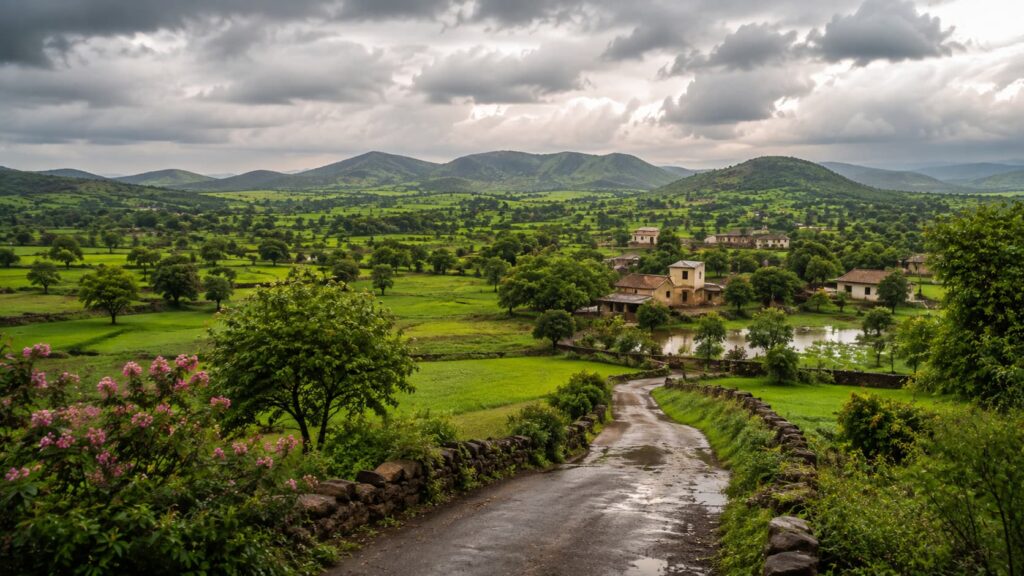
Monsoon changes what is visible. Plants respond visibly to water. Insects appear. Birds become more audible. The colour of the landscape shifts from ochre and dust to something greener and more alive.
Rajasthan is commonly associated with desert, heat, and dry landscape. But the monsoon reveals something different: wide open skies filling with clouds, fields turning green, the smell of wet red earth, birdsong in places that were quiet for months. In the rural countryside around Kotputli, Rajasthan, the monsoon transforms the character of the place entirely.
The landscape that looks one way in April looks something quite different in August. Many people who have experienced Rajasthan only in summer have not seen the state at its most unexpectedly vivid.
Are We Too Busy to Actually Experience the Monsoon?
The rain may be falling outside the office window, or behind the windscreen, or past the air-conditioned room where the meeting is happening. Notifications are arriving. Deadlines are close. Traffic is building. The umbrella comes out automatically.
Many of us experience the monsoon through secondary contact: the app, the traffic report, the Instagram photograph taken through a car window. The rain falls. We register it as weather.
The question is whether we are actually there to experience it.
A 20-Minute Monsoon Ritual
No productivity. No posting. & No pressure. Just experiencing.
- Put your phone away
- Find a safe, covered place with a view of the rain
- Listen to the rain for five minutes without doing anything else
- Notice the smell of wet earth
- Observe the trees, the sky, and the changing light
- Take several slow, deliberate breaths
- Have tea or another warm drink
- Write down one memory the rain brought back
Note: avoid standing in open spaces during thunderstorms, lightning, or conditions involving risk of flooding. Experience rain from a safe, covered position.
Experience the Monsoon at Off Grid Rajasthan
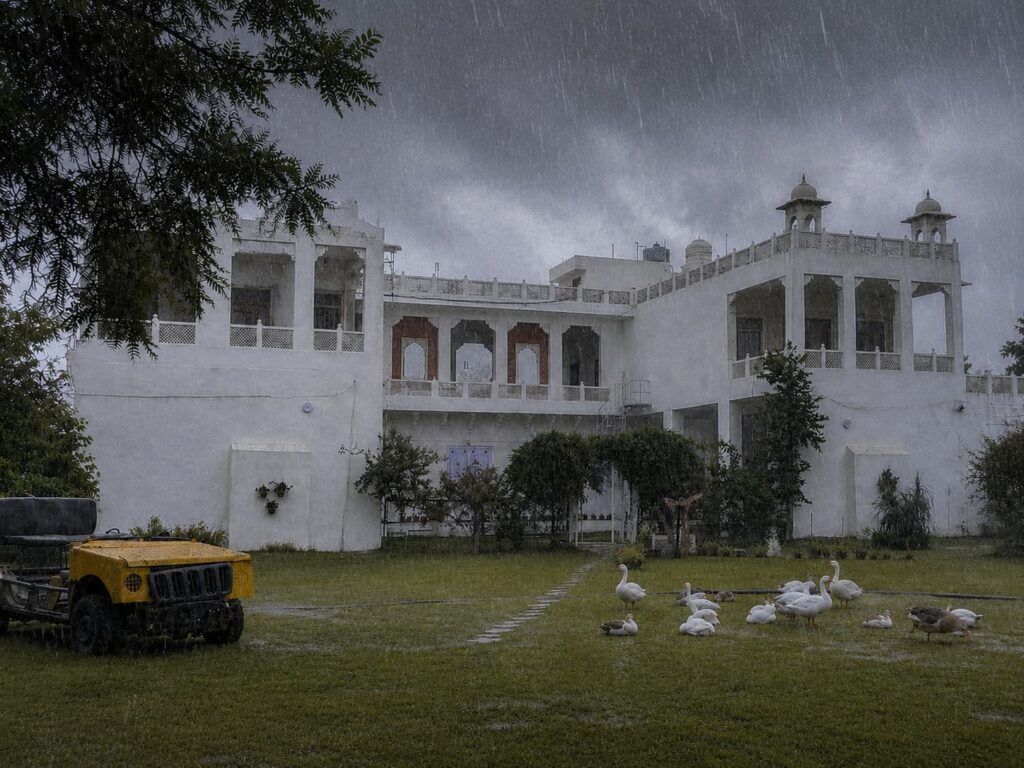
Off Grid Rajasthan is located in Kotputli, Rajasthan. During the monsoon season, the surrounding countryside changes character: open skies fill with cloud, the fields turn green, and the air carries the particular quality that arrives only after rain has fallen on dry Rajasthani earth.
Waking to rain on the roof. Sitting with chai while watching clouds move across an open sky. The smell of wet soil a few steps from where you are sitting. Birds that only appear in the monsoon. Conversations that happen slowly because there is no particular hurry.
This is not a medical retreat or a claim about what the monsoon will do for anyone’s health. It is a nature-based setting that offers something many people rarely experience during the season: genuine unhurried time in the middle of it.
- Open countryside in Kotputli, Rajasthan, with the monsoon sky directly overhead
- Organic farm-fresh meals eaten slowly, without screens
- Mornings that begin with rain or birdsong rather than notifications
- Space to sit, watch, breathe, and experience the season as it is actually happening
Plan your monsoon stay at Off Grid Rajasthan
Create Your Own Monsoon Memory This Season
Don’t let this monsoon become another season you remember only through photographs. Make one intentional memory this year.
- A rainy morning with tea and a conversation that has nowhere else to be
- Sitting at a window and watching until the rain stops, however long that takes
- A walk after the rain, while the earth still smells of it
- A visit to somewhere that lets you be inside the season rather than watching it pass
The Rain Will Fall Either Way
The rain will fall whether we stop to notice it or not. The geosmin will rise from the soil. The clouds will build and break. The birds will respond. The landscape will change.
The science behind it is real: smell triggers memory through neural pathways that connect olfaction directly to the brain’s emotional and autobiographical memory systems. Natural sounds can shift physiological states. Nature provides a quality of sensory engagement that allows the attention to rest rather than constantly perform.
And behind all of that: the rain is simply beautiful. It asks nothing from us except that we be there for it.
The question is whether you will be there to experience it.
Frequently Asked Questions
Q1. Why do we love the smell of rain?
The smell of rain on dry earth is largely produced by compounds including geosmin, released by soil bacteria such as Streptomyces when rain disturbs the soil surface. Humans are remarkably sensitive to geosmin at very low concentrations. The smell also triggers autobiographical memory through the olfactory system’s direct connection to the hippocampus and amygdala, the brain regions central to memory and emotion.
Q2. What is petrichor?
Petrichor is the term coined by Australian researchers Bear and Thomas (Nature, 1964) to describe the distinctive scent produced when rain falls on dry earth. It results from a mixture of compounds including geosmin, plant oils, and aerosols released when raindrops interact with porous surfaces and soil. It is one of the most widely recognized and emotionally evocative natural scents.
Q3 .Why does rain sound relaxing?
Research suggests natural soundscapes can influence autonomic nervous system activity and self-reported stress for many people (Gould van Praag et al., Scientific Reports, 2017). Rain produces a layered, non-repeating natural sound pattern across different surfaces. For many people, this consistent but non-demanding auditory environment creates conditions in which the mind can settle, though responses vary between individuals.
Q4. Why does rain make us nostalgic?
Smell, the primary sensory component of rain, is processed through the olfactory system, which has a more direct connection to the hippocampus and amygdala than any other sense. These regions are central to memory and emotional response. Olfactory-triggered memories tend to be particularly vivid and emotionally charged, which is why the smell of rain can retrieve specific, detailed memories from childhood or the past.
Q5. Why does the first rain smell so strong?
The first rain after a dry period is particularly intense because dry soil contains accumulated organic matter and dormant bacterial spores. When rain arrives, it disturbs the surface and releases geosmin and other compounds that have been building up during the dry period. The contrast after prolonged dryness also heightens the sensory response, making the first rain feel especially dramatic.
Q6. Is spending time in nature good for mental well-being?
Research consistently finds associations between time in natural environments and reduced stress-related physiological markers, improved mood, and restored attentional capacity. Attention Restoration Theory (Kaplan and Kaplan, 1995) proposes that natural environments engage a gentle form of attention that allows directed attention to recover. Individual experiences vary, and nature is not a treatment for clinical conditions.
Q7. What can you do during monsoon to slow down and relax?
Simple practices include: sitting near a window and observing the rain without distraction, making a warm drink and drinking it slowly, writing down a memory the rain brings back, taking a walk after rain while the smell of wet earth remains, spending time outdoors in a safe covered space, and deliberately setting aside phone and screen time for the duration of the rainfall.
Q8. What is special about experiencing monsoon in Rajasthan?
Rajasthan is commonly associated with dry heat and desert landscape. During monsoon, the countryside changes visibly: open skies fill with cloud, fields turn green, and the air carries the scent of wet red Rajasthani earth. In rural areas such as Kotputli, the contrast between the dry season and the monsoon reveals a very different and unexpectedly vivid side of the region.
Farmstay · Organic Living · Nature Retreat · Kotputli, Rajasthan