
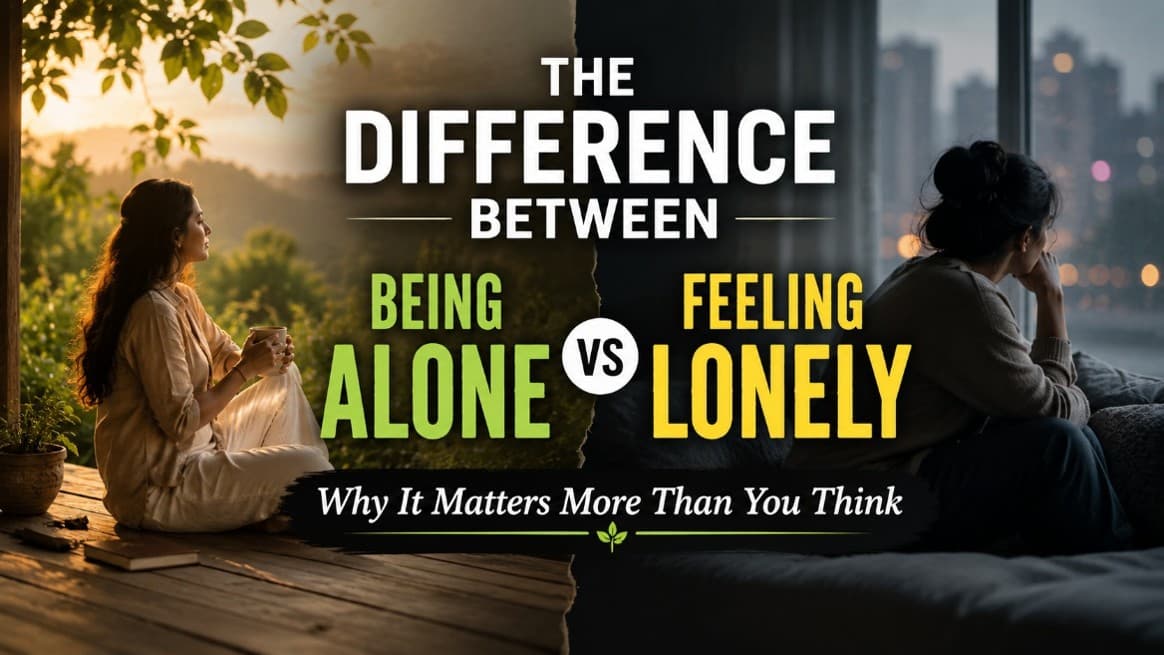
Why Solitude Can Heal You While Loneliness Can Hurt, and How Nature Helps You Rediscover Yourself
Quick Answer
Being alone describes a physical situation: the absence of other people. Loneliness is an emotional experience: the feeling of being disconnected, unseen, or unheard, regardless of how many people are nearby. Solitude, when freely chosen, can support reflection, creativity, and emotional renewal. Research consistently shows that meaningful relationships remain essential to well-being, and that time in nature can meaningfully support emotional health alongside human connection.
Have You Ever Felt Lonely in a Crowded Room?
Picture a family gathering. The room is full. There is food, there is noise, there are people who have known each other for decades. And yet, somewhere in the middle of it, a person can feel profoundly, quietly alone. Not because nobody is speaking to them. But because nobody is quite seeing them.
Or consider the open-plan office. Desks close together, conversations overlapping, a constant hum of activity. A person can sit in the middle of all of it and feel invisible, present in the room but absent from it in some deeper way that is hard to name.
Then there is the scroll. Late at night, phone in hand, moving through image after image of other people’s lives, other people’s celebrations, other people’s ordinary Tuesdays. A person surrounded by digital connection, feeling more alone with every swipe.
How can someone be surrounded by people and still feel lonely? The answer lies in a distinction that is simple to state and surprisingly easy to lose sight of in the middle of modern life.
Being alone and feeling lonely are not the same thing. Understanding the difference between them may be one of the most quietly important things we can do for our emotional well-being.
What Does It Mean to Be Alone?
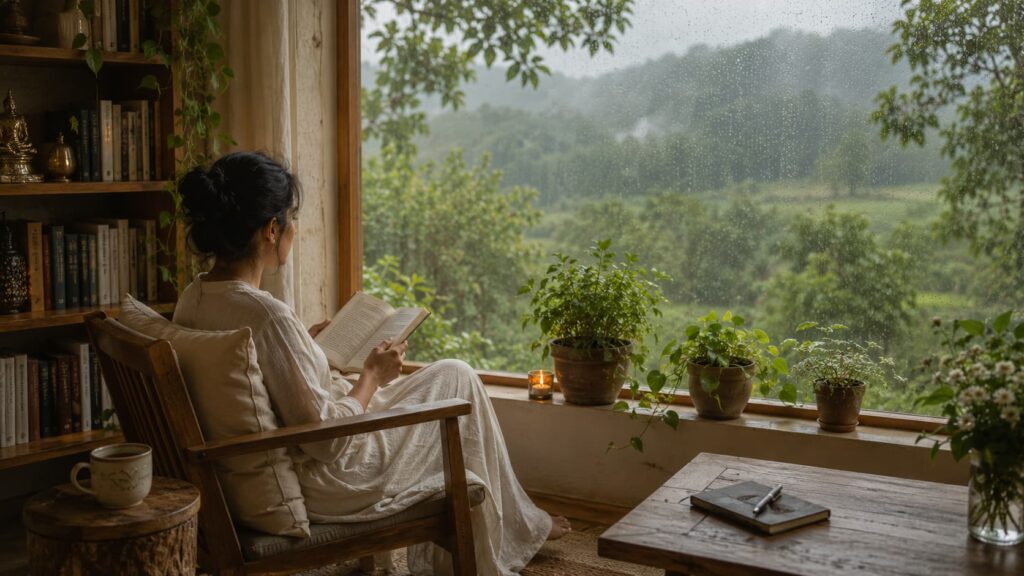
Being alone is simply a circumstance. It describes a physical situation: the absence of other people in the immediate environment. And on its own, that circumstance is neither good nor bad. It is neutral. What shapes the experience is not the aloneness itself, but how it is felt.
Many people describe their most peaceful moments as ones spent alone: reading in a quiet room on a rainy afternoon, tending a garden in the early morning, walking through an open landscape with no particular destination, sitting with a cup of tea and watching the light change. These are moments of solitude. They are chosen, comfortable, and genuinely nourishing.
Solitude is aloneness that has been inhabited rather than endured. It is the state of being with oneself in a way that feels like company rather than abandonment. Writers and artists have sought it deliberately for centuries. Scientists, philosophers, and spiritual traditions across cultures have recognized it as a condition necessary for a particular kind of thinking and feeling that crowds cannot accommodate.
Being alone is about where you are. Solitude is about how you feel while you are there.
Chosen solitude is not a withdrawal from life. It is a particular way of engaging with it: slower, quieter, and turned inward in ways that the presence of others often makes impossible.
What Is Loneliness?
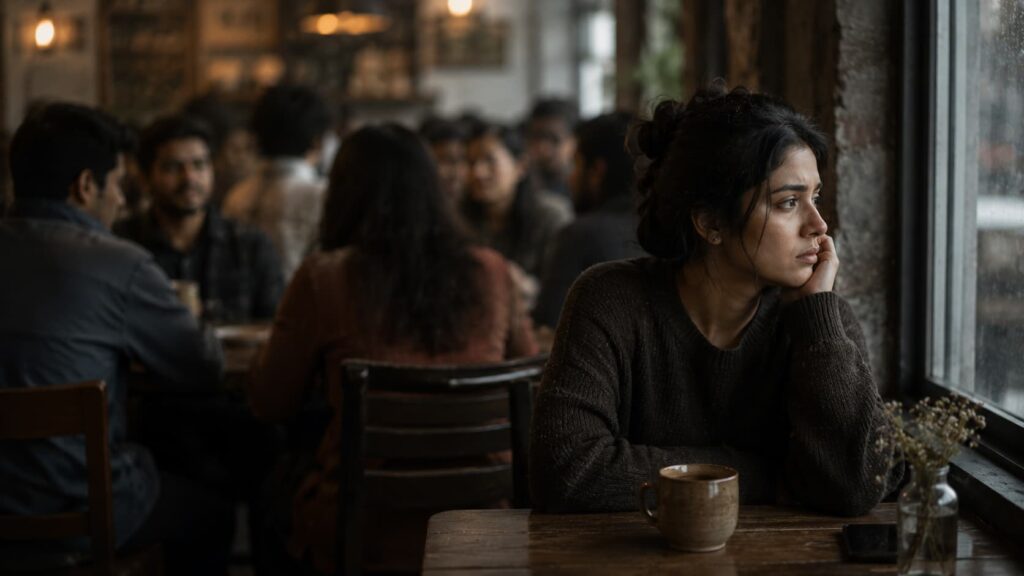
Loneliness is not about the number of people present. It is about the quality of connection, or more precisely, the felt absence of it.
A person can feel lonely in a marriage where conversations have thinned into logistics. In a classroom where nobody quite understands them. In a family where love is present but real understanding is rare.& In an office full of colleagues with whom the relationship stays permanently on the surface.
Loneliness is the experience of feeling unseen, unheard, or disconnected from the people around us, regardless of their physical proximity. It is the gap between the connection we have and the connection we need.
Social media makes this particularly complex. Online, a person can have hundreds of followers, post regularly, receive comments and reactions, and still feel profoundly alone. Because the interaction, however frequent, does not carry the weight of genuine presence. It is connection that satisfies the eye but not the deeper need for being truly known.
Why Are So Many People Feeling Lonely Today?
Loneliness is not a new human experience. But its scale in the current moment is drawing serious attention. The World Health Organization has identified social isolation and loneliness as significant concerns for global health. The U.S. Surgeon General’s 2023 advisory on loneliness described it as an epidemic with measurable consequences for physical and mental well-being.
Several features of modern life appear to be contributing to this.
Remote work has removed the incidental human contact that offices once provided: the brief exchange in the corridor, the shared lunch, the small moments of presence that were never dramatic but were, it turns out, meaningful. Busy schedules leave little room for the slow, uninterrupted conversations that create genuine closeness. Families are smaller and more geographically dispersed. People move more often and build community less easily.
And then there is the particular dynamic of constant digital connection combined with reducing face-to-face depth. Notifications arrive continuously, but they rarely ask for the kind of sustained, undivided attention that makes another person feel truly received.
We have never been more connected digitally, yet many people feel less connected emotionally. The two kinds of connection are not interchangeable.
The Science Behind Loneliness
Research consistently shows that meaningful social connection is important to human well-being. Studies published in journals including the American Journal of Psychiatry and findings referenced by the American Psychological Association indicate that prolonged loneliness is associated with elevated stress, disrupted sleep, and reduced sense of purpose and belonging.
Loneliness activates the brain’s threat response in ways that are similar to physical pain: the body treats social disconnection as something requiring attention and resolution. This is not a personal weakness. It is the predictable response of a social species to the felt absence of the connection it was built for.
It is important to note that these findings describe patterns across populations. Loneliness exists on a spectrum and affects individuals very differently. And research also shows that a small number of close, meaningful relationships can be more protective than a large number of shallow ones. The quality of connection matters more than the quantity.
None of this should be read as alarming. It is simply a clear argument for taking the felt experience of loneliness seriously, rather than dismissing it or assuming it will resolve on its own.
Why Solitude Can Actually Be Good for You
Given what we know about the importance of social connection, it might seem paradoxical to suggest that time alone is also valuable. But the research supports both things simultaneously.
Chosen solitude, the kind sought rather than suffered, is associated with increased creativity, clearer thinking, emotional regulation, and a greater sense of self-awareness. It provides the conditions in which the mind can process what it has experienced, rather than continuously adding new input to an already full system.
This is why people who paint, write, meditate, garden, walk, or journal often describe these solitary activities as restorative rather than isolating. The activity itself matters less than the quality of the internal state it produces: a quieter mind, a more settled sense of self, a return to something that feels like the person’s own perspective rather than a response to external demands.
Loneliness drains us because it feels like disconnection. Solitude restores us because it creates reconnection: with ourselves.
The key distinction is agency. Solitude chosen feels very different from aloneness that has been imposed. When time alone is a conscious decision, arrived at from a place of security, it nourishes. When it is a circumstance that feels inescapable or unwanted, it depletes. The same external situation can be experienced as either, depending on the internal relationship to it.
Why Nature Makes Solitude Feel Different
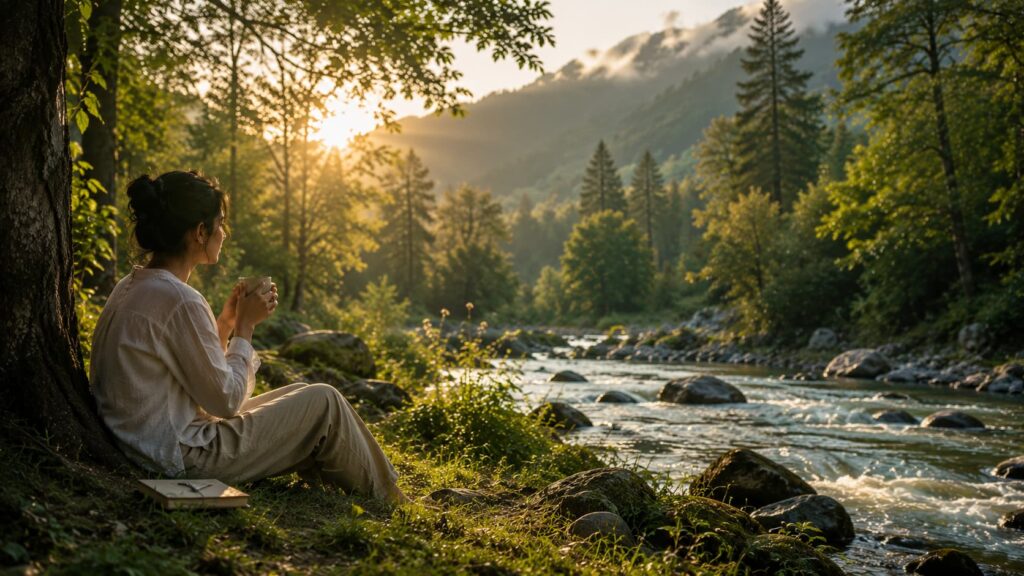
There is something specific that happens in natural environments that does not happen in the same way indoors or in urban settings. Research by environmental psychologists Stephen Kaplan and Rachel Kaplan, developed into what is called Attention Restoration Theory, suggests that natural environments gently engage a kind of effortless attention that allows the directed attention we use for work and problem-solving to recover.
In plain terms: the mind in nature is not idle, but it is not working hard either. It is engaged but not strained. Watching clouds move, listening to birdsong, observing the way light falls through leaves: these draw the attention lightly and without demand. The mental fatigue that accumulates from hours of concentrated screen-based work quietly begins to lift.
This is part of why people who spend time outdoors often report feeling more emotionally settled afterward, even when they have not done anything specifically therapeutic. The environment itself has been doing something.
Nature doesn’t ask you to perform, impress, or compare. It simply invites you to be present.
Rain on leaves. A sunrise moving through its full sequence of colour. Wind through tall grass. Birds going about their ordinary morning. These things do not make demands. They offer something instead: the experience of a world that is alive and moving and entirely indifferent to the contents of your inbox. That indifference, in the gentlest possible sense, is a relief.
Research also supports the idea that exposure to natural environments is associated with reduced markers of stress, including lower cortisol levels and reduced blood pressure. A 2019 study published in Frontiers in Psychology found that as little as twenty minutes in a natural setting produced measurable reductions in cortisol. These are not cure-all findings, but they point consistently in the same direction: nature supports emotional well-being in ways that are real, if not dramatic.
What Nature Can Teach Us About Connection
There is a different kind of understanding that time in nature sometimes produces, one that does not come from conversation or explanation.
Trees in a forest are connected through root systems and fungal networks that exchange nutrients and signals across distances. Birds coordinate in flight without any apparent leader. Rivers shape the land around them over centuries and are shaped by it in return. The seasons arrive, shift, and depart in a rhythm that nothing disrupts and no amount of urgency can accelerate.
Spending time in nature does not teach these things through information. It shows them through experience: the experience of being part of something that was here long before us and will continue long after, something in which our particular anxieties have very little bearing on the overall movement of things.
Connection does not always require conversation. Sometimes it requires only belonging: the felt sense of being part of something larger than oneself. Nature can provide that in a way that is quiet but genuinely real.
Five Gentle Ways to Feel Less Lonely
These suggestions are not prescriptions. They are small, realistic shifts that many people find make a genuine difference over time.
1. Spend Time Outdoors Every Day
Even briefly. A ten-minute walk in the morning before the day’s demands begin. A few minutes in a garden or on a balcony. The point is not exercise or productivity. It is the simple act of placing the body in natural light, natural air, and a slightly slower environment. Done regularly, it creates a small but consistent anchor to the physical world outside the screen.
2. Call One Person Instead of Scrolling
Social media gives the feeling of connection without the substance of it. When loneliness is present, the instinct to scroll is understandable but tends to make things worse rather than better. Choosing one actual conversation, a phone call, a walk with someone, a meal shared in person, provides something the feed cannot: the experience of being received by another human being who is actually paying attention.
3. Eat One Meal Without Screens
This sounds simple, and it is. But the practice of eating a meal without a screen present, tasting the food, noticing the room, or sharing the table with someone in an unhurried way, creates a small pocket of presence in a day that is otherwise usually divided. Over time, these pockets accumulate into a different relationship with daily experience.
4. Keep a Gratitude or Reflection Journal
Writing, even briefly and without any particular skill, is a form of solitude that creates genuine self-company. A few sentences each evening about what was noticed, what was felt, what was appreciated, builds the habit of turning toward one’s own inner life rather than away from it. This is not therapy, but it is a practice that many people find quietly stabilizing.
5. Create Small Daily Rituals
A ritual is different from a routine in that it asks for presence. The morning tea drunk slowly outside before anything else begins. The ten-minute walk taken at the same time each day. The moment of quiet before sleep, without a screen, where the day can settle before ending. Small rituals create structure that the nervous system recognizes as safe, and they create moments that belong fully to the person doing them.
Rediscover Connection at Off Grid Rajasthan
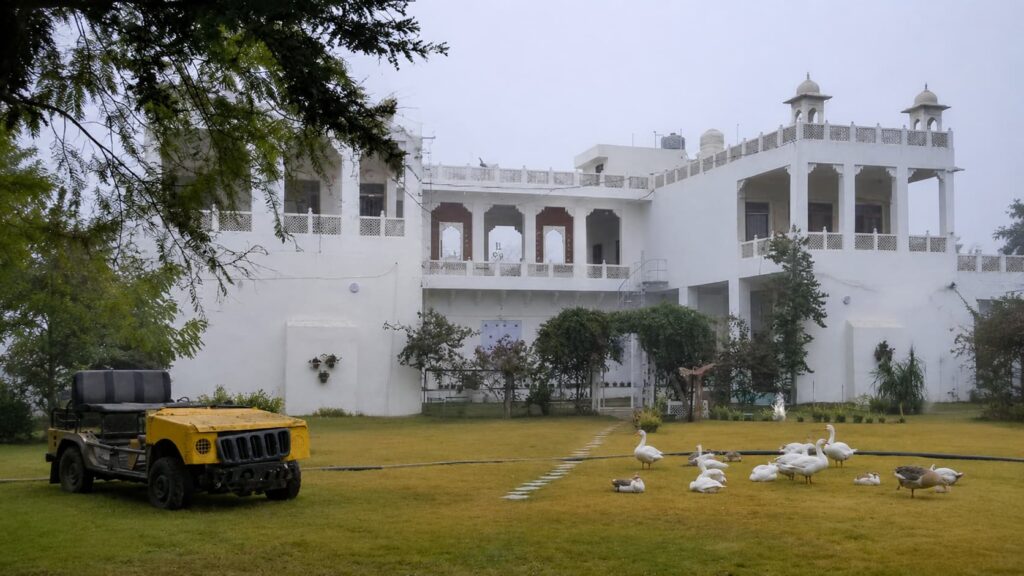
At Off Grid Rajasthan, we believe that stepping into nature is not about escaping life. It is about creating space to reconnect: with yourself, with the people you care about, and with the quieter rhythms that modern life often leaves behind.
The farm sits in the open countryside of Village Kotputli, away from city noise and artificial light. It runs on solar power and rainwater. Meals are made from organic produce grown in the surrounding soil. The mornings begin with birdsong. The evenings end under stars that the city does not show clearly.
People come here alone, to walk and read and think without the usual demands pressing in. Families come to share meals and mornings in a way that the ordinary week rarely allows. Friends come to have the longer, slower conversations that feel impossible when everyone is always somewhere else to be.
There is no agenda here, no itinerary to complete. There is a verandah, a field, a working farm, open sky, and the particular quality of time that appears when nothing is scheduled and nothing is urgent.
- Quiet mornings with birdsong and organic farm-fresh tea
- Nature walks through open Rajasthani countryside at a genuine pace
- Shared meals eaten slowly, without screens, with people who are actually present
- Stargazing under skies undiminished by city light
- The kind of conversation that only happens when nobody is in a hurry
- A few days that feel genuinely different from everything around them
Plan your stay at Off Grid Rajasthan
A Final Reflection
The difference between being alone and feeling lonely is not a small one. It is the difference between a quiet morning that restores and an evening that depletes. Between solitude that produces clarity and isolation that produces ache. Between chosen stillness and the particular sadness of feeling invisible in a room full of people.
Neither experience is fixed. The person who feels lonely in a crowd can learn to feel less so. The person who fears solitude can come to appreciate what it offers. These are not destinations to reach permanently but qualities to tend, like any other part of a life that requires attention.
- When did you last feel genuinely at ease in your own company?
- Who in your life makes you feel truly heard, and when did you last spend unhurried time with them?
- What would a single day look like if you designed it around connection rather than productivity?
Are you truly alone, or have you simply forgotten how to reconnect: with yourself, with others, and with the world around you?
The answer, for most of us, is somewhere in the middle. And the middle is a very good place to begin.
Off Grid Rajasthan
Farmstay · Organic Living · Nature Retreat · Rajasthan