Offgrid Rajasthan

Hydroponics

Blogs, Homestay, Hydroponics, Nurcery, Organic Farming

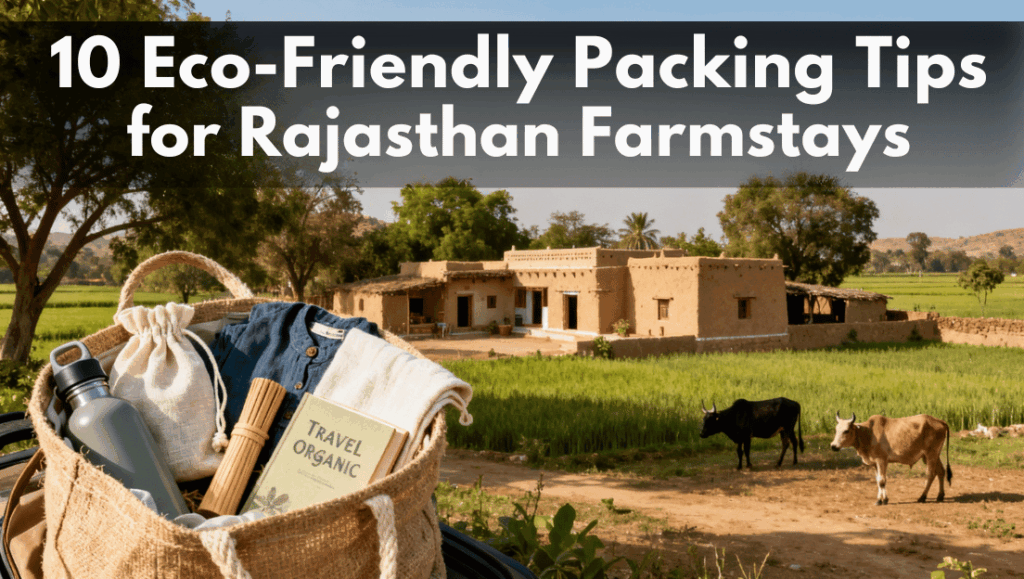
10 Eco-Friendly Packing Tips for Rajasthan Farmstays

Mindful Travel for the Dry Lands of Kotputli, Rajasthan Staying at a farmstay in Rajasthan is fundamentally different from staying in a city hotel. In regions like Kotputli, life unfolds at a slower, more eternal pace—not by choice alone, but by necessity. Rainfall here is limited and unpredictable. Summers are long and intense. Farming depends on careful planning, traditional wisdom, and crops that can survive dry soil and harsh sunlight. Every daily decision—from how water is used to what is grown in the fields—is shaped by these realities. When you visit a place like OFFGRID RAJASTHAN, you step into a way of life where sustainability is woven into routine living. Water is reused thoughtfully. Energy is conserved. Food is grown with patience, not excess. Nothing is wasted casually. That is why eco-friendly travel in Kotputli does not begin after you check in. It begins much earlier—with what you choose to pack. Packing thoughtfully is a quiet but powerful act. It helps protect local resources, supports traditional farming and living practices, and allows you to experience Rajasthan as it truly is, rather than as a tourist bubble. When your belongings align with the land you’re visiting, your stay becomes more respectful, more meaningful, and far more enriching. Below is a detailed guide to packing responsibly for a farmstay in Kotputli and other dry regions of Rajasthan, where mindful living is not a concept, but a daily discipline. 1. Carry Reusable Water Bottles Water Is Limited and Carefully Used Kotputli lies in a semi-arid zone. Water comes mainly from rainwater harvesting and groundwater, both of which are closely monitored. When visitors rely on packaged water bottles, plastic waste increases and water use becomes less controlled. What to pack Why this mattersWater conservation in Rajasthan is part of daily life. Carrying your own bottle reduces plastic waste and respects local water practices. 2. Choose Cotton, Khadi, and Handloom Clothing Dress According to the Climate, Not Fashion Trends The dry heat of Rajasthan makes synthetic fabrics uncomfortable and unnecessary. Local communities have relied on cotton and handwoven textiles for centuries because they work. What to pack Avoid These choices reduce water use and support sustainable textile traditions.. 3. Bring Biodegradable Toiletries What You Use Eventually Returns to the Soil At OFFGRID RAJASTHAN, wastewater often flows through natural filtration systems before returning to the land. Chemical-heavy products disrupt this balance. What to pack Why it mattersHealthy soil is essential for farming in dry regions. Harsh chemicals weaken soil quality over time. 4. Avoid Disposable Food Packaging Support Zero-Waste Food Habits Farmstays usually serve meals prepared from local grains, vegetables, and seasonal produce. Disposable snack packaging creates waste that rural areas struggle to manage. What to pack What to avoid Rajasthan’s traditional food culture naturally supports low-waste living. 5. Carry a Cloth Bag for Local Markets Reduce Plastic in Rural Ecosystems Village markets around Kotputli sell fresh vegetables, grains, and handmade items. Plastic bags often end up burned or dumped. What to pack This small step helps keep farmlands and village surroundings cleaner. 6. Use Natural Mosquito Repellents Protect Yourself Without Harming Crops Insects appear during certain seasons, especially near fields and stored water areas. What to pack Avoid Natural repellents are safer for you, farm animals, and crops. 7. Bring Low-Energy Gadgets and Limit Electronics Respect Off-Grid Energy Systems OFFGRID RAJASTHAN often relies on solar power and minimal electricity use. Smart packing Reducing energy demand supports the off-grid system and improves your experience of rural life. 8. Pack Durable Footwear The Land Is Uneven and Natural Farm paths, dry soil, and open fields require sturdy footwear. What to choose Fast-fashion footwear wears out quickly and adds to waste. 9. Carry Reusable Cutlery and Cups Simple Tools Make a Big Difference From morning chai to meals served outdoors, reusable items reduce daily waste. What to pack This fits naturally into the farmstay lifestyle 10. Pack Awareness and Willingness to Learn The Most Important Thing You Bring Respect local practices and observe how people live with limited resources. Farming in Kotputli is based on resilience, not abundance. Why Eco-Friendly Packing Matters in Rajasthan Dry regions like Kotputli function through balance. Rainfall is limited, summers are intense, and farming depends on careful use of water and soil. Every resource is used with intention. When travelers pack responsibly, they reduce stress on these fragile systems. Reusable bottles, low-waste essentials, and biodegradable products help conserve water and protect farmland from pollution. Eco-friendly packing also supports sustainable farming and respects off-grid living systems. At OFFGRID RAJASTHAN, this approach is part of community care, ensuring that travel benefits both visitors and the land they experience. Ready to Experience Sustainable Farm Living in Kotputli? Step away from fast travel and crowded destinations. At OFFGRID RAJASTHAN, life moves at a pace shaped by the land. Water is used thoughtfully. Food is grown seasonally. Energy is managed carefully through off-grid systems. Your stay is not just about rest. It is about understanding how dry-land farming works, how communities live with limited resources, and how sustainability becomes part of everyday routines. If you are looking for meaningful travel that respects nature and supports local livelihoods, this is where it begins. 👉 Plan your farmstay at OFFGRID RAJASTHAN today🌐 Visit: https://www.offgridrajasthan.com📞 Call or WhatsApp: +91 9313175332📧 Email: offgridrajasthan2024@gmail.com 📍 Location:Off Grid RajasthanNear Govt ITI, ITI RoadKotputli, Rajasthan – 303108 Travel lightly. Learn deeply. Leave with understanding that stays with you.
Blogs, Homestay, Hydroponics

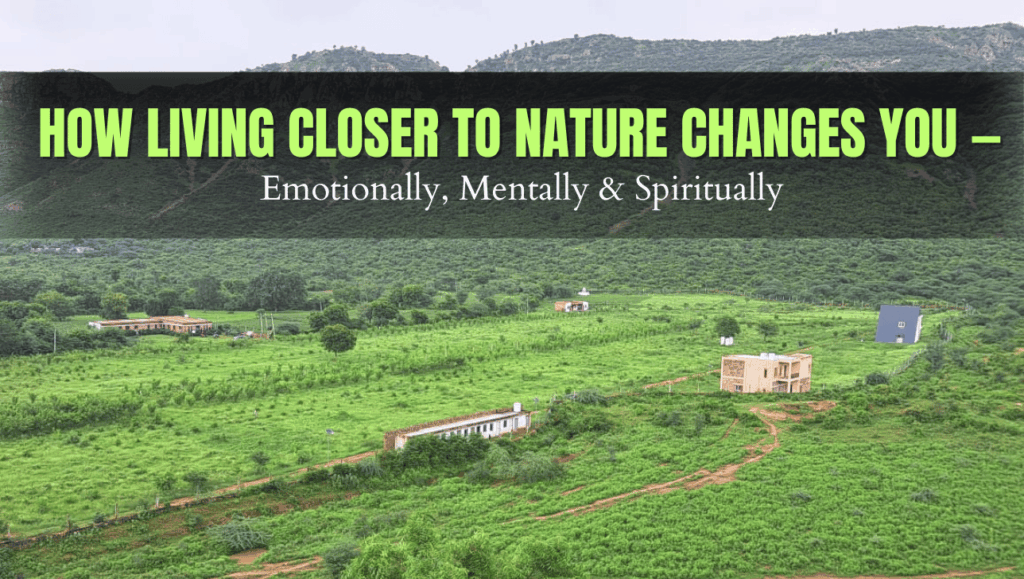
How Living Closer to Nature Changes You — Emotionally, Mentally & Spiritually

A Personal Experience by Dr. Neeti Kaushik There are moments in life when the soul whispers a truth we’ve ignored for far too long. For years, I lived in cities — surrounded by responsibilities, deadlines, noise, schedules, expectations, and the never-ending rhythm of “what’s next?”Everything was structured, efficient, purposeful… but somewhere along the way, I forgot how to simply be. It wasn’t until I began spending extended time at our off-grid farmhouse in Rajasthan — a property lovingly nurtured and built by my husband Mr. Sanjay Kaushik — that something inside me began to shift. Slowly at first… and then all at once. Here, there are no honking cars.No rush , performance and demands. Just open skies, untouched earth, silence that feels like prayer, and a rhythm as old as nature itself. Living here has changed me — not only as a woman, a mother, a teacher, or a spiritual guide — but as a human being. And today, I want to share that journey with you.Raw. Real. Heartful. The First Change: My Emotional Landscape Softened I remember the first winter morning I spent here.Fog sat like a soft blanket over the land. Sunlight travelled slowly, almost hesitantly, through neem branches. The air was cold, crisp, honest. And for the first time in a very long time — I felt peace. The busyness inside me began to untangle. Feelings I didn’t have time to feel in the city finally surfaced — not to overwhelm me, but to finally be heard. Nature does that. It doesn’t ask you to rush through your emotions…It holds space for them. Here’s what changed emotionally: The land teaches tenderness. The Mental Shift: Clarity Replaced Chaos Something fascinating happens when you are surrounded by silence. Your mind, which once felt scattered and overstimulated, suddenly breathes.Thoughts stop racing.The brain stops multi-tasking.Life stops feeling like an emergency. I noticed: When you wake up with the sun instead of alarms…when you listen to birds instead of notifications…when you see the horizon instead of screens… your nervous system resets itself. I still remember one particular visit that changed everything for me. Before coming here, I had been trying to write a book for months. In the city, every time I opened my laptop, my mind went blank. I would sit with intention… and leave with frustration. There was always noise — mental, emotional, environmental — and the deeper creative voice struggled to surface. But here, surrounded by silence and earth and open sky, something shifted. In just four days, the book that refused to move forward suddenly poured out of me — effortlessly, naturally, almost rhythmically. The words didn’t feel forced… they felt guided. It was as if nature unclogged the creativity that had been waiting inside me all along. That experience showed me one undeniable truth: The Spiritual Awakening: Nature Became My Teacher Before living here, spirituality was something I practiced intentionally — journaling, meditations, crystals, rituals, prayers. But here… spirituality is woven into living. It exists: ✨ In the quiet glow of the full moon.✨ In the silence between two breaths.✨ In the way the night sky holds a million stars without trying to impress. My intuition sharpened.Inner voice grew louder.My awareness expanded. It felt as if nature gently whispered: “You do not need to seek outside what already exists within.” I began seeing meaning in everything — the slow growth of a sapling, the rhythm of seasons, the way everything blooms in its own time. Spirituality stopped being a practice —and became a way of existing. The Physical Shift: My Body Found Its Natural Rhythm Again Without trying, without forcing, without planning — my lifestyle changed. Your body knows how to heal —nature simply gives it permission. The Life Shift: Slowing Down Created More Meaning Living closer to nature didn’t take away my ambition — it refined it. I still work.Still create.I still teach.But now… I choose quality over rush.Presence over productivity.Depth over speed. The farmhouse taught me that the purpose of life is not to run —but to experience fully. Lessons Nature Whispered to Me A Soft Invitation As I write this, the winter air outside is cool and grounding. The cattle are wandering slowly near the boundary wall. The sun is descending with that soft orange glow only rural skies can create. And I find myself smiling — because now, I understand: This is living.Not surviving. Not rushing.Living. And if… somewhere within you… a quiet voice just whispered: “I need this too.”Then maybe — it’s time. You Are Welcome. Come Experience It. Our Off-Grid Rajasthan Farmhouse is now open for limited seasonal stays. If you are longing for: then this place may feel like home. You can: ✨ Spend mornings journaling with the sunrise✨ Meditate under ancient trees✨ Cook with organic ingredients✨ Sit by a bonfire beneath a sky full of stars✨ Reconnect with yourself again 📩 Bookings & Inquiries To check availability, pricing, retreat offers, or plan your stay: 📞 Call – +91- 9313175332📧 Email – offgridrajasthan2024@gmail.com💬 WhatsApp – +91- 9313175332Come not just for a vacation — but for a shift. Because some places don’t just give you memories — they give you yourself back.

Blogs, Homestay, Hydroponics, Organic Farming

How Cultural Exchange Programs Enrich Travel Experiences in India

🧳 The Magic of Cultural Immersion Imagine stepping into a vibrant tapestry of colors, sounds, and flavors—where every street corner tells a story, and every face reflects a rich heritage. This is the essence of India, a land where ancient traditions coexist with modern aspirations. But how can travelers truly experience this depth? The answer lies in cultural exchange programs. These programs offer more than just sightseeing; they provide an opportunity to live the culture. Whether it’s participating in a traditional dance in Rajasthan, learning to cook authentic South Indian dishes, or celebrating Diwali with a local family, cultural exchange programs immerse travelers in the heart of India’s diverse traditions. 🌍 Bridging Worlds, One Experience at a Time Cultural exchange is a two-way street. While travelers gain insights into Indian customs, they also share their own cultures, fostering mutual respect and understanding. This exchange breaks down stereotypes, builds friendships, and creates a global community united by shared experiences. For instance, consider the collaboration between India and France’s Val de Loire region. This partnership aims to enhance cultural exchanges, promote collaborative projects, and encourage cooperation among museums and cultural institutions in both regions. 🕺 Living Like a Local The true essence of a place is best understood by living among its people. Cultural exchange programs often involve homestays or community-based stays, where travelers reside with local families or communities, gaining firsthand experience of daily life. This setup allows for deeper connections, authentic experiences, and a genuine understanding of the culture, creating memories that last a lifetime. Travelers learn not just about customs, but about the values, stories, and rhythms that shape everyday life in India. 🎨 Learning Through Festivals and Traditions India’s festivals are a kaleidoscope of colors, music, and rituals. Participating in these celebrations provides travelers with a unique insight into the country’s spiritual and cultural fabric. From the grandeur of Durga Puja in Kolkata to the serenity of Onam in Kerala, each festival offers a distinct experience. The Surajkund International Crafts Mela in Haryana is another example, showcasing India’s rich craftsmanship and cultural diversity. This mela serves as a forum for intercultural dialogue and the sharing of creative concepts. 🌱 Personal Growth and Global Citizenship Engaging in cultural exchange programs fosters personal growth. Travelers develop empathy, adaptability, and a broader worldview. They learn to navigate cultural nuances, communicate across barriers, and appreciate diversity. These experiences also contribute to global citizenship, as individuals become more aware of global issues and are motivated to contribute positively to the world. 🏜️ Off Grid Rajasthan – A Unique Cultural Immersion Among India’s diverse offerings, Off Grid Rajasthan stands as a shining example of immersive, sustainable, and meaningful travel. Located in the heart of Rajasthan, this program invites participants to disconnect from city life and step fully into the rhythms of rural India. Here, travelers don’t just observe—they engage, participate, and contribute. The program is thoughtfully curated to provide a mix of cultural, practical, and fun activities, offering a holistic experience of rural Rajasthani life: Village Work 🏡 – Assist in daily chores, experience the charm of simple living, and connect with locals on a human level. Tractor or Cart Riding 🚜 – Enjoy rustic rides through lush fields, soaking in the scenic countryside. Cycling on Village Roads 🚴 – Explore quaint lanes and interact with villagers, understanding their way of life firsthand. School Visit 📚 – Meet students, exchange knowledge, and learn about India’s education system from a local perspective. Shop Like a Local 🛍️ – Wander vibrant village markets, learn bargaining skills, and discover local crafts. Local Food & Cuisine 🍲 – Participate in cooking sessions and relish authentic home-cooked meals, gaining insight into regional flavors. Milking the Cow 🐄 – Experience traditional dairy farming, learning techniques passed down through generations. Hydroponic & Other Farming Activities 🌱 – Engage in sustainable farming practices, including hydroponics, and participate in planting and harvesting. Pottery 🏺 – Create clay masterpieces under the guidance of local artisans. Mehendi (Henna) Art ✋ – Learn the cultural significance while enjoying intricate henna designs. Vegetable & Fruit Picking 🍅🍋 – Harvest fresh produce and understand organic farming techniques. Plantation Activity 🌳 – Contribute to environmental conservation by planting trees. Traditional Sports (Guli Danda & More) ⚽ – Play games that have entertained rural communities for generations. Handicraft & Artisan Demonstration 🧵 – Observe skilled artisans at work, learning about traditional crafts. Every activity is designed to immerse participants in the local culture while promoting sustainability, empathy, and hands-on learning. It’s not just tourism—it’s a journey into the heart of rural India. 🌟 The Transformative Power of Cultural Exchange Cultural exchange programs have the remarkable ability to change the way we see the world—and ourselves. They gently push us out of our comfort zones, challenging our assumptions and encouraging us to approach life with curiosity and openness. By sharing meals, stories, and daily experiences with people from different backgrounds, travelers begin to see the common threads that connect us all, rather than the differences that divide us. These experiences often leave a lasting impression, fostering empathy, patience, and a deeper understanding of diverse ways of life. In many cases, travelers return home not just with souvenirs or photos, but with new perspectives, meaningful friendships, and a richer appreciation for the world’s vibrant tapestry of cultures. Simply put, cultural exchange is not just about learning—it’s about growing, connecting, and realizing that every interaction has the power to make us more compassionate and open-hearted. 📸 A Visual Journey To truly experience the richness of cultural exchange in India, picture these unforgettable moments: Learning Traditional Rajasthani Crafts 🎨 – Visitors try their hand at pottery, block printing, and embroidery under the guidance of local artisans. Participating in Village Life 🌾 – From organic farming workshops to daily routines with local families, travelers live the rhythm of rural Rajasthan. Celebrating Festivals and Traditions 🕯️ – Engaging in authentic celebrations, folk music, and dance, creating memories far beyond the usual tourist experience. Off Grid

Blogs, Homestay, Hydroponics, Nurcery, Organic Farming

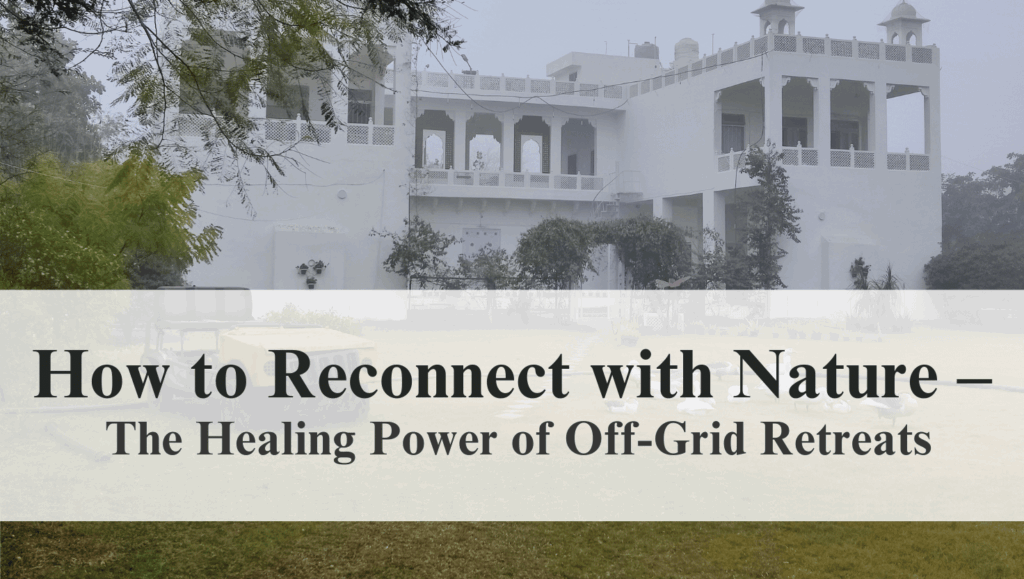
How to Reconnect with Nature –The Healing Power of Off-Grid Retreats

🌆 From Concrete Jungle to Countryside Calm I remember one evening, sprawled on my apartment sofa, phone in hand, mind buzzing with notifications. The city outside never seemed to stop—horns blaring, tires screeching, people rushing, a siren wailing somewhere in the distance. 🌆 I looked at the tiny plant on my windowsill, its leaves drooping sadly, and suddenly felt a pang. When was the last time I heard a bird sing? You know that feeling—your brain is overloaded, your body stiff, and yet, somewhere deep down, you crave something different. A space where the air is sweet and clean, where the only alarms are sunrise and bird calls, and where time itself seems to slow down. 🌳💛 Now, imagine stepping out of that concrete cage. Your feet sink into soft grass, the wind brushes your cheeks, and the sky stretches endlessly, unbroken by buildings. You hear leaves rustling, birds calling, and the quiet pulse of life beyond screens and schedules. This is not just a walk in the park—it’s a gentle reconnection with yourself. It’s a moment where your mind breathes, your body relaxes, and your soul stretches. 🌎 Why Reconnecting with Nature Matters Life moves too fast. Deadlines, emails, traffic, and constant pings—our world leaves little space for calm. Nature is that pause button we never press. The whisper reminding us what truly matters. And science backs it up: time spent outdoors heals, both physically and mentally. 🧠 Mental Health Benefits There’s something almost magical about being under the canopy of trees. In Japan, the practice of forest bathing (Shinrin-yoku) has shown that just 20 minutes in the woods lowers anxiety and reduces cortisol—the stress hormone—by up to 20%. 🌲 Even a short 10-minute walk in a local park can make your day feel lighter. Listen to the leaves rustling. Smell the earth after rain. Breathe deeply and just be. Over time, these tiny pockets of calm become shields against the stress of modern life. Nature’s therapy doesn’t need a prescription. 💚 ☀️ Physical Health Benefits Being outdoors moves your body in ways a treadmill never can. Hiking strengthens your heart. Walking lowers blood pressure. Even stretching under a tree improves flexibility. 🌿 Feel the warmth of the sun on your skin, breathe deeply, walk barefoot across dewy grass. Your body responds with energy, vitality, and a sense of groundedness that no office can ever give you. 🌱 Environmental Awareness Time spent in nature awakens a natural care for the world around us. Spotting litter on a trail or fragile habitats encourages small actions: planting trees, reducing waste, choosing sustainable options. Every mindful choice ripples outward. 🌼♻️ It’s not just about feeling better—it’s about becoming part of something larger, a world that heals as you heal. 🏙️ The Modern Barriers And yet… stepping into nature isn’t always easy. Between urban life, digital overload, and packed schedules, carving out moments of calm can feel impossible. 🏢 Urban Life and Busy Schedules In cities, green spaces are rare. Commuting, office hours, and noise make it easy to forget trees exist. Start small: grow herbs on your balcony, explore hidden pocket parks, or take a 15-minute outdoor break during lunch. 🌿 These tiny rituals reconnect you with the natural world and provide a vital breath of calm. 📱 Digital Overload Our screens dominate our attention. Notifications pull us in, leaving no room for birdsong, the wind, or silence. Try a phone-free walk. Notice the details you never saw before—the texture of bark, the shimmer of leaves, the way sunlight dances across the ground. The world comes alive in ways a feed never can. 🌾 Feeling Unsure Fear or inexperience can hold you back. “What if I get lost? What if I see nothing new?” Start gently. Birdwatching apps, simple field guides, or a friend’s company can make all the difference. Nature is endlessly patient, curious, and forgiving. 🌅 Simple Daily Practices You don’t need a weekend in the woods to reconnect. Small, mindful habits can anchor you: Open your curtains each morning and feel the sunlight. ☀️ Sip your coffee outside, watch squirrels chase each other, and just notice. 🐿️ Take a 10-minute walk during lunch, observing trees, flowers, or clouds. 🌳 🌿 7-Day Nature Challenge These simple exercises train your senses, anchor your mind, and help you reconnect with the rhythm of the natural world. 🌄 Off-Grid Retreats: Total Immersion For a deeper escape, off-grid retreats offer something unique: a world with no Wi-Fi, no traffic, no alarms—just stars, wind, and birdsong. These retreats cultivate self-reliance, environmental stewardship, and inner calm. Living off-grid means relying on solar power, rainwater harvesting, and composting systems. Weekends spent in solar-powered cabins, hiking scenic trails, or practicing yoga by rivers reset the mind, strengthen the body, and foster skills that last a lifetime. Benefits of off-grid living: Mental clarity: absence of screens improves focus and reduces stress. Physical wellness: hiking, chopping wood, outdoor tasks strengthen naturally. Sustainability: learn eco-friendly habits for life. Personal growth: skills like fire-starting, foraging, and journaling boost confidence. Top destinations worldwide include Pacific Northwest cabins, Costa Rican jungle lodges, and Swiss alpine huts. 🌍 🌾 A Soulful Escape in Rural Rajasthan Now, picture a countryside retreat in Rajasthan. Golden fields stretch endlessly, the air is crisp, and life flows with a natural rhythm. 🌾💛 This isn’t just a place—it’s a gentle invitation to reconnect with yourself, with nature, and with traditions centuries old. Here, rustic farmhouses blend charm with modern comfort. Stargazing under unpolluted skies, cozy nights around a fire, quiet walks through open fields… every moment invites you to slow down, breathe deeply, and savor simplicity. 🌌🔥 🌸 Experiences That Touch the Soul Beautiful Exploration: Gentle nature walks immerse you in the landscape. 🐪🌄 Hands-On Learning: Hydroponic farming, bonsai making, and vermiculture teach sustainable skills while reconnecting you to the earth. 🌱💧 Wellness & Mindfulness: Yoga at sunrise, meditation under the stars, journaling by the campfire. Each practice clears mental clutter and nourishes the soul. ✨🧘‍♀️ Cultural Immersion: Learn

Blogs, Homestay, Hydroponics, Organic Farming

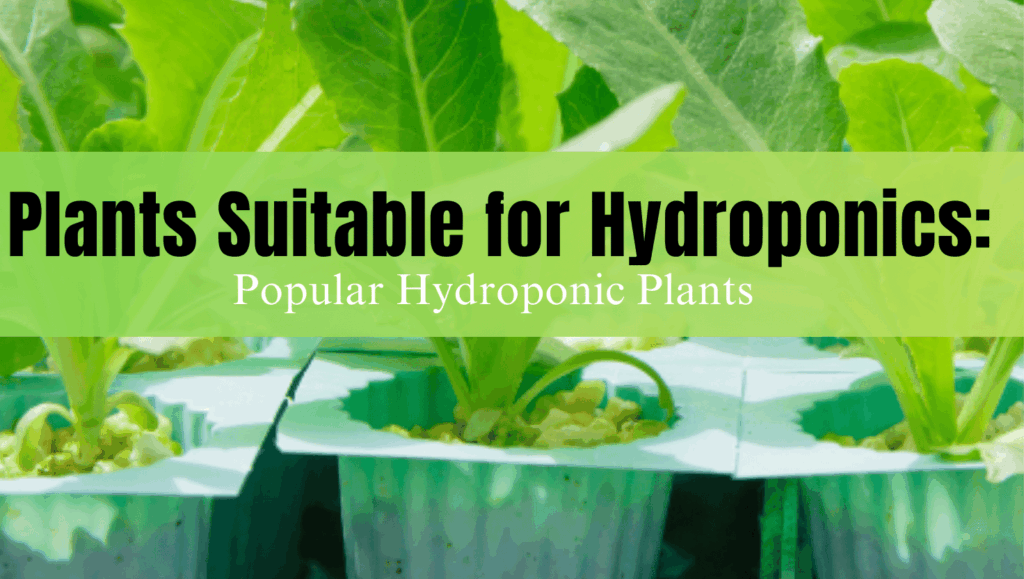
🌱 Plants Suitable for Hydroponics: Popular Hydroponic Plants 💧

Have you ever picked up a crisp, vibrant head of lettuce at the store and wondered how it got so perfect? Or maybe you’ve heard about hydroponics in the news—those high-tech, ultra-modern grow setups that seem almost magical. But here’s the secret: hydroponics isn’t just for futuristic farms or fancy restaurants. It’s quietly revolutionizing the way we grow food, especially in cities where soil is scarce, and water is precious. Imagine this: a small terrace, a sunny balcony, or even a corner of your rooftop transformed into a lush, green oasis. Fresh herbs for your cooking, leafy greens for your salads, vibrant tomatoes for your meals—all growing in water, nurtured by your hands, completely pesticide-free. Each leaf, each fruit, is alive with flavor, nutrients, and love. Hydroponics is more than growing food—it’s a lifestyle. It’s about choosing sustainability, efficiency, and wellness. Water usage drops dramatically, space becomes limitless, and even companion plants like citronella or marigold can keep pests away while adding beauty and fragrance 🌼. Whether your dream is to make your kitchen greener, provide your family with wholesome produce, or simply connect with nature, hydroponics makes it possible—and joyful. 🥗 Leafy Greens – Quick, Fresh, and Rewarding Let’s start small, with the gentle green magic of leafy vegetables. Lettuce, spinach, kale, and Swiss chard are not just nutritious—they are incredibly forgiving for beginners. Imagine checking your trays every morning and seeing your lettuce leaves stretch and grow, ready for harvest in just 30–40 days. Spinach enjoys slightly cooler water, while kale and chard reward your patience with nutrient-packed, antioxidant-rich leaves. Hydroponics gives you freedom: year-round harvests, vibrant colors, and leaves free from pesticides. No matter the season outside, your salads stay crisp, fresh, and safe. You can experiment with different varieties, mix colors and textures, and even surprise your friends and family with your very own garden-fresh meals. 🌿 Herbs – Small Leaves, Big Possibilities Close your eyes for a moment and picture this: a tiny balcony filled with fragrant basil, mint, coriander, and thyme. Just a few square feet of space, and you have a constant supply of flavor, wellness, and aromatic delight. Hydroponics allows herbs to grow densely without fighting for nutrients, giving you lush, healthy leaves every day. Herbs aren’t just tasty—they’re magical. Mint for refreshing drinks, coriander for curries, basil for your pasta, thyme for soups. And did you know that herbs also bring health benefits? Mint aids digestion, basil boosts immunity, and thyme carries antimicrobial properties. Growing them hydroponically isn’t just gardening—it’s a daily act of self-care and creativity . 🍅 Fruiting Vegetables – Juicy, Vibrant, and Delicious Now let’s talk about the stars of your kitchen garden: fruiting vegetables . Tomatoes, cucumbers, bell peppers, and brinjals can struggle in urban soil, but hydroponics gives them the perfect environment. Picture rows of cherry tomatoes ripening under your care, juicy cucumbers waiting to be sliced, and bell peppers turning red, yellow, and orange in neat little rows. Hydroponics ensures that your plants get exactly what they need—consistent nutrients, optimal light, and perfect humidity. The result? Faster growth, higher yields, and fruits that taste fresher and sweeter than anything store-bought. And here’s a bonus: even a small vertical setup can produce enough for your family, or for a small business supplying local kitchens. 🌱 Microgreens – Tiny Leaves, Big Nutrition If you’re short on space or time, microgreens are your secret superpower. Radish, broccoli, sunflower, mustard—they may be tiny, but they are packed with vitamins, minerals, and antioxidants. And the best part? They’re ready in just 7–14 days! Imagine sprinkling freshly harvested microgreens over your morning smoothie, sandwich, or salad. They add color, crunch, and a powerful nutritional boost. Even a small tray on your windowsill can become a thriving green patch, transforming your meals and your mood with just a little care and water. 🥬 Exotic Vegetables – Bring the World Home Hydroponics is your passport to global flavors. Arugula, bok choy, zucchini, specialty broccoli—even rainbow chard—can now grow locally, in your home or terrace garden. These exotic vegetables allow you to explore new tastes and add variety to your meals without waiting for markets to deliver. It’s a culinary adventure right at home! Your small space becomes a living, breathing garden of discovery, where each plant tells a story of curiosity, patience, and creativity. And the best part? You control every step, from seed to plate, ensuring freshness and flavor unmatched by anything you buy 🌟.  🌿 Medicinal & Aromatic Plants – Healing at Home Hydroponics goes beyond food. It’s about wellness. Tulsi, aloe vera, ashwagandha, lemongrass, peppermint—these plants thrive in water-based systems and offer powerful benefits. Tulsi supports immunity 🌿, aloe vera nurtures your skin, and ashwagandha helps reduce stress. Imagine harvesting fresh tulsi leaves for your morning tea 🍵, or using home-grown aloe vera for a soothing skincare routine. Hydroponics bridges modern gardening and traditional medicine, giving you access to pure, potent plants all year round. Caring for these plants isn’t just gardening—it’s a ritual of health, mindfulness, and connection to nature . 🌊 Why Hydroponics Matters Hydroponics isn’t just a gardening trend—it’s a movement. It helps people grow food sustainably, even with limited resources: Hydroponics reconnects us with our food, gives us control over quality, and makes growing plants a daily joy. It’s a lifestyle where science meets nature, and efficiency meets creativity. 🌈 Your Green Journey Awaits Starting a hydroponic garden is like beginning a story—your story. Each plant becomes a chapter, from leafy greens to exotic vegetables. Even a tiny terrace or windowsill can transform into a lively garden where every morning brings discovery, nourishment, and joy. Guides like Offgrid Frajasthan help you take that first step, showing you how to set up your system, select plants, and maintain thriving plants. You’ll learn about nutrients, pH levels, lighting, and temperature management—all the science behind successful soilless gardening . With just a few seeds, some water, and your care, you can create a lush oasis at home. Hydroponics

Blogs, Hydroponics

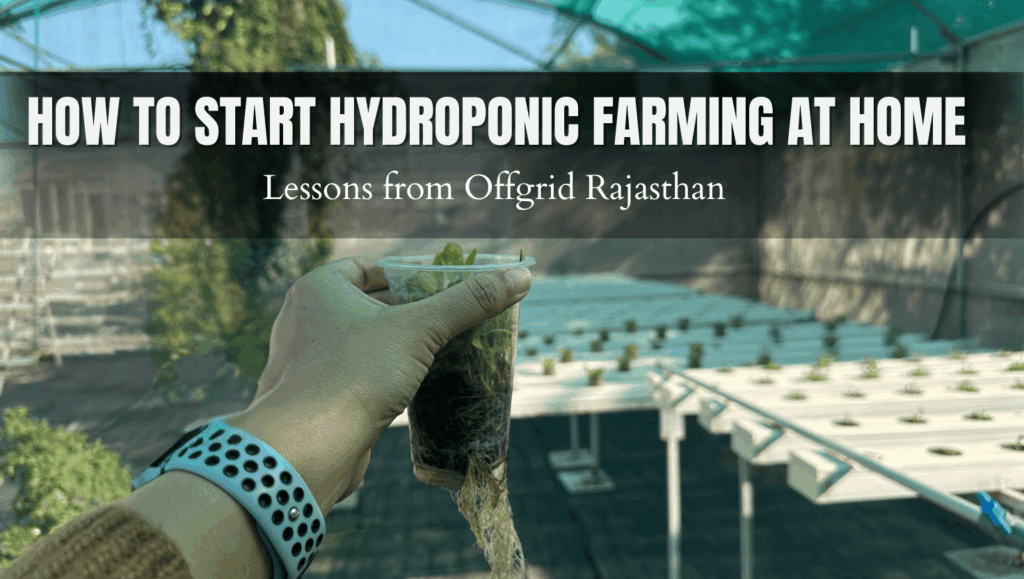
How to Start Hydroponic Farming at Home: Lessons from Offgrid Rajasthan

🌿 Introduction: When Soil Meets Science, and Science Meets Home Close your eyes for a moment. Picture yourself in a bustling city apartment. Your balcony is small, your terrace mostly unused, your windowsill home only to a couple of decorative pots. Deep inside, you dream of plucking fresh spinach for your morning smoothie, garnishing pasta with homegrown basil, or even serving strawberries grown with your own hands. But then reality whispers: “Farming is for those with acres of land, fertile soil, and endless water.” Now, let’s shift scenes. Imagine standing in Rajasthan’s golden desert. The land stretches endlessly, cracked and thirsty. The heat is merciless, the air dry, the horizon marked by camel trails and thorny shrubs. Farming here? It sounds impossible. And yet, as you turn a corner, you’re greeted not by barren sand but by lush corridors of green. Lettuce lines up neatly in trays. Strawberries climb skyward in vertical towers. Basil sways gently in the desert breeze. This isn’t a mirage — it’s reality at Offgrid Rajasthan, a sanctuary where hydroponics has turned scarcity into abundance. If a desert can bloom without soil, so can your home. Whether you live in a flat, bungalow, or studio apartment, you can recreate this miracle with just a few tools and a little care. This blog is your step-by-step guide to starting hydroponic farming at home, inspired by the innovation, resilience, and sustainability practiced daily at Offgrid Rajasthan. By the time you finish reading, you’ll know: Let’s dive into the story where deserts bloom and homes become farms.  🌱 What is Hydroponic Farming? At its simplest, hydroponics is farming without soil. Instead of planting in earth, you grow in water — water enriched with nutrients that feed plants directly. Sometimes, inert mediums like cocopeat, perlite, or clay pellets help anchor the roots. Why does this matter? Because plants don’t waste energy searching for food in the soil. They receive exactly what they need, in the right proportion. The results? 👉 At Offgrid Rajasthan, this principle is alive and thriving. Rows of basil stretch across trays, strawberries bloom in vertical towers, and herbs flourish in neat channels — all without touching soil. It’s like watching science and nature dance in harmony. If this miracle works in Rajasthan’s desert, it can certainly work in your balcony or kitchen corner. 🌿 Why Start Hydroponics at Home? So, why should you bring hydroponics home? Here are six reasons that will make you rethink gardening forever: Space-Saving Magic Hydroponics grows vertically. Even in a 2×2 ft balcony corner, you can grow a mini-farm. Water Wise At Offgrid Rajasthan, hydroponics uses up to 90% less water than soil farming. Imagine the same efficiency in your home. No Mud, No Mess No soil means no weeds, no muddy floors, and far fewer pests. All-Season Farming Grow fresh produce in summer, monsoon, or winter — hydroponics knows no off-season. Pure and Healthy Forget pesticides. Grow clean, nutrient-dense greens you can trust. Sustainability in Action Just like Offgrid marries eco-luxury with sustainability, you too can live consciously by conserving resources. 👉 Curious to see hydroponics in action? Explore more at www.offgridrajasthan.com. 🌱 Types of Hydroponic Systems for Home At Offgrid Rajasthan, you’ll find advanced systems like NFT channels and vertical strawberry towers. But for your home, you can start small and simple. Here are five systems to consider: 1️⃣ Deep Water Culture (DWC) Best for beginners. 2️⃣ Nutrient Film Technique (NFT) 3️⃣ Wick System 4️⃣ Vertical Towers 5️⃣ Kratky Method 🌿 Step-by-Step Guide: How to Start Hydroponics at Home Let’s turn inspiration into action. Inspired by Offgrid Rajasthan, here’s how you can start your own system: Step 1: Choose Your Space Step 2: Pick Your System Step 3: Gather Supplies Step 4: Prepare Nutrient Solution Step 5: Plant Your Seedlings Step 6: Monitor & Maintain Step 7: Harvest 👉 Want to see how Offgrid makes this look effortless? Visit Offgrid Rajasthan’s website for glimpses of their thriving hydroponic farms. 🌱 What Can You Grow at Home? Inspired by Offgrid Rajasthan, here are crops that thrive hydroponically: 👉 Tip: Start with leafy greens. They grow fast, reward quickly, and build your confidence. 🌿 Cost of Hydroponics at Home 🌱 Challenges & Smart Solutions Even Offgrid Rajasthan had hurdles in the desert. At home, here are challenges you might face — and how to fix them: 🌿 Lessons from Offgrid Rajasthan for Home Gardeners Every visit to Offgrid Rajasthan leaves guests with lessons that apply beautifully at home: 🌱 The Future of Farming, At Your Fingertips Offgrid Rajasthan proves one powerful truth: with care and science, deserts can bloom. Hydroponics is not just a farming technique; it’s a lifestyle shift. At your home, starting hydroponics means: 🌸 Closing: Your Invitation to Bloom If hydroponics can thrive in Rajasthan’s desert, it can thrive in your home too. Start small — maybe a jar of basil on your windowsill — and watch how it transforms into something bigger. At Offgrid Rajasthan, the desert blooms every day. Rows of lettuce, herbs, and strawberries are living proof that farming doesn’t need soil — only imagination and intent. And now, the invitation is yours: 🌱 Grow without soil.🌞 Respect every drop of water.🏡 Live sustainably.🥗 Celebrate food at its freshest. 👉 Take inspiration, or even better, plan a visit to experience it first-hand at www.offgridrajasthan.com. ✨ May your journey into hydroponics be as fresh as mint, as sweet as strawberries, and as grounding as basil roots.

Blogs, Hydroponics

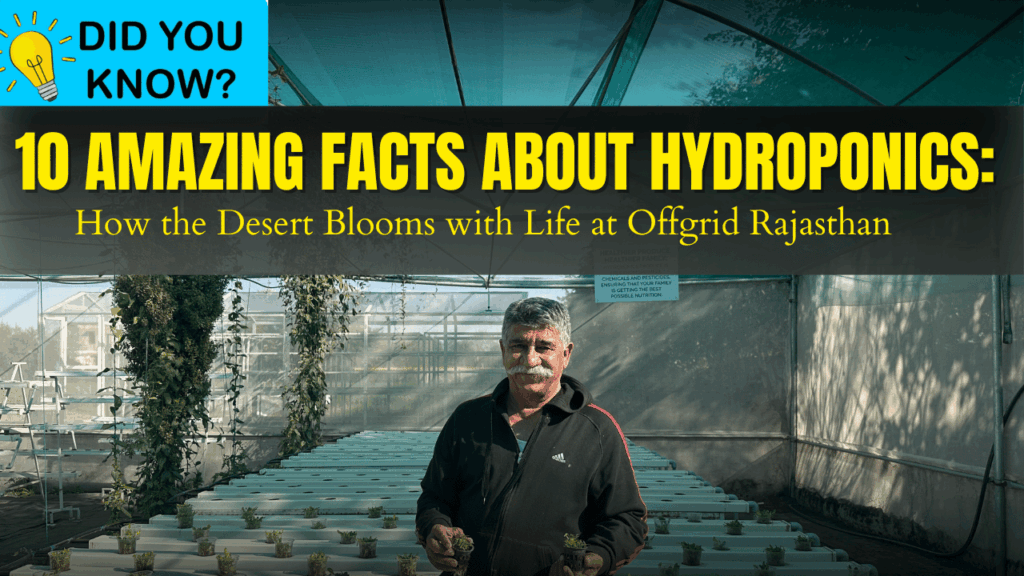
10 Amazing Facts About Hydroponics: How the Desert Blooms with Life at Offgrid Rajasthan

🌸 Introduction: Where Science Meets the Sands Imagine standing in the middle of Rajasthan’s golden desert, where camel trails stretch endlessly under a blazing sun. The air is dry, the dunes whisper their ancient stories, and you expect only cacti or thorny shrubs to survive here. But then, you turn a corner and find yourself in a lush green corridor — rows of basil, lettuce, and strawberries flourishing without soil. The sight is surreal, almost magical. This isn’t an illusion. It’s hydroponics — the art and science of growing plants without soil, where roots drink nutrient-rich water and thrive in futuristic systems. At Offgrid Rajasthan, this isn’t just farming; it’s a story of sustainability, wellness, and hope. Visitors from across the world come not just to see hydroponics, but to experience it: walking through our farms, sipping mint tea from freshly plucked leaves, or setting up their own mini systems in hands-on workshops. And through these encounters, they discover that hydroponics is more than agriculture — it’s a revolution that blends tradition with innovation. 🌿 Fact 1: Plants Don’t Need Soil to Grow Soil has always been seen as the foundation of farming. But the truth is, plants don’t need soil — they need the nutrients inside it. Hydroponics skips the middleman. Instead of soil, roots grow directly in nutrient-rich water solutions or inert mediums like coco peat, perlite, or clay pellets. 📍 At Offgrid Rajasthan: Guests are amazed when they lift a plant and find no soil, only white roots dangling in water or mist. Children especially love this discovery — they giggle as they realize that their favorite tomatoes can grow happily “floating.” 💡 Why it matters for you: This means farming is possible anywhere — deserts, cities, rooftops, or even inside apartments. 💧 Fact 2: Hydroponics Saves Up to 90% Water In traditional farming, most water evaporates or drains away. Hydroponics recycles water in closed systems, ensuring plants use only what they need. Imagine growing lush crops in Rajasthan’s desert with just a fraction of the water — that’s the miracle of hydroponics. 📍 At Offgrid Rajasthan: Every drop is precious. With water scarcity a daily challenge, our farms are proof that green abundance can thrive in one of the driest places on Earth. 💡 Why it matters for you: With climate change and rising water scarcity, hydroponics could be the future of food security for millions. ⚡ Fact 3: Plants Grow Faster in Hydroponics In soil, roots spend energy spreading and searching for nutrients. In hydroponics, nutrients are delivered directly. This means faster growth and quicker harvests. Lettuce, for example, can grow in 30 days hydroponically versus 45–60 days in soil. 📍 At Offgrid Rajasthan: Visitors often taste hydroponic lettuce straight from the channels. The crispness and freshness surprise them — and when they learn it grew almost twice as fast as soil lettuce, their amazement doubles. 💡 Why it matters for you: Faster growth = quicker harvests = fresher food on your table. 🐞 Fact 4: Hydroponics Needs Minimal Pesticides Because plants grow in controlled systems, they are less vulnerable to pests. This drastically reduces (or even eliminates) the need for chemical pesticides. The result? Cleaner, healthier, pesticide-free food. 📍 At Offgrid Rajasthan: Guests enjoy farm-to-table dining where every ingredient is chemical-free. Mint tea, fresh salads, and even strawberries taste different — pure, natural, and bursting with flavor. 💡 Why it matters for you: Fewer chemicals mean healthier food and a healthier planet. 🌍 Fact 5: Hydroponics Can Grow Anywhere From rooftops in Delhi to deserts in Rajasthan, hydroponics makes farming possible in places once considered barren. Even space missions are experimenting with hydroponics to grow food beyond Earth. 📍 At Offgrid Rajasthan: Guests often say, “I can’t believe this is in a desert!” The green corridors, set against golden dunes, make them feel like they’re walking in an oasis. 💡 Why it matters for you: No matter where you live — city, village, or desert — hydroponics can bring fresh food closer to you. 🥬 Fact 6: Hydroponics Produces Higher Yields Hydroponic systems allow farmers to grow more crops in less space. Vertical farming, for instance, stacks layers of crops, multiplying yield. This means more food, less land. 📍 At Offgrid Rajasthan: Guests see vertical towers of strawberries and leafy greens. Many can’t resist taking selfies — fresh red strawberries against desert skies are irresistible! 💡 Why it matters for you: As the world population grows, hydroponics could be the answer to feeding billions sustainably. 🍓 Fact 7: Hydroponics Supports Exotic and High-Value Crops Exotic vegetables like kale, pak choi, and broccoli often struggle in Indian climates. But hydroponics creates the perfect environment for them. Herbs like basil fetch premium prices in urban and export markets. 📍 At Offgrid Rajasthan: Guests taste kale salads, basil tea, and even fresh strawberries — luxuries in the desert! The farm-to-table dining experience is often described as “a luxury rooted in sustainability.” 💡 Why it matters for you: Hydroponics offers not just food security, but also profitable opportunities for farmers and entrepreneurs. 🧪 Fact 8: Hydroponics is Science + Art Hydroponics isn’t only about technology. It’s about balance: water, oxygen, nutrients, and light. Too much or too little of any element, and the plant suffers. It’s like a dance — precise, delicate, yet beautiful. 📍 At Offgrid Rajasthan: Visitors see this balance firsthand. During workshops, they mix nutrient solutions, measure pH levels, and watch plants respond. The experience feels both scientific and spiritual. 💡 Why it matters for you: Hydroponics teaches mindfulness — how every detail, every balance, creates life. 🚀 Fact 9: Hydroponics is the Future of Farming (and Space Travel!) NASA has long researched hydroponics for space missions. If humans ever colonize Mars, hydroponics will be our farm in the stars. Imagine astronauts eating fresh lettuce grown in space! 📍 At Offgrid Rajasthan: Guests often say they feel like they’ve stepped into the future — roots floating, mist spraying, plants thriving without soil. It feels

Blogs, Hydroponics

The Role of Organic Hydroponics in Sustainable Food Systems

In a world facing increasing urbanization, climate change, and resource scarcity, sustainable food production has become paramount. Traditional agricultural methods, often reliant on vast tracts of land and intensive use of pesticides and fertilizers, are straining our planet’s resources. Hydroponics, a soil-less cultivation technique, offers a promising solution, particularly when combined with organic practices. This article explores the role of organic hydroponics in building sustainable food systems, with a specific focus on its potential in off-grid regions like Rajasthan. Understanding Hydroponics Water conservation: Hydroponic systems can significantly reduce water consumption compared to traditional agriculture, making them ideal for regions with limited water resources. Land efficiency: Plants can be grown in a smaller space, reducing the need for extensive land areas. Pest and disease control: The controlled environment of hydroponic systems can help minimize the use of pesticides and herbicides. Faster growth: Plants often grow faster and produce higher yields in hydroponic systems. Organic Hydroponics: A Greener Approach While hydroponics offers many benefits, the use of synthetic fertilizers and pesticides can negate some of its environmental advantages. Organic hydroponics addresses these concerns by: Using organic nutrient solutions: These solutions are derived from natural sources, such as seaweed or plant extracts. Avoiding synthetic pesticides and herbicides: Organic pest and disease control methods, such as beneficial insects or biological agents, are employed. Promoting biodiversity: Organic hydroponic systems can support biodiversity by incorporating elements like aquaponics, which combine fish farming with hydroponics. Off-Grid Rajasthan: A Case Study Rajasthan, a largely arid state in India, faces significant challenges in terms of food security and water scarcity. Organic hydroponics offers a viable solution for sustainable food production in this region. By utilizing solar power and rainwater harvesting, off-grid hydroponic systems can be established, reducing reliance on traditional agricultural practices that are often unsustainable. Benefits of Organic Hydroponics in Off-Grid Regions Food security: Organic hydroponics can provide a reliable source of fresh, nutritious food, even in remote areas. Economic opportunities: The cultivation of high-value crops can generate income for local communities. Environmental sustainability: By reducing water consumption and minimizing the use of harmful chemicals, organic hydroponics can help protect the environment. Resilience: Off-grid hydroponic systems are less vulnerable to external factors, such as climate change or supply chain disruptions. Challenges and Considerations While organic hydroponics offers many advantages, there are also challenges to be addressed: Technical knowledge: Successful hydroponic farming requires a certain level of technical expertise. Energy consumption: Although solar power can be used to reduce energy costs, energy consumption remains a factor to consider. Conclusion Organic hydroponics has the potential to play a crucial role in building sustainable food systems, particularly in regions like Rajasthan. By combining the efficiency of hydroponics with the principles of organic agriculture, it offers a promising solution for addressing food security, environmental sustainability, and economic development. As technology continues to advance and awareness of the benefits of organic hydroponics grows, we can expect to see even greater adoption of this innovative farming method.

Blogs, Hydroponics

Starting a Hydroponic Business in Rajasthan

With its ability to produce high-quality yields in controlled environments, hydroponics is becoming an increasingly attractive option for farmers and entrepreneurs alike. In Rajasthan, a state known for its arid climate and limited water resources, hydroponics offers a promising solution for sustainable agriculture. Hydroponic Farming Hydroponics involves cultivating plants in a nutrient-rich solution, typically a mixture of water and minerals. This method eliminates the need for soil, allowing for precise control over growing conditions. By regulating factors such as temperature, humidity, and light, hydroponic farmers can optimize plant growth and maximize yields. Benefits of Hydroponic Farming in Rajasthan Water Conservation: Hydroponics uses significantly less water than traditional soil-based agriculture, making it a valuable option in regions with limited water resources. Land Efficiency: Hydroponic systems can be set up in small spaces, making them ideal for urban and rural areas with limited land availability. Pest and Disease Control: The controlled environment of hydroponic systems helps to minimize pest and disease infestations, reducing the need for chemical pesticides. Year-Round Production: Hydroponic farms can operate year-round, providing a steady supply of fresh produce regardless of the season. High-Quality Yields: Hydroponic plants often produce higher yields and have better quality than those grown in soil. Hydroponic Business in Rajasthan Choose a Suitable Location: Consider factors such as climate, water availability, and access to markets when selecting a location for your hydroponic business. While Rajasthan’s arid climate may pose some challenges, advancements in technology and greenhouse design can help mitigate these issues. Select a Hydroponic System: There are various hydroponic systems available, including nutrient film technique (NFT), deep water culture (DWC), and ebb and flow. Choose a system that is suitable for your specific needs and the crops you intend to grow. Acquire Necessary Equipment: Invest in the necessary equipment, such as hydroponic tanks, nutrient pumps, lighting systems, and temperature and humidity controls. Consider the scale of your operation and your budget when making purchasing decisions. Source Nutrient Solutions: Obtain high-quality nutrient solutions that are specifically formulated for hydroponic farming. These solutions provide essential nutrients to your plants and can be purchased from specialized suppliers. Choose Crops: Select crops that are well-suited for hydroponic cultivation and have a market demand in Rajasthan. Popular options include leafy greens, herbs, and tomatoes. Obtain Necessary Permits and Licenses: Ensure compliance with local regulations and obtain any required permits or licenses. This may include permits for water usage, land use, and business operations. Off-Grid Hydroponic Farming in Rajasthan For those looking to minimize their reliance on traditional energy sources, off-grid hydroponic farming can be a viable option. By incorporating renewable energy technologies such as solar panels and wind turbines, you can power your hydroponic system independently. This can reduce your operating costs and environmental impact. Marketing and Selling Your Hydroponic Produce To ensure the success of your hydroponic business, it is essential to develop a robust marketing strategy. Explore various sales channels, such as local farmers’ markets, grocery stores, restaurants, and online platforms. Consider partnering with local businesses or organizations to promote your products. Conclusion Hydroponic farming offers a promising opportunity for entrepreneurs in Rajasthan. By leveraging the benefits of this innovative agricultural method, you can contribute to sustainable food production, reduce water consumption, and create a profitable business. With careful planning and execution, starting a hydroponic business in Rajasthan can be a rewarding endeavor.

Blogs, Hydroponics

Unlocking the Future of Farming: How Offgrid Rajasthan is Teaching Hydroponics

In a world where traditional farming faces numerous challenges, hydroponics has emerged as a revolutionary solution. Offgrid Rajasthan, a pioneer in sustainable agriculture, is leading the way by educating customers on this innovative farming technique. Here’s a closer look at how Offgrid Rajasthan is transforming agriculture through hydroponics. What is Hydroponics? Hydroponics is a method of growing plants without soil, using nutrient-rich water instead. This technique allows plants to receive all the essential nutrients directly through their roots, leading to faster growth and higher yields. Hydroponics is particularly valuable in regions with poor soil quality or limited water resources, making it an ideal solution for arid areas like Rajasthan. Why Hydroponics? Hydroponics offers numerous advantages over traditional soil-based farming: Water Efficiency: Hydroponic systems use up to 90% less water than conventional farming, making them perfect for water-scarce regions. Faster Growth: Plants often grow faster in hydroponic systems due to the direct delivery of nutrients. Space Efficiency: Hydroponic setups can be vertically stacked, making them suitable for urban and limited-space environments. Reduced Pests and Diseases: Growing plants without soil reduces the risk of soil-borne pests and diseases. Offgrid Rajasthan’s Hydroponics Initiative Offgrid Rajasthan is at the forefront of promoting hydroponics as a viable solution for sustainable agriculture in Rajasthan. Their comprehensive approach involves teaching customers not only how to set up hydroponic systems but also how to manage and optimize them effectively. 1. Hands-On Training Offgrid Rajasthan offers hands-on training sessions to help customers understand the basics of hydroponics. These workshops cover everything from the different types of hydroponic systems (such as nutrient film techniques and deep water culture) to the essentials of nutrient management and system maintenance. 2. Customized Solutions Understanding that each region and individual may have different needs, Offgrid Rajasthan provides customized hydroponic solutions. They work closely with customers to design systems that suit their specific requirements, whether it’s a small home setup or a larger commercial operation. 3. Support and Resources Beyond initial training, Offgrid Rajasthan ensures ongoing support for their customers. They provide resources, troubleshooting assistance, and guidance to help users overcome any challenges they may face with their hydroponic systems. 4. Community Building Offgrid Rajasthan fosters a community of hydroponic enthusiasts and practitioners. By organizing events, forums, and networking opportunities, they create a space for individuals to share experiences, exchange tips, and support one another in their hydroponic journey. Success Stories The impact of Offgrid Rajasthan’s hydroponics training is evident in the success stories emerging from the region. Farmers and individuals who have adopted hydroponic systems report significant improvements in their crop yields and resource efficiency. These success stories not only highlight the effectiveness of hydroponics but also inspire others to explore this sustainable farming method. Conclusion Offgrid Rajasthan is making a significant difference in the agricultural landscape of Rajasthan by teaching hydroponics. Through hands-on training, customized solutions, ongoing support, and community building, they are empowering individuals to embrace this innovative farming technique. As hydroponics continues to gain traction, Offgrid Rajasthan’s efforts are paving the way for a more sustainable and resource-efficient future in agriculture.

Scroll to Top