
November arrives, and something shifts in Delhi NCR.
The mornings become colder, a heavy haze settles over the city, and visibility drops before you even step outside. The smell in the air changes. Parents start wondering whether the school run is safe. Morning walkers check their phones before heading out. Checking the AQI becomes as routine as checking the weather.
Winter pollution in Delhi NCR is not new, and it is not simple. It is the result of several overlapping factors, weather conditions, emissions, agricultural burning, construction dust, and more, all coming together in ways that can make the air noticeably harder to manage for weeks at a stretch.
There is no single solution, and no article can fix the broader problem. But being informed, taking practical precautions, and making thoughtful choices throughout the season can make a genuine difference to how you and your family get through it.
Here are ten things worth knowing.
1. Why Does Air Pollution Become Such a Big Concern During Winter?
Winter pollution in Delhi NCR is not simply caused by one thing. It is the result of several sources combining with weather conditions that make it harder for pollutants to disperse.
During winter, cooler temperatures near the ground can create a phenomenon called temperature inversion, where a layer of warmer air sits above cooler air close to the surface. This can trap pollutants near ground level rather than allowing them to rise and disperse. The result is that pollution from vehicles, industries, construction sites, and other sources accumulates in the air that people are actually breathing.
Reduced wind speeds during certain winter periods further limit natural dispersion. When there is little wind to move air along, pollutants from multiple sources build up in the same space.
Among the most discussed pollutants during this season are:
- PM2.5: Fine particles smaller than 2.5 micrometres in diameter. Because of their size, they can penetrate deep into the respiratory system. They come from combustion sources including vehicle exhaust, industrial emissions, and biomass burning.
- PM10: Coarser particles up to 10 micrometres in diameter. These include dust from construction and roads. They are also inhaled but tend to be filtered out before reaching the deepest parts of the lungs.
Seasonal burning of agricultural stubble in neighbouring states, particularly Punjab and Haryana, adds to the particulate load during October and November. Combined with Diwali-related emissions and the weather conditions described above, this period can see some of the most challenging air quality readings of the year.
Understanding that pollution has multiple causes is important, because it means no single precaution is sufficient on its own.
2. Understand AQI Before Planning Your Day
The Air Quality Index, or AQI, is a standardised scale that translates pollution measurements into categories that are easier to understand and act on. In India, the Central Pollution Control Board (CPCB) publishes AQI readings through its official platforms.
The main AQI categories used in India are:
- 0 to 50: Good. Air quality is satisfactory.
- 51 to 100: Satisfactory. Minor discomfort for sensitive individuals.
- 101 to 200: Moderate. Some discomfort for sensitive groups.
- 201 to 300: Poor. Discomfort for most people; sensitive individuals may experience significant effects.
- 301 to 400: Very Poor. Respiratory illness likely for prolonged exposure.
- 401 and above: Severe. Serious health effects for everyone; even brief outdoor activity can be problematic.
One important thing to remember: clear skies do not always mean clean air. Some pollutants are not visible, and pollution levels can vary significantly across different parts of the NCR and at different times of day. Early mornings and late evenings sometimes see higher pollution concentrations than midday.
Checking a reliable, official AQI source before planning outdoor activities, particularly exercise or children’s outdoor time, is a sensible habit throughout the winter months.
The AQI is a practical tool, not just a number. Reading it before you step outside can shape decisions that matter.
3. Limit Outdoor Exposure When Pollution Levels Are High
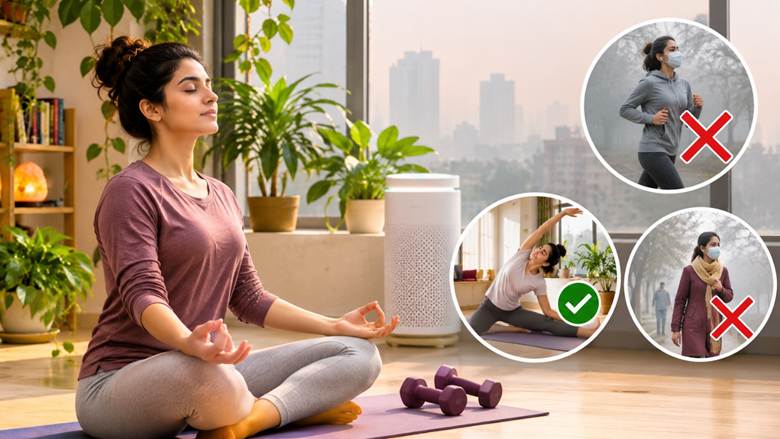
When AQI readings are in the Poor, Very Poor, or Severe categories, reducing outdoor exposure is one of the most practical steps available.
This does not mean staying indoors at all times. It means being thoughtful about when and how you go outside, and avoiding activities that significantly increase the amount of air you breathe in.
- Avoid strenuous outdoor exercise such as running, cycling, or sports when AQI is high. Physical exertion increases breathing rate and depth, which means more air, and more pollutants, entering the body.
- If a morning walk is part of your routine, check the AQI first. Consider timing your walks for periods when pollution levels are lower.
- Reduce unnecessary outdoor exposure on days when readings are severe. Combining errands or postponing non-essential outdoor activities can help.
- Follow local health advisories, particularly during prolonged high-pollution episodes.
- Explore indoor exercise alternatives during the most difficult weeks, yoga, home workouts, or gym sessions in filtered indoor spaces.
People with asthma, heart conditions, respiratory conditions, or other health concerns should follow the specific guidance of their healthcare professional, particularly during winter. The general advice here is a starting point, not a substitute for individualised medical guidance.
4. Choose the Right Mask When You Need to Go Outside
When going outside cannot be avoided during high-pollution periods, a properly fitted particulate-filtering mask can reduce exposure to fine particles.
Not all masks are equivalent. Ordinary cloth masks and surgical masks are designed to prevent the spread of large droplets, not to filter fine particles like PM2.5. For meaningful protection against fine particulate matter, a mask certified to filter small particles, such as an N95 or equivalent, used correctly and fitted properly, provides better protection than a cloth covering.
A few practical points:
- Fit matters significantly. A mask with gaps at the sides does not provide the protection its rating suggests.
- Masks should be used according to the manufacturer’s instructions, including guidance on how long they can be worn and when they should be replaced.
- No mask eliminates exposure entirely, but a well-fitted, appropriate mask can reduce it.
- Children’s masks need to be sized for children; adult masks are not suitable substitutes.
5. Make Your Indoor Environment More Comfortable
People in urban areas spend the majority of their time indoors, which means that indoor air quality is not a secondary concern. It is a primary one.
During high outdoor pollution periods, keeping windows closed where practical can reduce the entry of outdoor pollutants. This needs to be balanced with the need for ventilation, which is important for removing indoor pollutants generated by cooking, cleaning products, and normal activity. Opening windows briefly when outdoor AQI improves, such as on relatively cleaner days or during better-quality periods, allows fresh air exchange without excessive exposure.
Other steps worth considering:
- Air purifiers fitted with HEPA filters can help reduce indoor particulate matter, but they need to be appropriately sized for the room, placed and used correctly, and have their filters maintained or replaced as recommended.
- Avoid indoor smoking. Tobacco smoke generates significant fine particle pollution indoors.
- Limit the use of incense sticks, candles, and other sources of indoor combustion during the winter months, when ventilation is reduced.
- Keep living spaces dusted and vacuumed regularly to reduce settled dust that gets re-suspended into the air.
- Maintain kitchen exhaust ventilation to remove cooking smoke and particles at the source.
Indoor air quality depends on multiple factors simultaneously, and no single measure resolves it entirely. A combination of ventilation, source control, and filtration, used together, is more effective than any one approach alone.
6. Can Indoor Plants Help During Pollution Season?

This is a question that comes up often, particularly during winter when people are looking for ways to improve their indoor environment.
Indoor plants offer several genuine benefits. They bring greenery into living spaces, improve mood, encourage a habit of care and observation, and create a stronger connection with nature, particularly for people who spend long hours in urban interiors.
Popular choices for Indian homes include:
- Snake Plant: Tolerates low light well and requires minimal watering. A low-maintenance option for most indoor spaces.
- Areca Palm: Prefers brighter indirect light. Adds a soft, tropical quality to living rooms.
- Spider Plant: Hardy and adaptable. Works well in hanging planters or on shelves.
- Money Plant: Grows readily in water or soil with minimal attention. Suits almost any indoor corner.
- Peace Lily: Prefers shade and consistent moisture. Produces attractive white flowers.
- Rubber Plant: Bold, broad leaves and tolerates indirect light well. Suits larger indoor spaces.
- Boston Fern: Prefers humidity and indirect light. Works well in bathrooms or shaded balconies.
Here it is important to be accurate about what plants can and cannot do. Laboratory studies have shown that some plants can absorb certain volatile organic compounds under controlled conditions. However, the quantities of plants required to produce a meaningful air-cleaning effect in a typical room are far greater than what most homes can accommodate. Indoor plants are not a substitute for air purifiers or proper ventilation when it comes to managing fine particulate matter.
The honest answer is that plants bring very real benefits, but clean air requires ventilation, source control, and appropriate filtration. Plants add to a healthier living environment in ways that go beyond air composition alone.
7. Create a Small Green Corner at Home
You do not need a garden or a large balcony to bring greenery into your living space.
Even a few pots on a windowsill, a small herb planter in the kitchen, or a trailing plant on a shelf can change the feel of a room and give you a small but consistent connection to something growing.
Some practical approaches for urban homes:
- Balcony gardening with hardy plants that handle direct sun and wind, such as marigolds, basil, or small ornamental shrubs.
- Window-side plants positioned to catch available light, such as succulents, aloe vera, or snake plants.
- A small kitchen herb garden with mint, coriander, or curry leaf plants that can be used in cooking.
- Indoor foliage plants for rooms with limited natural light.
- Terrace gardens for those with rooftop access, which can support a wider variety of plants.
Caring for plants, even a few of them, encourages a small but consistent routine of attention and observation. For people who spend most of their day in front of screens and in traffic, that connection can be genuinely restorative.
A green corner at home is not a solution to urban pollution. But it is a small, real way of choosing nature within the space you have.
8. Protect Children and Elderly Family Members
Children and elderly family members may be more vulnerable to the effects of poor air quality, and deserve particular attention during high-pollution periods.
For children:
- Check AQI before outdoor play, particularly early morning sessions when pollution can be higher.
- Follow school advisories carefully. Schools in Delhi NCR sometimes restrict outdoor activities during severe pollution episodes.
- Limit prolonged outdoor exertion during high-AQI days.
- Watch for symptoms such as persistent coughing, eye irritation, or breathing difficulty, and seek medical advice if symptoms appear or worsen.
For elderly family members:
- Be especially cautious during Very Poor or Severe AQI days. Reduce outdoor exposure and ensure they are not exerting themselves outside during these periods.
- Ensure any prescribed respiratory medications are available and in date.
- Monitor for symptoms and seek prompt medical attention if breathing difficulties arise.
The guidance here is general and practical. For family members with existing respiratory, cardiovascular, or other health conditions, following the specific advice of their doctor is essential.
9. Build Healthier Winter Habits
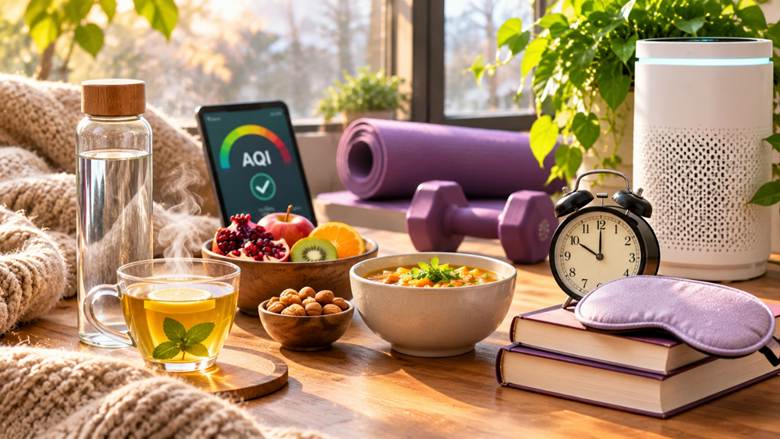
Winter is long, and high-pollution days can stretch for weeks. Building a few consistent daily habits is more sustainable than reacting to each day as it comes.
Simple habits that contribute to general well-being during winter:
- Stay well hydrated. Cold weather can reduce the sensation of thirst, but hydration remains important.
- Maintain a balanced and varied diet. No specific food reverses pollution damage, but eating well supports general health.
- Get adequate sleep. Rest supports overall immune function and helps the body manage daily environmental stresses.
- Exercise indoors when outdoor AQI is poor. Maintaining physical activity matters, even if the location needs to change.
- Keep your living space clean and ventilated where possible.
- Avoid unnecessary exposure to smoke, including from bonfires, vehicles left idling, and burning waste.
- Follow reliable pollution alerts rather than making assumptions based on appearance.
- Consult a healthcare professional for any persistent respiratory symptoms that develop or worsen during winter.
These habits are not remedies. They are practical ways of looking after yourself through a difficult season.
10. Why Spending Time in Green Surroundings Matters
Living in Delhi NCR means spending much of the year surrounded by buildings, traffic, concrete, and noise. During winter, when pollution is at its most challenging and the inclination to stay indoors is strongest, the city can feel particularly heavy.
Green spaces, parks, and open natural areas offer something that urban environments often cannot: room to breathe at a slower pace, natural light, and an environment that is simply different from the one most of us inhabit for most of the week.
When local AQI and weather conditions allow, spending time outdoors in greener environments can be restorative. A park, a garden, an open field, or a nature-oriented destination can offer a genuine change of experience from the urban pace.
It is worth noting that visiting a green destination does not guarantee pollution-free air. Air quality can vary in rural and semi-urban areas too, and travellers should check local AQI and weather conditions before planning extended outdoor activities at any destination.
That said, the broader value of spending time in natural surroundings, the change of pace, the exposure to open space, the opportunity to step away from the urban routine, is something many Delhi NCR residents benefit from during the winter months.
Discover a Different Kind of Getaway at Offgrid Rajasthan

Living in a busy city means spending much of your time surrounded by traffic, buildings, noise, and the continuous demands of everyday responsibilities. Sometimes, a change of surroundings is exactly what a family or a group of friends needs.
Offgrid Rajasthan, located in Kotputli, Rajasthan, offers a farmhouse setting where visitors can spend time in green outdoor spaces, explore the farm environment, and experience a pace of life that is quite different from what most Delhi NCR residents encounter during the working week.
It is a place to walk outdoors at your own pace, share meals without rushing, and spend time with family or friends without the constant pull of daily urban demands.
If you are planning a winter getaway from Delhi NCR, it is worth checking current weather and air quality conditions for your destination before travelling, as you would for any outdoor trip. Plan your visit thoughtfully and make the most of the open spaces the farmhouse offers.
Visit www.offgridrajasthan.com to explore Offgrid Rajasthan and plan your next farmhouse getaway.
Make Healthier Choices This Winter
Winter air pollution in Delhi NCR is a collective problem, and it requires collective solutions. Cleaner air across the region depends on policy, enforcement, urban planning, and changes that go well beyond what any individual household can achieve.
But individuals are not without agency. Staying informed, reducing unnecessary exposure, protecting vulnerable family members, and making thoughtful choices through the season are all practical and meaningful steps.
Check your AQI. Keep your indoor spaces sensible. Protect your children and elderly family members with extra care. Build habits that support your health through the months ahead.
And when you need a change of pace, a green setting, and time away from the city’s weight, consider a short getaway. Sometimes, a different environment is exactly what helps you return to your own life with a clearer head.
Offgrid Rajasthan in Kotputli, Rajasthan, is there when you are ready for that kind of break.
Plan Your Winter Getaway at Offgrid Rajasthan
If you are planning a getaway this winter, explore Offgrid Rajasthan in Kotputli, Rajasthan. Spend time in green surroundings, enjoy the outdoor spaces, reconnect with nature, and make time for experiences beyond your everyday routine.
Visit our website to explore the farmhouse and plan your stay.
Website: www.offgridrajasthan.com | Book your stay: www.offgridrajasthan.com/booking-form