
By Sanjay Kaushik, Founder – Uthhaan NGO & Off-Grid Rajasthan
Each morning, when I step out of my home in Gurgaon these days, I’m greeted not by sunlight but by a layer of haze that hides it. The air feels heavy, almost metallic, and there are moments when breathing itself feels like a conscious act of effort. It’s ironic — the city that once symbolized modern growth and opportunity now feels like a slow suffocation.
I often look at the grey skyline and wonder — when did we lose our right to breathe freely?
For the last few years, I’ve been living between two very different worlds — the structured, hurried life of Gurgaon, and the quiet, natural rhythm of our small farmhouse in Kotputli, Rajasthan. I founded Off-Grid Rajasthan not as a business venture, but as a personal quest — a way to remember what living truly feels like.
Whenever I travel there, leaving the city behind, I can feel the difference almost instantly. The air becomes lighter. The sky turns bluer. The mind, which feels cluttered in the city, begins to settle into silence. People smile more easily there. They speak slower. The food tastes of earth, not preservatives.
And each time I return to Gurgaon, I feel a strange ache — not just in my chest from the pollution, but in my heart from the realization that somewhere, we’ve drifted too far away from our roots.
The Winter Haze That Speaks Volumes
Delhi-NCR’s pollution has become an annual reality — a headline that repeats itself every November. The air quality index crosses 400, 500, sometimes even beyond. Schools close, flights are delayed, and face masks become a way of life again.
But this isn’t just data — this is about our children, our parents, our soil, our air. It’s about the fact that we’ve made survival in our own homes dependent on air purifiers.
And yet, the solution doesn’t lie in blaming the farmers, the government, or the industries alone. It lies in acknowledging that this crisis is born from our collective lifestyle.
We have chosen comfort over balance, speed over sustainability, and convenience over consciousness.
Every time we buy a new car instead of using public transport, every plastic bag we accept, every tree we cut for a parking lot — we add a small, invisible layer to this thick blanket of pollution. And now, we are living inside it.
The Real Cause — Our Disconnection from Nature
As someone who has spent decades working through Uthhaan NGO, I’ve seen firsthand how deeply our health and happiness are tied to nature. We often say “save the environment” as if it’s something outside of us — a separate entity. But the truth is, we are the environment.
When we pollute the air, we poison our lungs.
When we contaminate rivers, we corrupt our own blood.
When we destroy forests, we erase the oxygen of our future generations.
We’ve forgotten this sacred relationship. The city lifestyle — high-rises, sealed windows, fast food, digital screens — has distanced us from the soil beneath our feet.
Nature operates on balance. When we consume beyond what we give back, imbalance takes over — and pollution is simply the symptom of that imbalance.
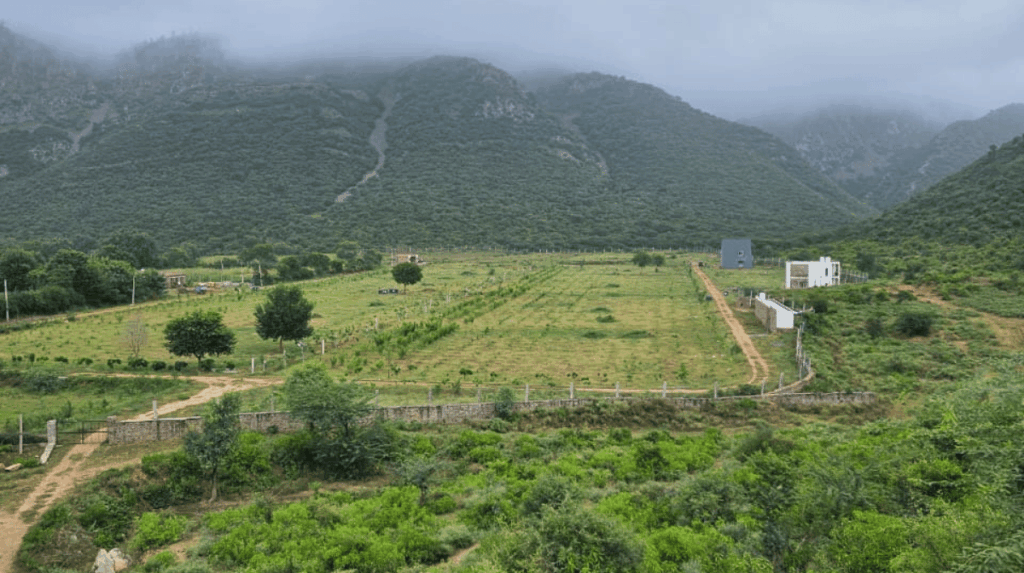
The Healing I Found in Rural Simplicity
At Off-Grid Rajasthan, I’ve witnessed something remarkable — how quickly nature begins to heal when left undisturbed.
The farm is nestled in a small village near Kotputli, far from Delhi’s chaos. The nights there are silent except for the sound of crickets. The mornings arrive with birdsong, not honking cars. The air smells of neem, tulsi, and wet soil.
We grow everything organically — using compost made from our kitchen waste, watering plants with recycled water, and depending on solar energy for electricity. We don’t burn waste; we repurpose it. Nothing goes to waste because nothing in nature is waste.
Whenever I’m there, I find myself breathing differently. Deeper. Freer. And I realize — this is not luxury; this is how life is supposed to be.
The villagers nearby live simple lives, but their smiles are wider than most I see in Gurgaon’s glass towers. They still touch the soil, cook on earthen stoves, and value community over competition. Their air is pure because their intentions are pure — they take from the Earth only what they need, and they give back what they can.
What Can We — the Citizens — Do?
It’s easy to feel helpless looking at the rising smog, but each of us can make a difference. True change starts not in the Parliament, but in the home.
Here are a few conscious steps every citizen can take — starting today:
- Plant trees — not as a formality, but as a responsibility. Choose native species like neem, amaltas, peepal, or kadamba.
- Compost kitchen waste. Let your leftovers return to the soil instead of plastic bins.
- Avoid burning waste. Reuse, repurpose, recycle.
- Use public transport, carpool, or cycle. One less car can make a difference when a million people do it.
- Conserve energy. Switch off lights and appliances when not in use. Solar panels are not just for villages — they are for everyone.
- Reduce plastic dependency. Carry cloth bags, refill bottles, support brands that follow eco-friendly packaging.
- Support organic and local farmers. You not only eat healthier food but also encourage sustainable agriculture.
- Educate children early. Let them grow up knowing that clean air is a right that must be protected, not demanded.
Each small act is like planting a seed of change. If we all begin, the collective impact can transform our future.
Why We Built Off-Grid Rajasthan
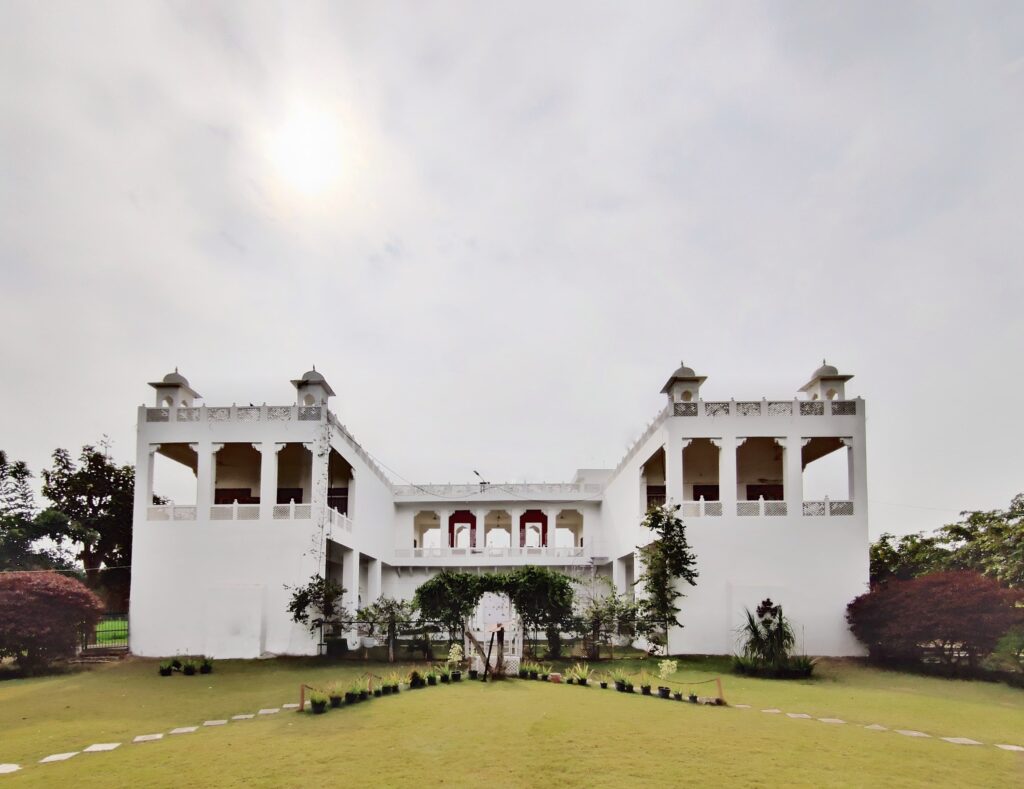
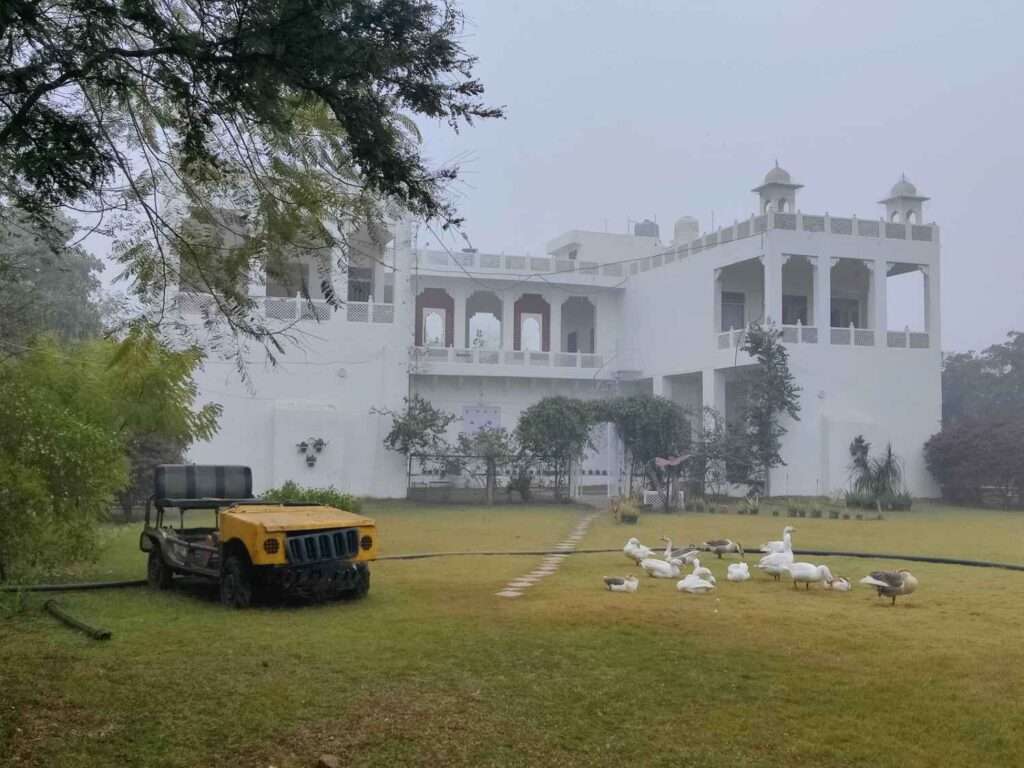
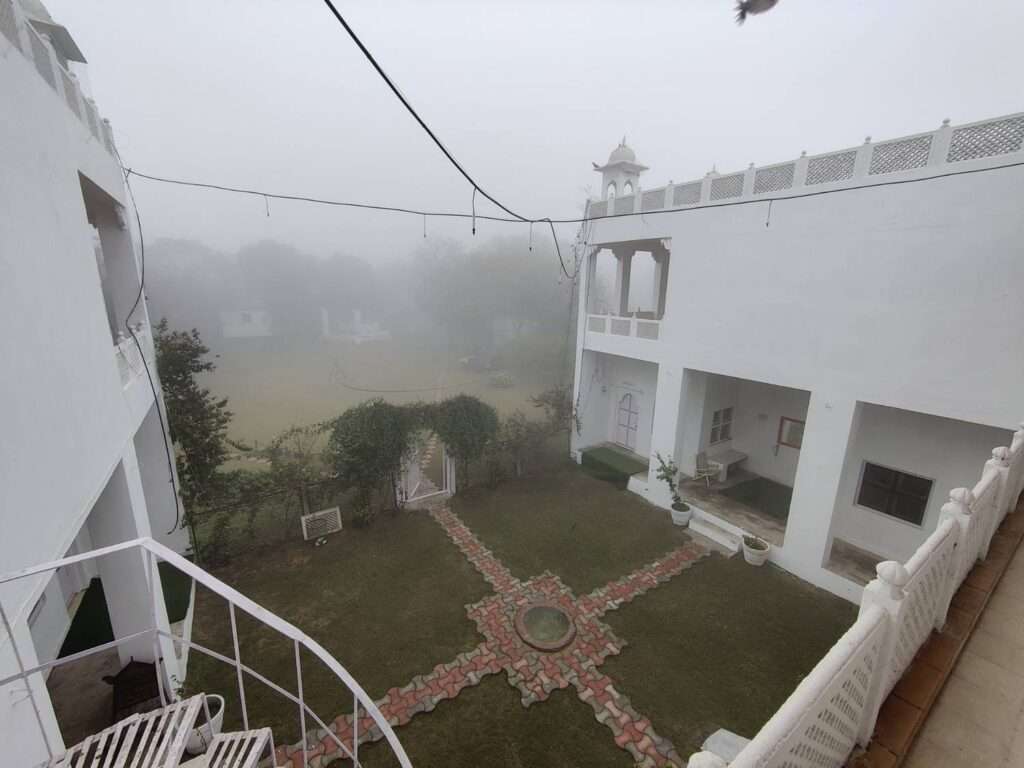
The idea behind Off-Grid Rajasthan wasn’t just to create a retreat — it was to create a reminder.
A reminder of the kind of life that heals you instead of draining you.
Our farmhouse is built on the principles of green living and minimum waste:
- We recycle every drop of water.
- We use solar energy to power our spaces.
- We follow composting systems that turn waste into nourishment.
- We encourage guests to plant trees during their stay — a small act that lives on long after they’ve left.
- We grow organic vegetables, cook with natural ingredients, and avoid plastic completely.
This isn’t an escape from modern life — it’s a conscious return to balance.
I often tell our visitors, “Come not to run away from the city, but to remember what peace feels like.”
And when they do, something changes in them. They begin to notice the difference between clean and polluted air. Between silence and noise. Between fullness and emptiness.
Many tell me that when they return to the city, they start taking small steps — planting a tree, starting composting, reducing plastic. And that, for me, is the greatest success of Off-Grid Rajasthan.
The Call of Responsibility
We cannot keep blaming the system while continuing the habits that create the problem.
We — the citizens — are the system. And real reform begins when we change the way we live, buy, travel, and consume.
It’s easy to wait for government action, but if every citizen planted one tree, refused one plastic bag, chose one sustainable product — imagine the ripple effect.
The air we breathe belongs to all of us, and so does the duty to protect it.
This winter, as Delhi and Gurgaon once again struggle to see the sun, I invite you to pause. Look around. Feel the air in your lungs. And ask yourself — what legacy are we leaving for our children?
If you are tired — tired of coughing, tired of concrete, tired of noise — I invite you to visit us at Off-Grid Rajasthan. Not as a tourist, but as a seeker. Come experience what it feels like to breathe truly fresh air, to eat from the soil that nourishes you, to live a day in harmony with nature.
It’s not luxury. It’s a homecoming.
And maybe, when you return to your city life, you’ll carry a piece of that calm within you — and begin to make small, conscious changes in your own surroundings. Because that’s how transformation begins — one aware heart at a time.
In Closing
I often say, the Earth doesn’t need us — we need her. And she is infinitely forgiving. Give her space, and she will heal.
The grey air outside is not a punishment — it’s a message.
It’s nature’s way of reminding us that we cannot keep taking without giving back.
Let’s not wait for laws and machines to purify what our hearts and hands can restore. Let’s live in a way that allows our children to see the sky blue again.
We still have time. But we must begin — now.
(Authored by Mr. Sanjay Kaushik, Founder – Uthhaan NGO & Off-Grid Rajasthan, environmentalist, advocate of green living, and passionate promoter of sustainable, organic, and mindful ways of coexisting with nature.)
blog is very informative…