

Every winter in Delhi NCR, the same routine begins. You wake up, check the AQI, and decide whether to open the windows or leave them shut. You look at the haze outside and start wondering what you can do to make your home’s air a little healthier.
And sooner or later, the idea of indoor plants comes up. A Snake Plant in the bedroom. A Money Plant trailing across a shelf. A Peace Lily on the coffee table. The internet is full of articles promising that the right combination of houseplants can clean your indoor air and protect your family from pollution.
But can indoor plants really do that? Or is their air-purifying reputation somewhat larger than what the science actually supports?
This article explores what plants can genuinely do for your indoor environment, what they cannot do, which plants are worth considering for Indian homes, and what actually helps when it comes to managing indoor air quality. The answer is more nuanced than most gardening articles suggest, and knowing the difference matters.
Where Did the Idea of Air-Purifying Plants Come From?
The popular belief that houseplants can clean indoor air traces back largely to research conducted by NASA in the late 1980s. Scientists were studying how to maintain air quality in sealed space station environments and found that certain plants, when placed in controlled sealed chambers, could absorb particular volatile organic compounds (VOCs) such as benzene, formaldehyde, and trichloroethylene.
The research was genuinely interesting. Some plants showed measurable ability to interact with these airborne chemicals under those conditions. The findings were published and, over time, found their way into gardening culture, home decor writing, and wellness content, usually without the important context of how those experiments were actually conducted.
Laboratory conditions are very different from a living room in Gurgaon or a flat in Noida. In the NASA experiments, plants were placed in small, sealed chambers with controlled concentrations of specific compounds. A typical home has much larger air volumes, continuous ventilation, far more varied pollution sources, and far fewer plants per square metre than those experiments used.
A finding from a sealed laboratory chamber does not automatically translate into a meaningful effect in a real home. That gap between the lab and the living room is important.
What Does Science Actually Say About Indoor Plants and Air Pollution?
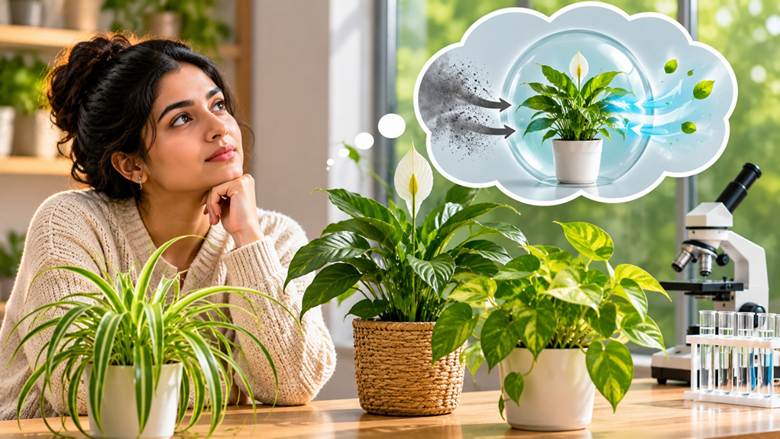
A significant review published in 2019 by researchers Bryan Cummings and Michael Waring looked closely at the existing body of research on potted plants and indoor air quality. Their analysis examined dozens of studies and reached a conclusion that many plant enthusiasts find surprising: the air-cleaning effect of a few houseplants in a real home is likely too small to make a meaningful difference to indoor air quality.
The core problem is one of scale. Plants do interact with certain compounds, but they do so slowly and in relatively small quantities. A typical home exchanges its air with the outdoors multiple times per hour through natural ventilation and air gaps. That rate of air exchange is simply much faster than the rate at which a few potted plants can remove pollutants.
To achieve the kind of air-cleaning effect that laboratory experiments suggest, you would need a number of plants that is impractical in most homes. Studies suggest hundreds of plants per square metre in some cases.
There is also an important distinction that gets lost in popular coverage. VOCs, the compounds that some plants can absorb to a degree, are chemically different from particulate matter. PM2.5 and PM10, the fine particles that are of greatest concern during Delhi NCR’s winter pollution season, are physical particles, not gases. Plants are not an effective mechanism for removing particulate matter from indoor air.
The honest scientific picture is this: plants are real and living things that interact with their environment in complex ways, but their effect on indoor air quality in a typical home, at typical plant densities, is not significant enough to substitute for mechanical filtration or proper ventilation.
This does not mean plants have no value. It means their value lies somewhere other than air purification.
Seven Popular Indoor Plants You Can Consider for Your Home
Even though indoor plants are not substitutes for air purifiers or ventilation, they remain genuinely worthwhile additions to a home. They bring greenery into everyday spaces, create a visual connection with nature, and reward consistent care with steady growth.
Here are seven plants that work well in Indian homes, with honest information about what each one needs and any relevant safety considerations.
1. Snake Plant (Sansevieria)
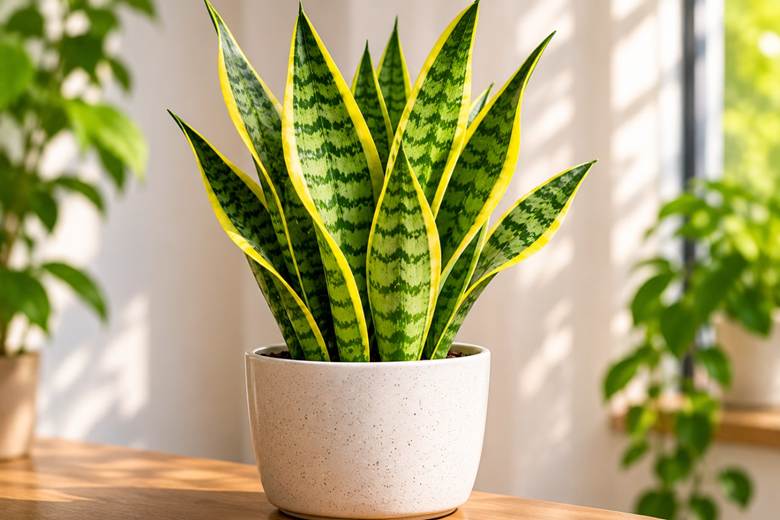
The Snake Plant is one of the most popular choices for Indian homes, and for good reason. Its upright, architectural leaves work in a range of spaces and it tolerates lower light conditions better than many other houseplants.
- Light: Adapts to low to bright indirect light; avoids direct harsh sun.
- Water: Water infrequently; allow the soil to dry completely between waterings. Overwatering is the most common problem.
- Beginner-friendly: Yes. Very forgiving of irregular care.
- Pet safety: Toxic to cats and dogs if chewed. Keep out of reach of pets.
2. Areca Palm (Dypsis lutescens)
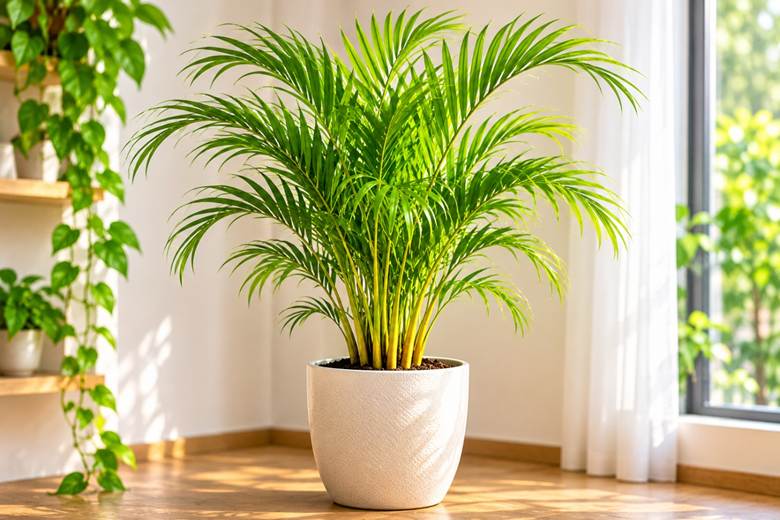
The Areca Palm brings a soft, tropical quality to larger indoor spaces. It suits living rooms and areas where it has room to spread its graceful arching fronds.
- Light: Needs bright, indirect light. A north or east-facing window works well.
- Water: Keep the soil consistently moist but not waterlogged. Water more frequently in summer, less in winter.
- Space: Needs room. Can grow quite large indoors.
- Beginner-friendly: Moderate. Requires more attention to light and humidity than some other plants.
- Pet safety: Generally considered non-toxic to pets.
3. Money Plant (Pothos / Epipremnum aureum)
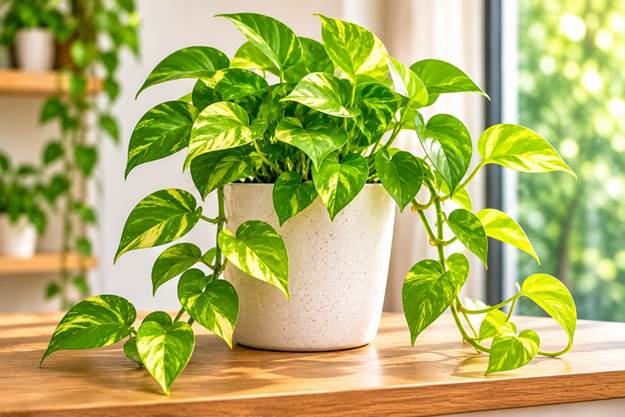
One of the most familiar plants in Indian homes, the Money Plant is adaptable, grows readily, and suits a variety of settings from shelves to hanging pots.
- Light: Tolerates low to medium indirect light. Grows faster in brighter conditions.
- Water: Allow the top layer of soil to dry between waterings. Can also be grown in water.
- Beginner-friendly: Very. Among the easiest houseplants to maintain.
- Pet safety: Toxic to cats and dogs if ingested. Keep away from pets.
4. Spider Plant (Chlorophytum comosum)
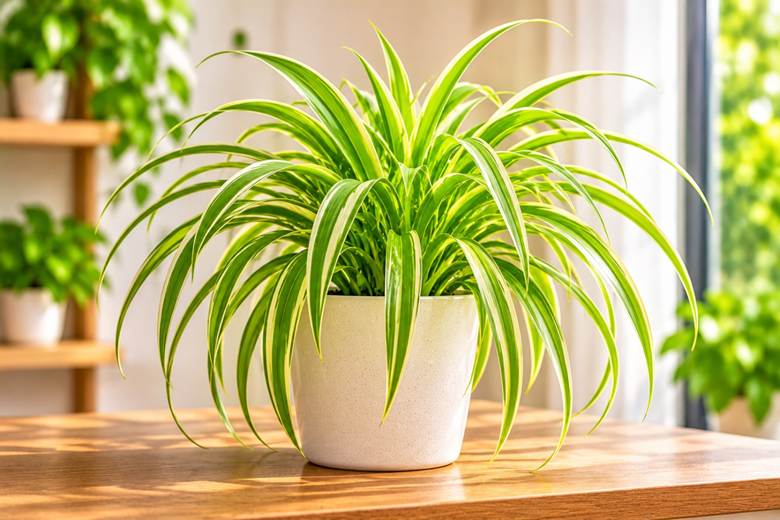
The Spider Plant is recognisable by its long arching leaves and the small plantlets it produces. It is adaptable, grows readily, and is an excellent choice for first-time plant owners.
- Light: Prefers indirect light. Tolerates lower light reasonably well.
- Water: Water regularly but allow the soil to dry slightly between waterings.
- Propagation: The plantlets can be rooted in water or soil to grow new plants.
- Beginner-friendly: Yes. Very easy to maintain.
- Pet safety: Generally considered non-toxic to cats and dogs.
5. Peace Lily (Spathiphyllum)
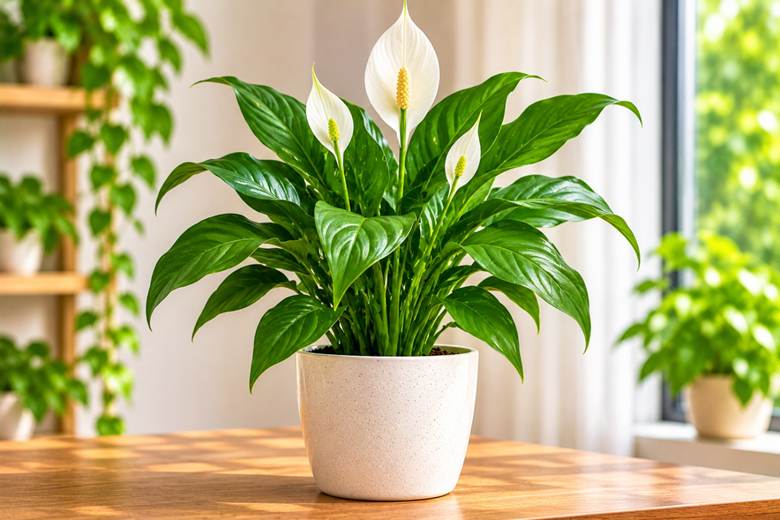
The Peace Lily is known for its attractive dark green leaves and elegant white flowers. It suits spaces with lower light and adds a quietly decorative quality to a room.
- Light: Prefers low to medium indirect light. Avoid direct sunlight.
- Water: Keep the soil consistently moist. Drooping leaves are often a sign that it needs water.
- Beginner-friendly: Moderate. The plant communicates its needs clearly through its appearance.
- Pet safety: Toxic to cats and dogs if ingested. Place carefully if pets are present.
6. Rubber Plant (Ficus elastica)
The Rubber Plant’s broad, glossy leaves make it a striking presence in any room. It grows steadily and can become a significant feature in a living space over time.
- Light: Needs bright, indirect light. Can tolerate lower light but grows more slowly.
- Water: Allow the top layer of soil to dry between waterings. Overwatering can damage roots.
- Space: Grows tall. Allow adequate headroom.
- Beginner-friendly: Moderate. Fairly straightforward once its light and water needs are understood.
- Pet safety: The sap can irritate skin. Toxic to cats and dogs if ingested.
7. Boston Fern (Nephrolepis exaltata)
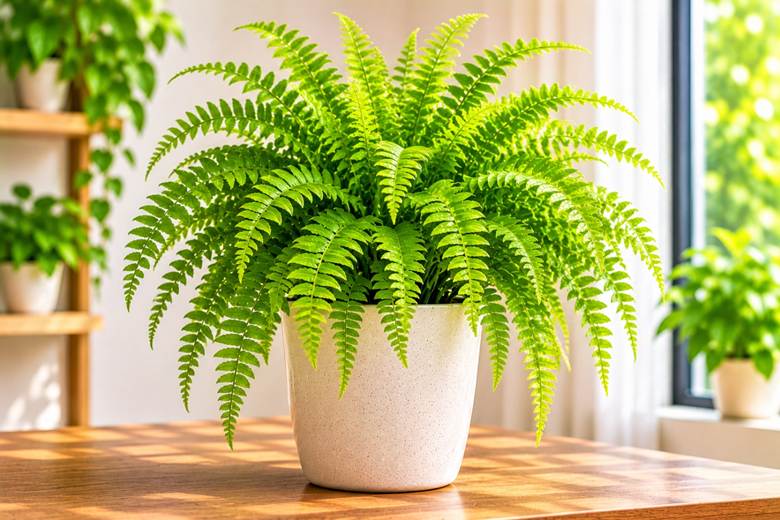
The Boston Fern’s soft, lush fronds make it one of the more visually delicate houseplants available. It suits people who enjoy caring for plants, as it requires more consistent attention than some of the others on this list.
- Light: Prefers indirect light. Direct sun will scorch its fronds.
- Water: Needs consistent moisture and appreciates higher humidity. Misting can help in dry indoor conditions.
- Beginner-friendly: Less so. It can be particular about humidity and watering.
- Pet safety: Generally considered non-toxic to cats and dogs.
What Can Indoor Plants Actually Do for Your Home?
The genuine benefits of indoor plants are real, they are simply different from what popular coverage usually suggests.
Plants make living spaces more inviting. A room with greenery looks and feels different from one without. The natural colour, texture, and variety that plants bring to an indoor space is an aesthetic benefit that is difficult to replicate through other means.
Plants create a connection with nature. For people who spend most of their day in front of screens, in traffic, or in entirely built environments, having something living and growing nearby provides a small but consistent reminder of the natural world.
Caring for plants is a rewarding practice. Watering, pruning, repotting, and watching something grow are activities that require patience, attention, and consistency. Many people find the routine of plant care quietly satisfying.
There is also a concept from environmental design called biophilic design, which explores how incorporating natural elements into built spaces can contribute to making those spaces feel more pleasant and liveable. Plants are one of the simplest expressions of this idea.
Plants are worth having in your home. The reason simply isn’t because they clean your air. It’s because they connect you to something growing, and that matters in its own right.
What Indoor Plants Cannot Do: Common Myths to Stop Believing
Given how widely the air-purifying plant idea has circulated, it is worth being direct about what plants genuinely cannot do.
- A few houseplants cannot replace an air purifier. Even several dozen plants would not achieve what a properly sized HEPA air purifier can do.
- Indoor plants cannot protect you from Delhi NCR’s outdoor pollution. The particulate matter coming in from outside is a different problem entirely, and plants are not equipped to address it.
- Plants do not meaningfully remove PM2.5 and PM10. These fine particles require mechanical filtration, not biological processes, to be captured.
- A Snake Plant in the bedroom does not guarantee cleaner or safer air while you sleep. It may make the room more pleasant, but it is not performing the kind of filtration that claim implies.
- More plants do not automatically mean better air quality. At realistic densities in a home, the relationship between plant count and air quality improvement is negligible.
- Plants cannot eliminate cooking fumes, indoor smoke, mould, or household chemicals. These require source control, ventilation, and in some cases filtration.
Believing that plants alone are protecting your indoor air can create a false sense of security that leads people to skip practical measures that would actually help.
What Actually Helps Improve Indoor Air Quality?
If plants are not the answer to indoor air pollution, what is? The practical measures are less photogenic than a Peace Lily, but considerably more effective.
Improve filtration
- An air purifier fitted with a HEPA filter can capture fine particles, including PM2.5, from indoor air.
- Size the purifier correctly for the room it is in. An undersized unit will not keep up with the air volume.
- Replace or clean filters according to the manufacturer’s schedule. A clogged filter is significantly less effective.
Manage ventilation carefully
- Check the outdoor AQI before opening windows. On high-pollution days, keeping windows closed reduces the entry of outdoor particulates.
- Ventilate when outdoor air quality is suitable, to remove indoor pollutants generated by cooking and normal activity.
- Use kitchen exhaust systems when cooking to remove smoke and particles at the source.
Reduce indoor pollution sources
- Avoid indoor smoking. It generates significant fine particle pollution indoors.
- Limit the use of incense sticks and candles during periods when ventilation is reduced.
- Keep living spaces dusted and clean to reduce settled particles that re-enter the air.
- Address dampness and mould promptly. Mould spores contribute to poor indoor air quality.
- Store household chemicals and cleaning products safely and use them in well-ventilated conditions.
Monitor and stay informed
- Follow reliable AQI sources such as the Central Pollution Control Board (CPCB) during winter.
- Understand that outdoor pollution enters indoor spaces, particularly in homes with limited sealing.
- Take appropriate precautions during severe pollution episodes, particularly for children and elderly family members.
Beyond Indoor Plants: Why We Need More Green Spaces in Our Lives
There is a significant difference between having a potted plant on a shelf and walking through an open garden, sitting under a tree, or spending time in a genuinely natural environment.
A plant in a room connects you to nature in a small and domestic way. An outdoor green environment offers something much harder to replicate indoors: open space, natural light at its full range, the sounds and textures of living systems that extend beyond a pot.
For people living in Delhi, Gurgaon, Noida, or Faridabad, meaningful outdoor green spaces can be difficult to access easily, particularly during winter. But the value of seeking them out when conditions allow is real.
Spending time outdoors in natural surroundings, whether a park, a garden, or a destination outside the city, offers a change of pace and environment that indoor plants, however lovingly tended, simply cannot replicate. It is worth noting that air quality varies in rural and semi-urban areas too, and travellers should check local AQI and weather conditions before planning extended outdoor activities wherever they go.
A plant at home is a small daily connection with nature. Time outside in a genuinely green space is something larger. Both matter, and neither replaces the other.
Experience a Different Kind of Getaway at Offgrid Rajasthan
Adding plants to your home is a wonderful way to bring a little greenery into your everyday surroundings. But sometimes, it is equally important to step outside and experience nature beyond the walls of your home.
Offgrid Rajasthan, located in Kotputli, Rajasthan, is a farmhouse where visitors can spend time in green outdoor surroundings, explore the farm environment, and experience a pace of life that feels genuinely different from a typical week in the city.
The appeal is not complicated. It is open space, outdoor walking, the sounds of a working farm, shared meals, and the particular quality of attention that comes when you are somewhere that is not your usual routine.
If you are planning a getaway from Delhi NCR this winter, it is worth checking local weather and air quality for your destination before travelling, as it is for any outdoor trip. Plan your visit thoughtfully, and make time for the outdoor spaces the farmhouse offers.
Discover Offgrid Rajasthan and plan your next getaway at www.offgridrajasthan.com.
Explore Offgrid Rajasthan
If you are looking for a change from the busy rhythm of city life, explore Offgrid Rajasthan in Kotputli, Rajasthan.
Spend time in green surroundings, enjoy the farmhouse’s outdoor spaces, experience a nature-oriented getaway, and make time for yourself and your loved ones.
Discover Offgrid Rajasthan and plan your next getaway through our official website.
Website: www.offgridrajasthan.com | Book your stay: www.offgridrajasthan.com/booking-form