

A practical guide to making your next holiday more comfortable, less stressful, and genuinely enjoyable.
A good holiday begins long before you reach your destination.
Most travel problems are not caused by bad luck. They are caused by small things that were easy to check and easy to forget. The medicine left behind. The wrong clothes packed for the weather. The booking confirmation not saved. The route not checked until the last minute.
None of these mistakes are serious on their own. But they have a way of adding up, and when they do, you spend the first day of your holiday sorting things out instead of settling in.
A memorable trip is not just about choosing the right destination. A little preparation beforehand can make the difference between a holiday that runs smoothly and one that starts with unnecessary frustration.
Thoughtful planning does not mean scheduling every minute. It means taking care of the essentials so that once the journey begins, you can focus on enjoying it.
Here are the small things that can make a real difference to your next trip.
1. Research Your Destination Before You Travel
Understanding where you are going before you arrive can prevent a lot of confusion and disappointment.
This is especially true for nature-oriented getaways, farmhouse stays, and rural destinations, which may offer a very different experience from a city hotel. Knowing what to expect means you arrive prepared rather than surprised.
A few things worth checking in advance:
- The location and how to reach it, including road conditions and travel time.
- The expected weather during your dates, particularly for outdoor activities.
- Local customs, visitor guidelines, or any relevant seasonal considerations.
- The type of accommodation and what surroundings to expect.
- Nearby essential services, including medical facilities if you are travelling with children or elderly family members.
A quick look at the map and a few minutes reading about your destination can save several hours of confusion during the trip itself.
2. Make a Packing Checklist Instead of Packing at the Last Minute

Last-minute packing is one of the most reliable ways to forget something important. A simple checklist does not take long to make, and it prevents the frantic repacking that happens when you realise at the door that something is missing.
Pack according to where you are going and what you plan to do there, rather than simply how many days you will be away.
Clothing and footwear
- Pack according to the weather forecast and planned activities.
- Carry comfortable walking shoes or suitable outdoor footwear.
- Include an extra set of clothes, particularly on longer trips or visits to outdoor destinations.
- Consider layers for destinations where temperatures change between morning and evening.
Personal essentials
- Toiletries and personal hygiene items.
- Sunscreen, sunglasses, and a hat for outdoor destinations.
- A reusable water bottle.
- Chargers, a power bank, and any necessary travel accessories.
Important documents
- Government-issued identification where required.
- Booking confirmations and travel tickets saved on your phone and as a printed copy if possible.
- Driving licence and vehicle documents for road trips.
- Emergency contact information noted separately from your phone.
Packing should reflect the destination and activities, not just the number of nights away.
3. Keep Your Medicines and Basic First-Aid Essentials Ready
This is one of the most commonly overlooked parts of travel preparation, and also one of the most straightforward to manage.
If you take prescribed medicines regularly, check that you have enough to last the entire trip with a small buffer. Running out of regular medication far from a pharmacy can be genuinely stressful.
A basic travel first-aid kit is worth carrying on most trips, particularly for outdoor and rural destinations. General items that tend to be useful include:
- Prescribed medicines in adequate quantities.
- Basic wound care supplies.
- Something for headaches, fever, or mild stomach discomfort.
- Any personal medical essentials specific to your needs or conditions.
- Relevant allergy information written down, particularly if you are visiting a remote location.
- Appropriate sun protection for extended outdoor activity.
A first-aid kit is not a substitute for professional medical care, but having the basics available can make minor issues easier to manage while travelling.
4. Plan Your Budget, But Leave Room for Spontaneity

Travelling without any sense of a budget can lead to financial stress at exactly the wrong moment. A rough idea of expected costs across the main categories is usually enough to travel comfortably without monitoring every expense.
The main things to account for:
- Accommodation and transport.
- Food and refreshments, including meals during the journey.
- Activities, experiences, and entry fees where relevant.
- A small emergency reserve for unexpected expenses.
- Payment options, including whether your destination has reliable card acceptance or if you should carry cash.
It is also worth checking what your accommodation booking includes and what may cost extra. Understanding this before arrival prevents surprises at checkout.
Good planning leaves enough flexibility to enjoy an unexpected discovery without worrying about every expense.
5. Check Your Accommodation Before You Arrive
Making assumptions about accommodation is one of the more common sources of travel disappointment. A quick confirmation call or message a day or two before arrival can resolve most potential issues in advance.
Things worth checking or confirming:
- Booking dates and check-in time.
- Available amenities and facilities.
- Meal arrangements, including whether advance notice is required for dietary preferences.
- Activities available at or near the property, along with timings and any additional charges.
- The exact location and access route, particularly for rural properties.
- Any relevant guidelines the property has for guests.
For farmhouse stays and nature-oriented getaways, it is especially useful to understand the surroundings before you pack. A farmhouse in a rural setting will have a different environment from a city hotel, and packing accordingly makes the stay considerably more comfortable.
If you are considering a farmhouse experience in Rajasthan, Offgrid Rajasthan in Kotputli, Rajasthan, offers a setting where visitors can spend time in natural surroundings, explore organic farming, and enjoy a slower pace away from the city.
You can explore the stay and plan your visit at www.offgridrajasthan.com.
6. Prepare for the Weather and Outdoor Conditions
Weather can change between the time you book and the time you travel. Checking the forecast a day or two before departure gives you a more accurate picture than checking a month in advance.
For outdoor and rural destinations, preparation makes a genuine difference to how comfortable the experience is.
- Pack suitable clothing for the season, including a light layer for cool evenings.
- Carry sun protection for daytime outdoor activity.
- Stay hydrated during outdoor time, especially in warm weather.
- Wear suitable footwear for the terrain, particularly for farm walks or nature trails.
- Take sensible precautions during rain or extreme temperatures.
Travellers visiting rural or nature-oriented destinations should expect a different environment from a city hotel. Open spaces, natural surroundings, and outdoor activities require a slightly different kind of preparation, and that preparation is usually straightforward.
7. Travel Safely, Especially During Road Trips
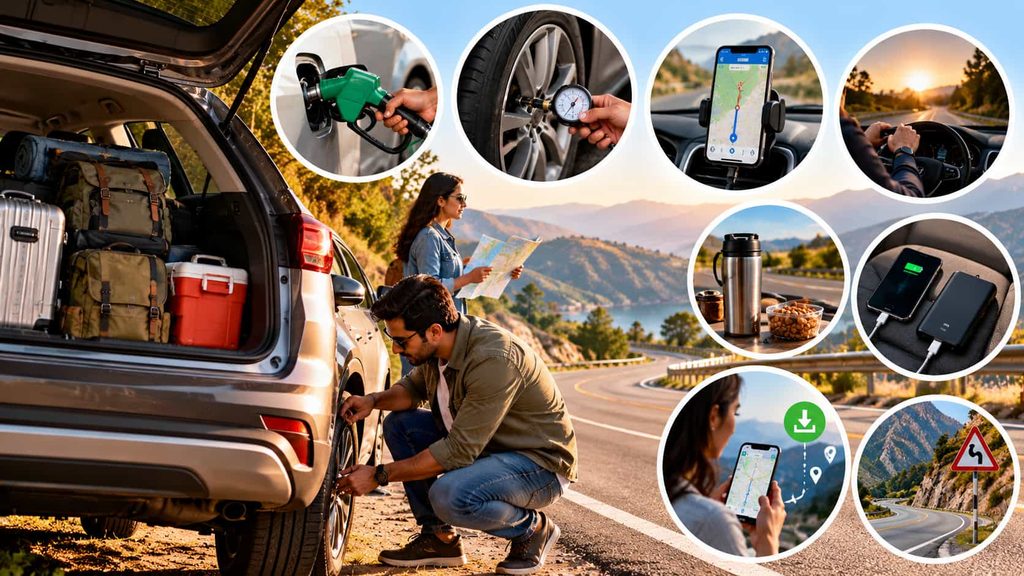
Road trips to rural or nature destinations are a popular choice for families and groups travelling from urban areas. A few basic checks before and during the drive make the journey considerably safer.
- Check the vehicle before departure, including fuel, tyres, and basic fluid levels.
- Plan the route in advance and download offline maps if connectivity may be limited.
- Take breaks on longer drives, particularly every two to three hours.
- Avoid driving when tired.
- Share your itinerary and expected arrival time with someone at home.
- Keep phones charged and a power bank accessible during the journey.
- Follow local traffic rules and avoid unfamiliar shortcuts in poor conditions.
The priority is arriving safely. Reaching your destination a little later than planned is always better than rushing.
8. Take Care of Your Food, Water, and Energy
Long journeys and new environments can be tiring, and it is easy to neglect the basics when you are caught up in the excitement of a trip. Staying comfortable during travel is mostly about staying hydrated, eating sensibly, and taking rest when you need it.
- Drink clean, safe water throughout the journey and at your destination.
- Carry suitable snacks for longer road journeys to avoid arriving hungry and impatient.
- Eat balanced meals where possible rather than relying entirely on convenience food.
- Be mindful of food storage and hygiene, particularly in warm weather.
- Take breaks when tired rather than pushing through discomfort.
- Avoid packing an itinerary so full that there is no time to rest.
An over-scheduled holiday can leave you more tired at the end than you were at the beginning. Leaving space for rest is not wasted time.
9. Respect Nature and Local Communities
Responsible travel is straightforward in practice. It mainly involves being aware of your impact on the places you visit and the people who live there.
- Avoid littering and carry a bag for your waste until you can dispose of it properly.
- Reduce unnecessary single-use plastic where you can.
- Respect plants, wildlife, and natural surroundings.
- Follow the property’s guidelines for guests.
- Ask before photographing local people.
- Respect local customs and personal boundaries.
- Appreciate local knowledge, crafts, food traditions, and livelihoods rather than treating them as background scenery.
This is particularly relevant at farmhouse stays and rural destinations, where visitors have the opportunity to engage directly with local communities and agricultural practices.
At Offgrid Rajasthan, the setting encourages a more thoughtful relationship with the natural environment and the local community. The experience is more rewarding when visitors approach it with genuine curiosity and respect.
10. Make Room for Experiences, Not Just an Itinerary
One of the most common travel mistakes is building a schedule so tight that there is no space for anything unexpected.
The moments that become stories are rarely the ones that were planned in advance. They are the longer meal that nobody wanted to end, the conversation that went on until evening, the activity you tried on a whim, the walk that took a different direction.
A well-prepared trip should leave time for:
- Unhurried meals.
- Conversations with travel companions that don’t get cut short.
- Exploring the surroundings at your own pace.
- Trying a new activity or experience.
- Observing nature without needing to be somewhere else in fifteen minutes.
- Enjoying time without constantly checking the clock.
A farmhouse getaway is particularly well suited to this kind of unscheduled pace. The setting itself encourages you to slow down, step outside, and pay attention to what is around you.
If you are looking for a nature-oriented getaway in Rajasthan that offers outdoor space, farming experiences, and a slower rhythm, Offgrid Rajasthan in Kotputli, Rajasthan, is worth exploring.
11. A Quick Travel Checklist Before You Leave
Use this as a final check before you head out.
Destination and planning
- Destination and expected weather checked.
- Travel route planned and downloaded offline if needed.
- Accommodation booking confirmed with check-in details.
- Accommodation instructions and activity details checked.
Packing
- Clothing and footwear packed for the destination and activities.
- Government-issued identification and travel documents ready.
- Medicines and personal essentials packed.
- Phone, charger, and power bank ready.
- ✓ Reusable water bottle packed.
Logistics
- Budget and payment options organised, including cash if needed.
- Emergency contacts noted and accessible.
- Itinerary shared with someone at home.
- Home secured before departure.
Mindset
- Responsible and waste-conscious travel habits in mind.
- Space left in the itinerary for rest and unexpected experiences.
A Little Preparation Can Make Your Holiday Better
Preparing for a trip is not about controlling every detail or removing every possible inconvenience. It is about taking care of the essentials beforehand so that you can be more present, more comfortable, and more open to enjoying what the holiday offers.
The travellers who seem to have the best holidays are not usually the ones with the most elaborate plans. They are the ones who showed up ready, stayed flexible, and paid attention to where they were.
Whatever kind of holiday you are planning, the preparation is worth the small effort it takes.
And if you are looking for a destination that rewards exactly that kind of open, unhurried attention, a farmhouse setting in Rajasthan might be the right choice.
Explore Offgrid Rajasthan
Planning your next getaway? If you are looking for a change of pace, a farmhouse setting, and an opportunity to spend time closer to nature, explore Offgrid Rajasthan in Kotputli, Rajasthan.
Discover the stay and experiences that suit your next break, and plan your visit at the website below.
Visit: www.offgridrajasthan.com | Book your stay: www.offgridrajasthan.com/booking-form