
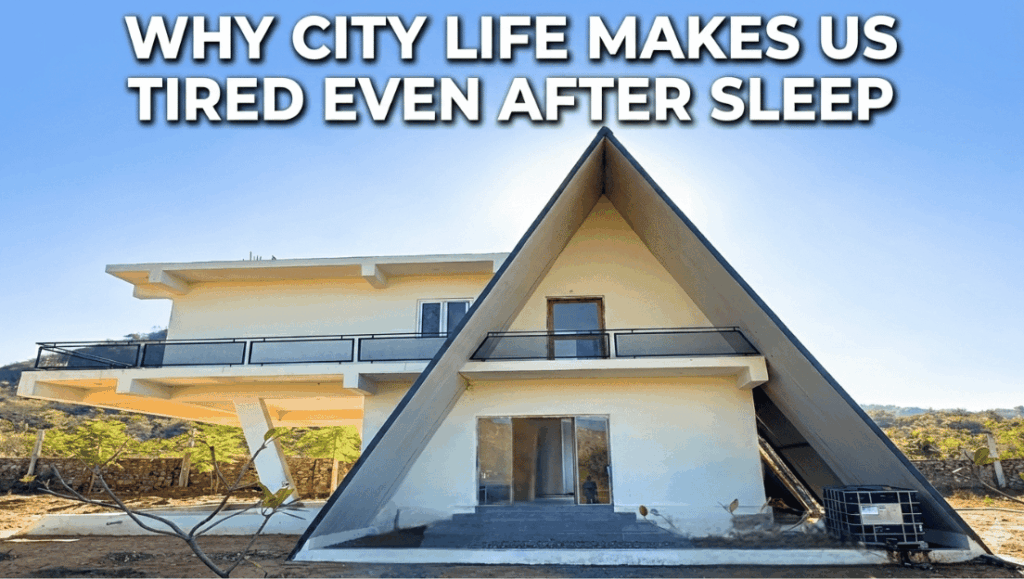
Have you ever woken up after a full night’s sleep and still felt drained — not just physically, but from somewhere deeper inside? Your eyes open, the alarm stops ringing, yet your body feels heavy, your mind foggy, and your heart strangely unenthusiastic about the day ahead.
You ask yourself:
“Why am I so tired when I slept properly?”
This exhaustion has become so normal in city life that we barely question it anymore. We blame age, workload, responsibilities, hormones, stress, or simply say, “This is how life is.” But the truth is — this tiredness is not natural.
It is the quiet consequence of living a life disconnected from rhythm, nature, and grounding.
City life does not just tire the body. It exhausts the mind, overwhelms the emotions, and slowly starves the spirit.
Let us understand this — slowly, honestly, and deeply.
The Modern Paradox: Sleeping More, Resting Less
Sleep is supposed to heal us. It repairs cells, balances hormones, and restores energy. Yet in cities, sleep has become more of a pause than a repair.
You may lie on a comfortable mattress, in an air-conditioned room, behind soundproof windows — but your nervous system rarely feels safe enough to truly rest.
Even at night, the city whispers:
- Distant traffic noise
- Streetlights seeping through curtains
- Notifications blinking silently
- Thoughts about deadlines, bills, expectations
Your body is still. Your mind is not.
This is why city sleep often lacks depth. It is interrupted, light, and mentally active.
Example:
You sleep for 7–8 hours but wake up with stiffness in the body, heaviness in the chest, and a mind already racing through the day’s to-do list. That is not rest. That is survival-mode sleep.
Physical Exhaustion: When the Body Is Always on Alert
1. Constant Sensory Overload
Cities overstimulate us without pause. Honking horns, flashing billboards, crowded streets, artificial lights — the senses never get silence.
The human nervous system was never designed for this level of stimulation.
Over time, this leads to:
- Chronic fatigue
- Frequent headaches
- Muscle tension
- Digestive issues
- Hormonal imbalance
The body remains slightly tense all the time — as if bracing for impact.
2. Artificial Living Environments
In cities, everything is artificial:
- Artificial lighting
- Artificial temperature control
- Artificial food habits
We spend most of our time indoors, disconnected from sunlight, fresh air, and natural cycles. This confuses the body’s internal clock.
3. Lack of Natural Movement
In natural settings, movement is effortless and varied — walking on uneven soil, sitting on the ground, stretching naturally.
In cities:
- We sit for hours
- We walk on flat concrete
- We use lifts instead of stairs
The body becomes stiff, circulation slows, and energy stagnates.
Mental Fatigue: The Mind That Never Switches Off
1. Constant Mental Noise
City life demands continuous thinking:
- Performance pressure
- Comparisons
- Career anxiety
- Financial planning
- Social expectations
Even moments of rest are filled with scrolling, messages, and information overload.
This results in:
- Brain fog
- Poor focus
- Overthinking
- Irritability
Example:
You sit quietly, yet your mind jumps from one thought to another — replaying conversations, imagining worst-case scenarios, planning endlessly. The mind is exhausted, not because of effort, but because of never stopping.
2. Decision Fatigue
From the moment we wake up, we make countless decisions — what to wear, what to eat, how to respond, where to go.
By evening, the mind is simply tired of choosing.
Emotional Burnout: Surrounded by People, Starved of Connection
Cities are crowded, yet emotionally lonely.
- Conversations are rushed
- Relationships feel transactional
- There is little space for vulnerability
To cope, we suppress emotions and keep moving.
Slowly, this creates:
- Emotional numbness
- Loss of joy
- Feeling disconnected from oneself
You may appear functional on the outside, yet feel empty within.
Spiritual Exhaustion: Losing Touch With the Earth
Beyond body, mind, and emotions lies another layer — spiritual health.
Human beings are deeply connected to the earth. For thousands of years, we lived barefoot, close to soil, trees, rivers, and open skies.
City life has quietly broken this bond.
We now live:
- Surrounded by concrete
- Elevated in apartments
- Separated from soil
This disconnection creates a subtle but powerful imbalance — a feeling of being ungrounded.
What Is Grounding (Earthing)?
Grounding means direct physical contact with the earth — soil, grass, sand, water.
When you:
- Walk barefoot on grass
- Sit on soil
- Touch trees
- Work with plants
Your body exchanges energy with the earth.
The earth carries a natural, stabilising electrical charge that helps calm the nervous system and release excess stress.
Grounding is ancient wisdom — practiced intuitively by our ancestors.
Why City Life Deprives Us of Grounding
In cities:
- Floors are concrete
- Shoes have rubber soles
- Buildings insulate us from the earth
We live above the ground, not on it.
Just like an electrical system without earthing overheats, the human system also becomes restless without grounding.
This leads to:
- Anxiety
- Restlessness
- Insomnia
- Emotional instability
- Feeling scattered and uncentered
Signs That Your Body Is Craving Grounding
- You feel tired despite rest
- Your thoughts race endlessly
- You feel disconnected or lost
- Your sleep feels incomplete
- You feel calmer in nature instantly
These are not random signs. They are messages from your body.
Why Nature Heals So Quickly
Have you noticed how fast your body relaxes when you:
- Sit under a tree
- Walk in a field
- Watch the sunset
- Hear birds instead of traffic
Your breath deepens.
Your shoulders drop.
& Your mind softens.
This is grounding happening naturally.
Villages, Farms & Natural Spaces: The Forgotten Medicine
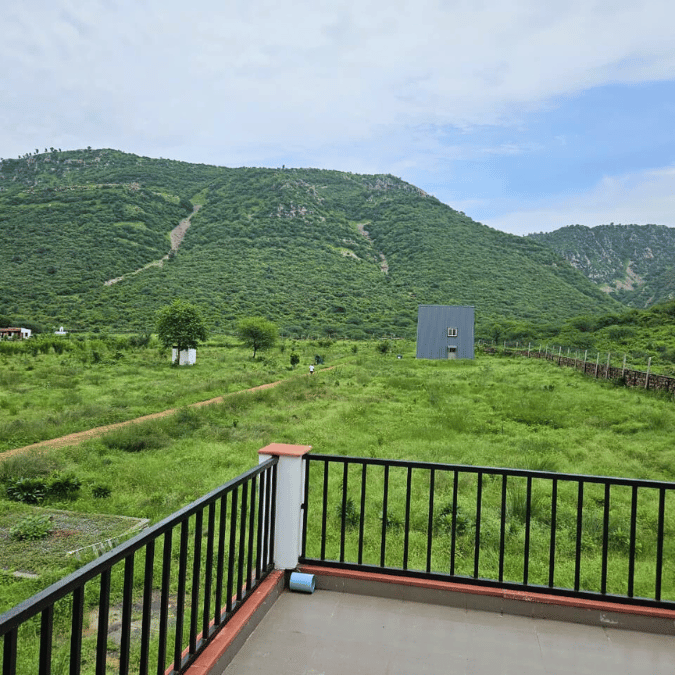
Villages and farm spaces offer what cities cannot:
- Barefoot walking
- Open skies
- Silence
- Slow rhythms
- Connection with soil, animals, trees
Even a short stay can reset the nervous system.
Example: Many people say, “I slept better than I have in years.” This is not coincidence — it is alignment.
If You Cannot Leave the City, Start Small
While regular escapes into nature are ideal, small practices help:
- Walk barefoot on grass whenever possible
- Touch plants daily
- Sit on the floor
- Spend time in parks
- Reduce screen exposure at night
These practices gently restore balance.
Experiencing True Rest at Our Off-Grid Farm Stay
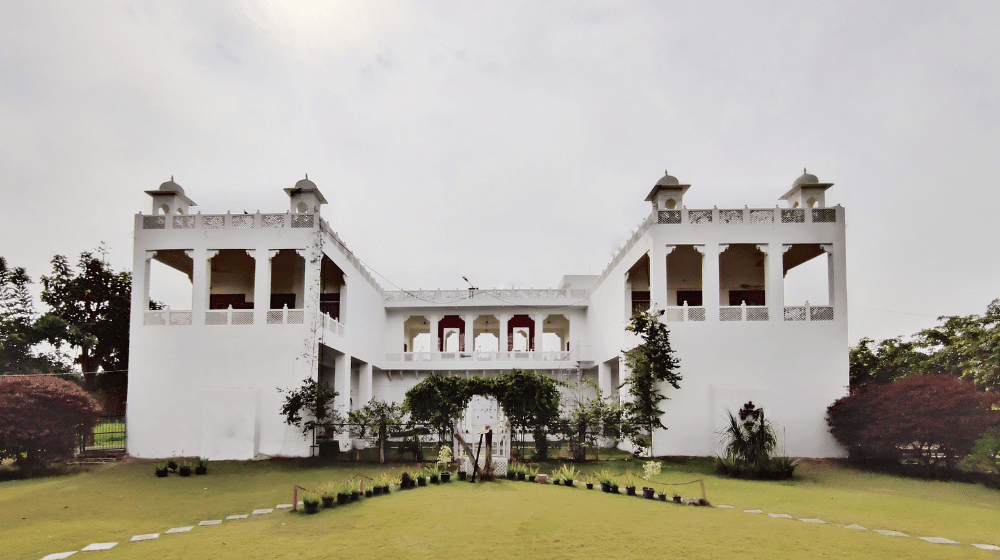
At our off-grid farmhouse in Rajasthan, life slows down naturally.
Here, you experience:
- Natural grounding through soil and open land
- Barefoot walks on grass
- Silence that heals
- Star-filled skies
- Mornings without alarms
Guests often share that they feel lighter, calmer, and deeply rested — not because of luxury, but because of reconnection.
Final Reflection: You Are Not Lazy, You Are Disconnected
If you feel tired even after sleep, pause before judging yourself.
Your body may be asking for:
- Earth
- Stillness
- Silence
- Slowness
Reconnecting with nature is not escapism. It is remembering who we are.
Sometimes, healing does not require doing more — it simply requires coming back to the ground beneath your feet.
Want to Experience This Kind of Rest for Yourself?
If something within you resonated while reading this — the tiredness, the longing for silence, the need to slow down — perhaps it is time to experience it, not just read about it.
Our upgraded off-grid farmhouse in Rajasthan is designed for exactly this purpose: to help you disconnect from city chaos and reconnect with nature, soil, silence, and yourself.
If you would like to:
- Know more about our farmhouse experience
- Understand what makes it different from resorts or hotels
- Inquire about availability and bookings
You can reach out to us here:
🌿 Website: https://www.offgridrajasthan.com
📩 Email: offgridrajasthan2024@gmail.com
📞 Contact Number: +91- 9313175332
We will be happy to guide you and help you plan a stay that truly restores you.